
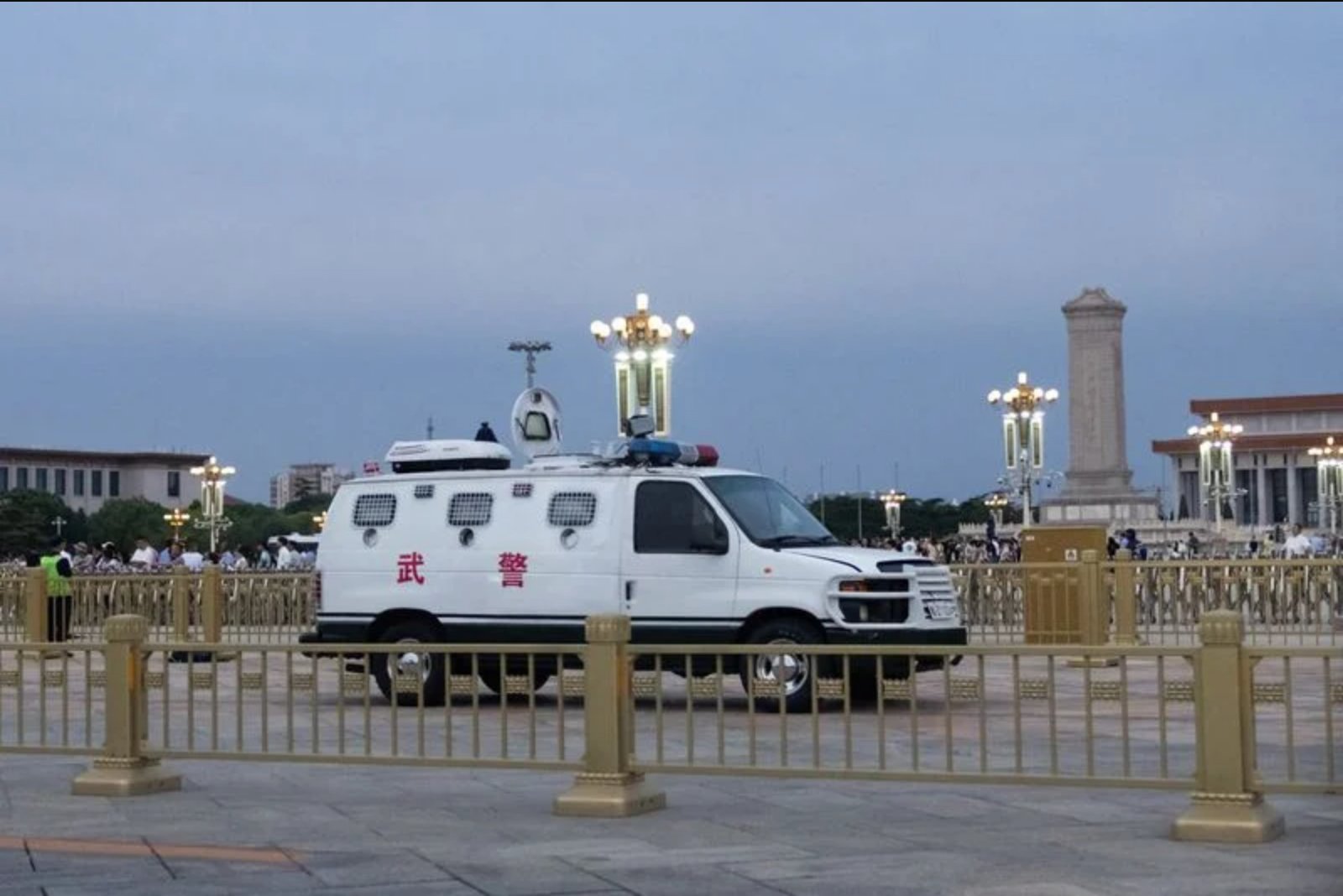
June 4 - Thursday marks 37 years since Chinese troops fired on demonstrators in and around Tiananmen Square in central Beijing, an episode that remains taboo and is not officially commemorated by the Communist Party or government. The following timeline chronicles key dates and developments that preceded the crackdown and the immediate aftermath that unfolded in the days that followed.
Background
The months leading up to the protests were shaped by economic instability. In 1988, China experienced what the contemporary reporting described as economic chaos, with panic buying triggered by rising inflation that neared 30 percent.
Chronology of events
- April 15, 1989: Hu Yaobang, a prominent reformer and a former Communist Party chief, dies. His death helps crystallize public discontent over the pace of reform, corruption and income inequality.
- April 17: Students begin protests at Tiananmen Square calling for democracy and reform. Despite official warnings, crowds swell to as many as 100,000.
- April 22: Approximately 50,000 students gather outside the Great Hall of the People during Hu Yaobang’s memorial service. Three students attempt to present a petition to the government but are ignored. Rioting and looting occur in Xian and Changsha.
- April 24: Students in Beijing initiate a classroom strike.
- April 27: Around 50,000 students defy authorities and march to Tiananmen, with supporting crowds estimated at up to one million people.
- May 2: In Shanghai, some 10,000 protesters march on city government headquarters.
- May 4: Mass demonstrations coincide with the anniversary of the May 4 Movement of 1919. Students and intellectuals lead protests, which occur in Shanghai and nine other cities; they also overlap with a meeting of the Asian Development Bank in the Great Hall of the People.
- May 13: Hundreds of students begin a hunger strike on Tiananmen Square.
- May 15-18: Protests disrupt a traditional welcome ceremony outside the Great Hall of the People for the state visit of Soviet leader Mikhail Gorbachev. Demonstrators receive Gorbachev as "The Ambassador of Democracy."
- May 19: Zhao Ziyang, then party chief, visits students on Tiananmen Square accompanied by hardliner then-premier Li Peng and future premier Wen Jiabao. Zhao pleads with protesters to disperse but is ignored. This is the last public appearance of Zhao; he is later purged.
- May 20: Li Peng declares martial law in parts of Beijing. He would remain premier until 1998 and is reviled by many as the "Butcher of Beijing."
- May 23: Some 100,000 people march in Beijing demanding Li Peng’s removal.
- May 30: Students unveil a 10-metre (33-foot) high sculpture dubbed the "Goddess of Democracy" in Tiananmen Square, modeled on the Statue of Liberty.
- May 31: A government-sponsored counter-demonstration labels the students "traitorous bandits."
- June 3: Thousands of soldiers mount charges toward Tiananmen that citizens repel. Running clashes occur a few hundred metres from the square, with tear gas and bullets used. Authorities warn protesters that troops and police have the "right to use all methods."
- June 4: In the early hours, tanks and armoured personnel carriers begin an assault on Tiananmen Square, clearing it by dawn. Roughly four hours later, troops open fire on unarmed civilians who had regrouped at the square's edge.
- June 5: An unidentified man stands in front of a convoy of tanks leaving Tiananmen Square. The photograph of that act of defiance is widely circulated around the world.
- June 6: Chinese State Council spokesman Yuan Mu states on television that the known death toll was about 300 people, most of them soldiers, with 23 students confirmed killed. The government has never released a comprehensive death toll; rights groups and witnesses contend the figure could reach into the thousands.
- June 9: Paramount leader Deng Xiaoping praises military officers and describes the protests as the work of counter-revolutionaries seeking to overthrow the party.
Observations
The events described span grassroots demonstrations and significant confrontations with state forces, culminating in a forceful military operation in early June. Official public acknowledgement within China remains limited, and questions persist about the full human cost of the crackdown.