
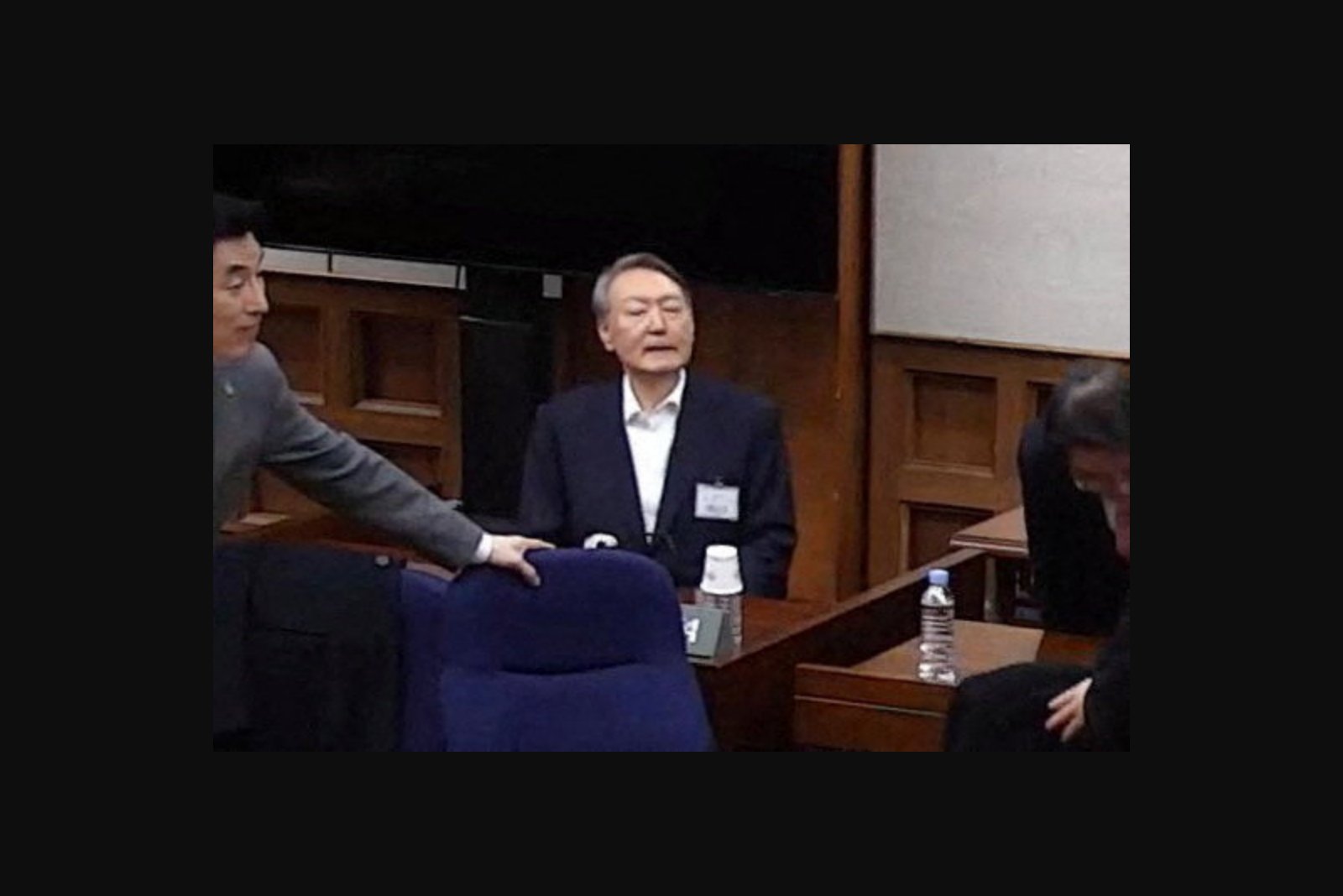
SEOUL, Feb 20 - Former South Korean president Yoon Suk Yeol issued a statement on Friday apologising for the "frustration and hardship" his December 2024 declaration of martial law caused the public, even as he defended the "sincerity and purpose" of his actions. The remarks came a day after a Seoul court sentenced him to life imprisonment for what it concluded was an attempt to subvert the constitutional order.
Yoon said the Seoul Central District Court’s decision to impose a life sentence on Thursday was "predetermined" and characterised the ruling as political retaliation. In his statement, he warned that "Forces that seek to smear a decision made to save the nation as an ’insurrection’ and to use it beyond political attacks as an opportunity to purge and eliminate their opponents will only grow more rampant going forward," and he called on supporters to "unite and rise."
At the same time, Yoon questioned whether filing an appeal would be meaningful in an environment where, he said, judicial independence could not be guaranteed. His lawyers separately clarified that his public statement did not amount to an intention to forgo an appeal.
The sequence of events dates back to December 2024, when Yoon briefly declared martial law. That decree remained in effect for roughly six hours before parliament voted it down, a move that triggered nationwide alarm and street demonstrations. The court found that Yoon had subverted constitutional order by deploying troops to storm parliament and by attempting to detain political opponents, findings that culminated in his removal from office and imprisonment.
Yoon, who rose to prominence as a career prosecutor, has denied the criminal allegations. He has argued that he possessed presidential authority to declare martial law and that his intent was to sound the alarm over opposition parties' obstruction of government, rather than to seize power.
The legal proceedings also drew harsh prosecutorial demands. A special prosecutor had sought the death penalty in the case, though South Korea has not carried out an execution since 1997. After the court handed down the life sentence, a member of the prosecutorial team said on Thursday that they had some "regret" over the sentencing outcome but declined to state whether they intended to pursue an appeal.
Context and immediate implications
The conviction and life sentence mark a dramatic legal and political downfall for a former head of state. The limited duration of the martial law decree - roughly six hours - contrasts with the far-reaching legal judgment that followed, which found the deployment of troops and attempts to detain opponents sufficient to constitute subversion of the constitutional framework.
Yoon's public messaging blends contrition for the public impact of his decree with a firm rejection of the court's legitimacy. The statement leaves legal strategy and the prospect of appeals formally open, while also signalling continued political mobilisation among his supporters.