
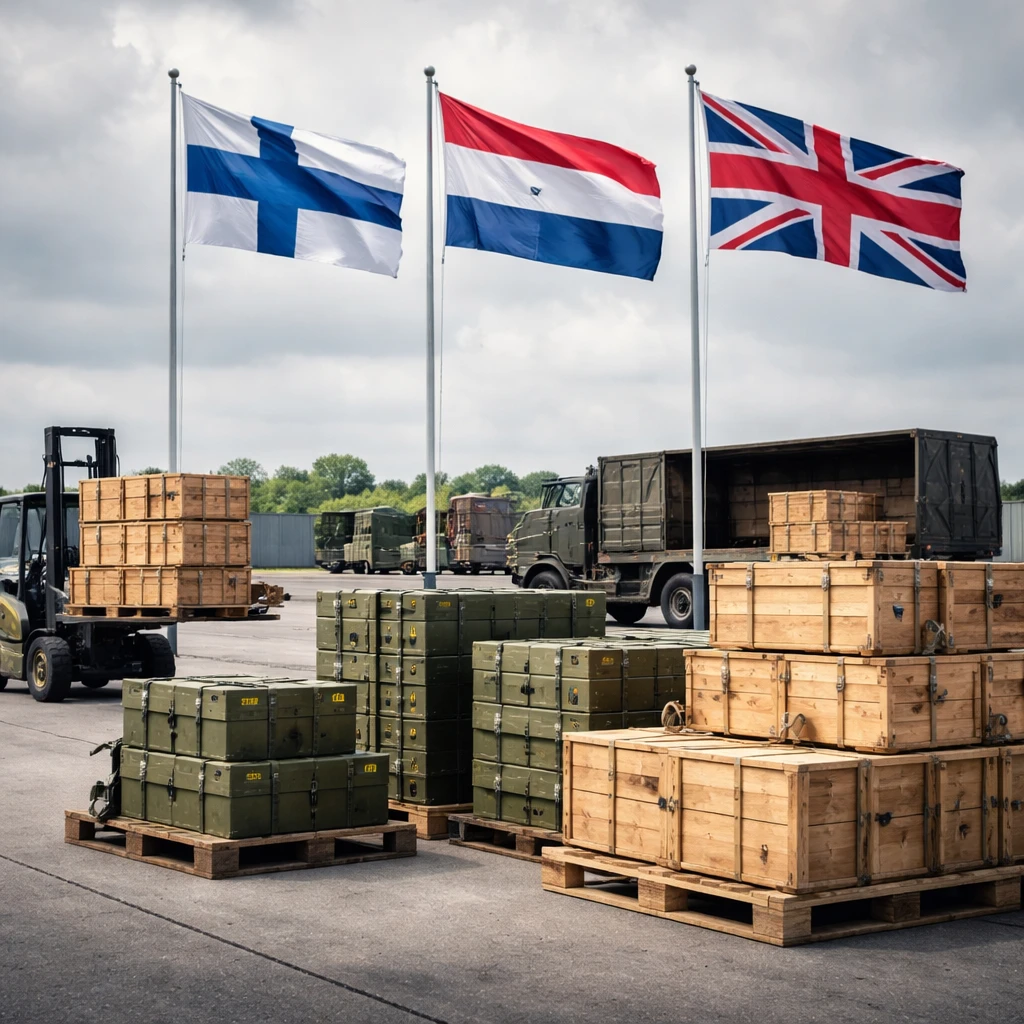
Finland, the Netherlands and the United Kingdom announced on Tuesday they are jointly exploring a defence financing and procurement mechanism, with the objective of launching the initiative by 2027.
The three NATO countries described the proposal as a way to aggregate demand, enable coordinated procurement, speed up defence investment and increase the availability of critical capabilities such as munitions as they broaden shared defence and security commitments.
In a joint statement, the partners said the move comes as rising threats from hostile actors - including Russian aggression in Ukraine - are contributing to global instability and disrupting the rules-based international order.
UK Chancellor of the Exchequer Rachel Reeves highlighted the need for closer alignment between allies on defence and economic stability, saying: "Now, more than ever, we must deepen cooperation with our allies. It’s in our long-term interests to strengthen our defence industries, make it easier for our armed forces to work together, and make sure taxpayers get value for money." The statement framed the mechanism as a tool to improve value for public budgets while supporting interoperability.
The partners said the proposed mechanism is intended to operate alongside existing international organisations and to complement both NATO and EU initiatives. They said it should aim to strengthen collective deterrence, expand defence industrial capacity and boost defence capability through joint procurement.
Dutch Finance Minister Eelco Heinen described the plan as a new form of defence cooperation among European partners and noted it would be open to like-minded Western partners both inside and outside the EU. "By joining forces, we get more security with the same resources and we strengthen our alliances as well," Heinen said.
Finland’s participation from the outset, the partners said, gives Helsinki an opportunity to help shape the mechanism’s design. Finnish Minister of Defence Antti Häkkänen said that Finland’s early involvement provides the country with a chance to influence what such a mechanism could look like.
Summary
The three NATO allies are exploring a pooled defence financing and procurement mechanism to be launched by 2027. The proposal aims to aggregate demand, speed defence investment, and improve access to key capabilities such as munitions while working with existing international institutions and remaining open to other like-minded Western partners.
Key details in the announcement
- The mechanism seeks to aggregate demand and drive joint procurement to increase capability availability.
- It is intended to accelerate defence investments and expand defence industrial capacity.
- Officials said the initiative will complement NATO and EU efforts and be open to like-minded Western partners both inside and outside the EU.
The plan emphasizes coordination across procurement and finance to deliver enhanced deterrence and improved readiness without duplicating existing institutional roles.