
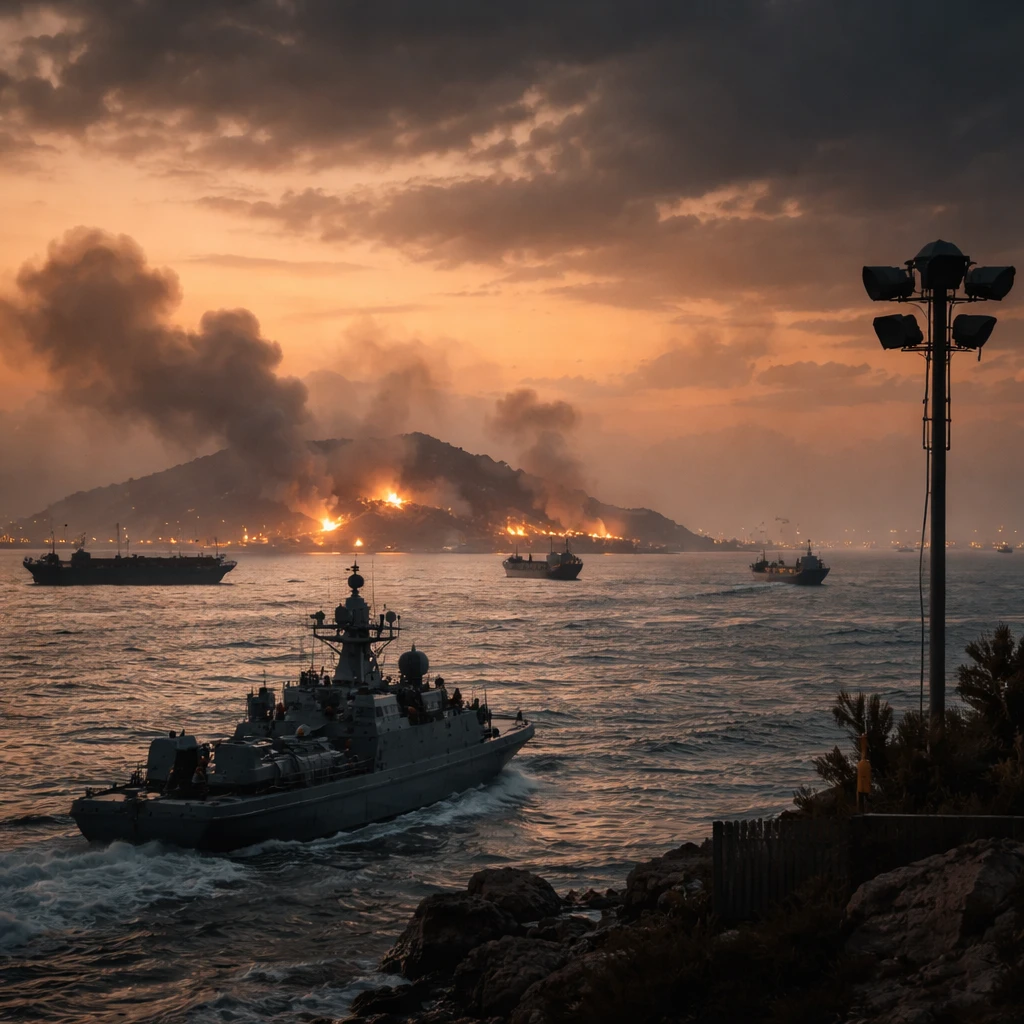
Gulf skirmishes resurface
Fresh incidents of violence erupted in the Gulf on Wednesday as Kuwait's military reported that its air defenses were intercepting hostile missile and drone attacks, while Bahrain broadcast warning sirens and urged people to move to the nearest safe spaces. Iran’s state news agency said explosions were heard near Qeshm Island, located close to the Strait of Hormuz, a chokepoint whose effective closure has disrupted global shipping flows.
The United States said it engaged a tanker that was en route to Iran. Iran’s Revolutionary Guards claimed responsibility for an attack on a vessel in Iraq’s Umm Qasr port, saying the strike was retaliation for a U.S. attack on an Iranian ship in the Gulf of Oman. Separately, the world’s largest shipping group MSC reported one of its vessels was struck by two projectiles while in Umm Qasr the previous day.
Diplomatic talks at an impasse
More than three months after the U.S. and Israel launched strikes against Iran, the confrontation remains in a deadlock. A fragile ceasefire is in effect but the Strait of Hormuz remains largely closed to maritime traffic, sustaining pressure on energy shipments.
Iran and the United States announced last week that they had reached a tentative initial agreement to halt the war, yet both sides have so far refrained from signing off on the deal. Iranian media reported that Tehran had not been in contact with Washington for several days. U.S. President Donald Trump, however, pushed back on that characterization, saying in a social media post that "The conversations between us have been going on continuously, including four days ago, three days ago, two days ago, one day ago, and today."
Negotiations and nuclear discussions
Since mid-March, President Trump has repeatedly said he is close to securing an agreement that would end hostilities and allow negotiators to address more complex issues, including the trajectory of Iran's nuclear program. Trump has characterized preventing Iran from obtaining nuclear weapons as his top priority. Iran denies any effort to develop a nuclear bomb and maintains that its atomic program is intended for peaceful uses.
Tehran is seeking access to billions of dollars in oil revenues, waivers on crude exports, an end to a U.S. blockade on its ports and continued leverage over the Strait of Hormuz. U.S. Secretary of State Marco Rubio told lawmakers on Tuesday that Washington would provide sanctions relief only if Iran agrees to abandon its nuclear activity. During a heated exchange with Democratic Senator Cory Booker of New Jersey, Rubio declared, "The war is over," a claim contested by Booker.
Broader battlefield: Israel and Lebanon
The conflict that began on February 28 has resulted in thousands of deaths, concentrated largely in Iran and Lebanon. It has also had global economic consequences by driving up energy prices after Iran effectively closed the Strait of Hormuz, a former conduit for roughly one fifth of global oil and liquefied natural gas shipments.
The confrontation between Israel and Lebanese militant group Hezbollah intensified as Israel conducted its deepest incursion into Lebanon in 25 years. Despite a U.S.-mediated partial ceasefire announced on Monday, Israeli strikes continued on towns across southern Lebanon on Tuesday, according to Lebanese security sources.
The partial ceasefire offered limited reassurance to many Lebanese residents: roughly 1.2 million people have been displaced and an Israeli drone operating above Beirut kept civilians on edge. Faten Al Chehime, who fled to a displacement camp from her home in Beirut’s southern suburbs on Monday after returning only two weeks earlier, said, "Every time we return to our homes, there is a warning for us to be displaced again."
Humanitarian and logistical fallout
The ramifications of the crisis extend beyond the immediate combat zones. UNICEF warned that rising transport costs and disruptions to supply chains are impeding delivery of lifesaving aid to Gaza, Lebanon, the Democratic Republic of Congo, Mali, Somalia, South Sudan, Nigeria and other affected areas. The combined effect of maritime closures, port attacks and higher energy prices has produced widespread strain on relief operations and international logistics.
At sea and on land, the situation remains volatile: countries in the Gulf issued air defense alerts and maritime operators reported projectile strikes on vessels at Iraqi ports. Meanwhile, diplomatic channels report fits and starts, with assertions from Tehran and Washington differing on the continuity of communications and the status of the tentative deal aimed at ending the war.
What remains uncertain
Negotiators have yet to formalize the tentative halt to the war, and key sticking points referenced by the parties include nuclear activity, sanctions relief and access to oil revenues. Until agreements are finalized and implemented, shipping through the Strait of Hormuz and the flow of humanitarian assistance will likely remain subject to disruption.