
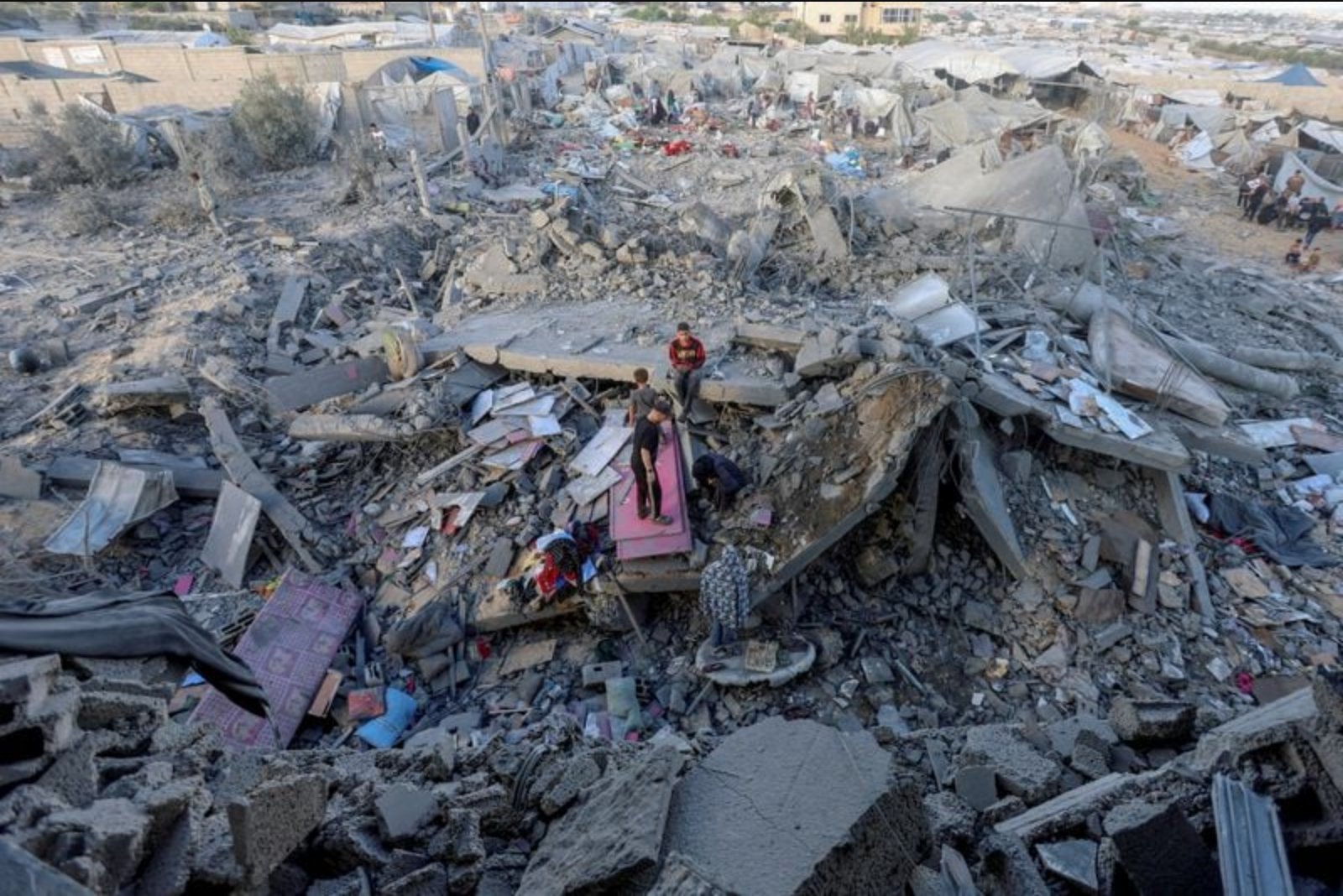
Health authorities in the Gaza Strip said four Palestinians were killed on Monday in separate Israeli strikes, including an eight-year-old child, as residents reported that Israeli forces had pushed out the perimeter of territory they control.
Medical teams reported that two people were killed when an Israeli strike hit near a tent encampment in the Mawasi area of Khan Younis in the southern part of the enclave. In the north, medics said an airstrike struck close to a group digging a well in the Jabalia refugee camp, killing two Palestinians there, one of whom was an eight-year-old boy; others were wounded in that strike.
The Israeli military had not issued an immediate response to the accounts of those attacks, nor to residents' reports that forces were placing new markers and barriers to expand what is referred to locally as the "Yellow Zone" under Israeli control.
Since a U.S.-brokered ceasefire halted large-scale fighting, both Israel and Hamas have accused each other of breaching the truce. Health officials in Gaza say more than 950 people have been killed by Israeli strikes in the period since the truce took effect. Israel, for its part, reports that four of its soldiers were killed by militants during the same period.
Witnesses and residents described visible changes on the ground in southern Gaza over recent days. They said concrete blocks and new markers have been placed in parts of eastern Khan Younis and northern Rafah, and that these physical markers are moving Israeli positions closer to areas dense with tents and displacement centres. In Bani Suhaila town, people reported being able to see tanks from their tents.
The recent movements come after Israeli Prime Minister Benjamin Netanyahu reiterated that he had ordered the military to increase the area it holds inside Gaza. Government statements and his public remarks indicated a directive to expand control to 70% of the enclave. In a speech, he said: "We are not allowing them to arm themselves or harm us, and we are also eliminating their senior commanders."
Across the enclave, Israeli forces still control more than 60% of Gaza's territory, according to accounts cited by residents. Officials say residents have been ordered to leave many areas and that remaining buildings have been destroyed. The bulk of Gaza's population - nearly 2 million people - now live in a narrow coastal strip, largely in makeshift tents or damaged structures that remain under Hamas control.
In parallel with developments on the ground, mediators in Cairo continued efforts to press forward with a fragile ceasefire agreement brokered by the United States. Talks entered a new round and, three days into the discussions, leaders from Hamas and allied Palestinian factions told mediators that Israel must cease attacks to permit negotiations on a proposed second phase of the deal.
Delegations from Hamas and other groups set out specific demands to mediators: an end to Israeli attacks during negotiations, a greater flow of aid and goods into Gaza, and the withdrawal of Israeli forces back to the original October ceasefire lines. A Hamas official told mediators and international interlocutors that Israel had so far refused to make commitments on those points.
No agreement has been reached to enact a further U.S.-backed plan that would see Israeli troops withdraw, Hamas disarm, and Gaza rebuilt. The Hamas official expressed the movement's position bluntly, saying: "Israel refuses to end attacks on civilians in Gaza, allow 600 trucks of aid and goods into Gaza as agreed and it continues to occupy more land every day."
The situation on the ground remains fluid: residents near new markers described a tangible encroachment of Israeli-controlled areas, while mediators in Cairo pressed for concessions that would enable the next phase of a ceasefire plan. With both sides maintaining their accusations of violations and no firm commitments reported from Israel on Hamas's demands, the talks have yet to produce the substantive steps both sides require for broader implementation of the proposed agreement.
Summary
Four Palestinians, including an eight-year-old child, were reported killed by Israeli strikes on Monday, according to Gaza health officials. Residents say Israeli forces have been placing markers and concrete barriers to expand the "Yellow Zone" under their control, bringing them closer to tented displacement areas. Mediators in Cairo continue to negotiate a U.S.-backed ceasefire plan but report no commitments from Israel on Hamas's key demands related to halting attacks, increasing aid access - including an agreed flow of 600 trucks - and a withdrawal to earlier ceasefire lines.