
Lead
Federal immigration agents have stepped up enforcement against individuals who follow their vehicles, detaining and citing people in local neighborhoods and charging them under a broad federal statute that bars impeding, intimidating or assaulting federal officers. The recent wave of arrests, prosecutions and the compilation of identifying information on observers reflect a wider effort by federal authorities to counter what they describe as obstruction and threats to officer safety.
Incident in suburban Minneapolis
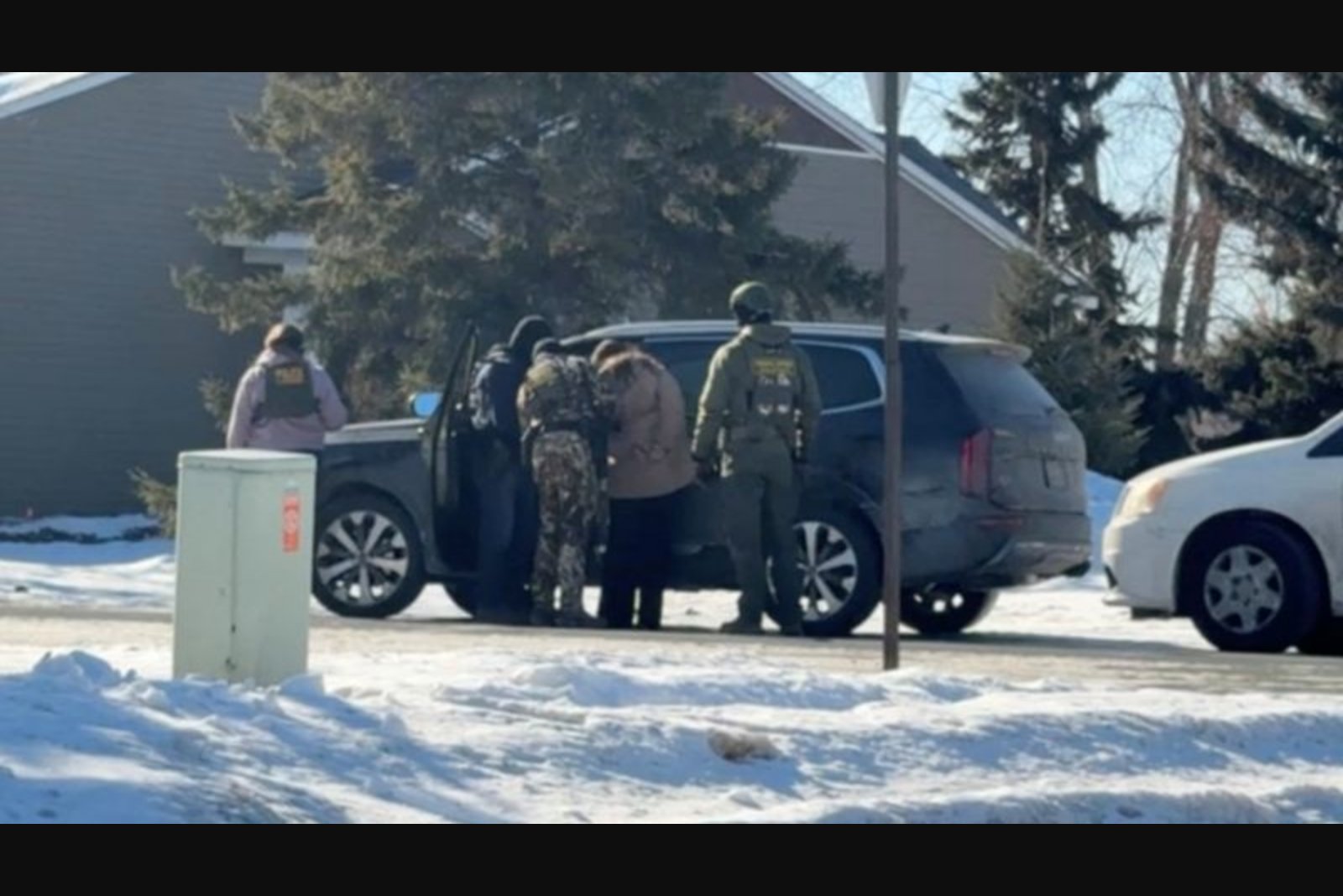
One illustrative case occurred in suburban Minneapolis when a 42-year-old mother of seven, driving a gray Kia SUV, followed federal immigration officers for part of an afternoon before being surrounded and arrested. According to bystander video verified by independent review, at least a half-dozen unmarked vehicles converged, and multiple masked agents exited their cars to detain the motorist. A video clip shows an officer striking the woman’s windshield with a metal object in a manner that appeared to threaten the window.
After the detention the woman was taken to the Bishop Henry Whipple Federal Building in downtown Minneapolis. There, an official issued a citation charging her under Title 18, Section 111 of the U.S. Code, the federal statute used to allege obstruction of and assaults on federal officers. The citation indicated the defendant’s name and photograph would be entered into a government database, and listed a court date as "TBD" - to be determined.
The statute and its consequences
Title 18, Section 111 is a catch-all criminal provision that applies to anyone who "forcibly assaults, resists, opposes, impedes, intimidates, or interferes" with a federal officer performing official duties. The law can be charged either as a felony or a misdemeanor. When charged as a felony, the statute carries a maximum penalty of up to 20 years in prison. However, sentences beyond eight years are typically reserved for defendants who allegedly used a "deadly or dangerous weapon" or who caused physical injury.
Scope and scale of prosecutions
A review of federal court records shows a steep increase in prosecutions under this statute since a series of city-focused immigration operations began last summer. Federal filings indicate at least 655 prosecutions nationwide under Title 18, Section 111 during the relevant period - more than double the number recorded during the same stretch in 2024-2025 according to publicly available criminal filings searched in a legal database.
In classifying those filings, artificial intelligence was used in some instances, with a spot-check indicating 98% accuracy in the categorization process. The available filings do not consistently identify how many of the cases were directly tied to immigration enforcement, how many were charged as felonies, or how many ultimately resulted in convictions.
Officials' rationale
Department of Homeland Security officials maintain the elevated enforcement is aimed at protecting officers and ensuring they can carry out their duties. A DHS spokesperson said that assaulting and obstructing law enforcement is a felony and described officers as using the "minimum amount of force necessary to protect themselves, the public, and federal property." A White House spokeswoman reiterated that while the administration is committed to safeguarding First Amendment freedoms, individuals who impede law enforcement will face legal accountability.
Internal tracking and referrals
Federal immigration authorities have compiled identifying information on people who follow agents, according to officials familiar with internal operations. That internal database reportedly contains names, photographs, descriptions of actions deemed suspicious, locations and license plate numbers. Officials described the effort as intended to reveal patterns that could lead to criminal charges. DHS stated it does not maintain a database of U.S. "domestic terrorists," but said it monitors and investigates threats and refers relevant incidents, assaults and obstructions to appropriate law enforcement channels for further action.
One official involved in the effort said that, in Minnesota alone, ICE had been referring several people per day to federal prosecutors for potential charges under the statute for allegedly interfering with police operations.
Accounts from the scene
In the Minneapolis-area incident, the woman said she had followed federal immigration officers for about 45 minutes while they were parked in her neighborhood. She said she maintained a distance of several car lengths behind the officers and recorded interactions on her phone. At one point, a Border Patrol agent approached her car and, in the recording, warned her with the words, "Last time I'm going to warn you." She said the officers took a different route at a stop sign while she continued in another direction, and that minutes later, as she returned toward her home, multiple vehicles carrying federal officers moved to stop and detain her.
The woman said she was frightened during the encounter and feared she might suffer the same fate as another protester who was fatally shot by federal immigration officers earlier in January. She later said she believed her conduct was lawful and that she had been observing the officers from a distance.
Officials at DHS said the agents had issued lawful commands and warnings and that the woman persisted in actions they characterized as obstructive. "When agitators willingly involve themselves and inject themselves in law enforcement operations, they are risking arrest as well as jeopardizing the safety of themselves and those around them," the DHS spokesperson said.
Legal perspective
Legal scholars have questioned whether following officers in a vehicle without physical contact meets the statute’s "forcibly" element. A professor who studies policing noted that historically the law has most often been applied to cases involving physical assaults on officers and emphasized that forcible conduct is a required component of a Section 111 violation.
In a separate judicial action in Minneapolis in mid-January, a federal judge issued an order finding that a vehicle following immigration officers at "an appropriate distance" did not, by itself, justify a traffic stop or arrest. That order was paused by an appeals court 10 days later. The judge's now-paused order did not specify an exact distance that would be deemed safe; it simply drew a distinction between following at an appropriate distance and actions that would justify immediate intervention.
A former senior ICE official appointed under the previous administration called it inappropriate and unconstitutional to arrest or intimidate people who are peacefully observing immigration activities from their cars. "Observing ICE activities is not a crime and should not be treated as such," the former official said.
Video evidence and incidents with weapons drawn
Despite internal guidance reported late in January that instructed officers to avoid engaging with protesters, recent encounters show officers approaching vehicles with firearms drawn. On January 29, south of Minneapolis, dashcam footage from a driver who had been following officers captured immigration agents abruptly swerving, stopping their vehicle and then approaching the trailing car with guns drawn. Authorities said they were attempting to arrest a criminal offender and that the driver began "stalking and obstructing" them. Officials alleged the driver ignored emergency lights and drove recklessly, running stop signs, nearly colliding with multiple vehicles and attempting to ram law enforcement. Independent verification of those specific driving behaviors was not available.
In another incident on February 3, two officers approached a car that had been following them with weapons drawn, according to video of the encounter and a DHS statement. The department described the vehicle as "stalking" and "obstructing" agents, and said the occupants made hand motions suggestive of possessing a firearm. The video shows the vehicles after they had come to a stop; the department’s account could not be independently confirmed from that footage alone.
The record of DHS statements after violent interactions with immigration agents includes instances in which details later proved to be inaccurate or incomplete, according to the available public record.
Claims of intimidation and tactics at people’s homes
Some residents in the Minneapolis-St. Paul area say they feel targeted by what they describe as intimidation tactics. In one case on January 22 in a northern St. Paul suburb, video recorded and reviewed shows an immigration officer leading a woman who had been following his vehicle back to her house and making clear he knew her identity and address. The woman’s husband recorded interactions outside the home and said the officer responded to his questions about the tactic with the remark, "You raise your voice, I erase your voice," according to the footage.
One immigration agent told investigators that officers have led people who followed them back to their houses after running license plates as a tactic "to freak them out." DHS said it would review body camera footage and investigate the St. Paul incident but did not comment on whether the tactic was used to intimidate opponents.
Other detentions and force claims
Earlier in January, two people who were following an immigration vehicle in Minneapolis said officers fired pepper spray into their car, smashed a window and held them for eight hours. Officials said multiple warnings had been issued to the occupants to stop impeding operations and that the occupants chose to continue. DHS said the passenger in one of those vehicles refused to lower the window and exit when ordered; the agency said officers used the minimum force necessary to make the arrest. The agency did not explicitly confirm public accounts that officers broke the window or deployed pepper spray. The two individuals detained during that incident have not been charged.
What remains uncertain
Public filings and footage provide an incomplete record of how often these detentions are tied directly to immigration enforcement, how frequently the statute is prosecuted as a felony versus a misdemeanor, and how many cases result in convictions. The internal tracking database and the criteria used to refer individuals for prosecution have been described by officials, but the full scope of entries and how they are applied remain only partially transparent.
Conclusion
The recent surge in detentions, charges and internal tracking of people who follow federal immigration officers in vehicles highlights a contentious enforcement posture that federal authorities say is necessary to protect operations and officer safety. Critics argue that the sweeping application of a statute intended to address physical assaults is being used to punish nonviolent observers, raising constitutional and civil liberties questions that are actively being litigated and debated in courts and communities where these encounters occur.
Sources of legal and operational statements
- Department of Homeland Security statements emphasizing the legal basis for arrests and characterizing the conduct as stalking, obstructing, or assaulting officers.
- Federal filings from court records showing at least 655 prosecutions under Title 18, Section 111 since the recent city-focused enforcement began.
- Video footage and dashcam recordings showing multiple encounters in which officers drew weapons, boxed vehicles in, or made arrests after trailing bystanders followed agents.
- Legal commentary from a policing scholar noting the statutory requirement that alleged conduct be "forcible" and questioning whether noncontact following meets that standard.
Note on evidence and verification
Video clips and court records reviewed in the course of reporting provided much of the factual record. Some agency accounts about specific incidents were not independently verified from available footage; where agency descriptions of events differ from visual records or eyewitness statements, those differences are noted within this report.