
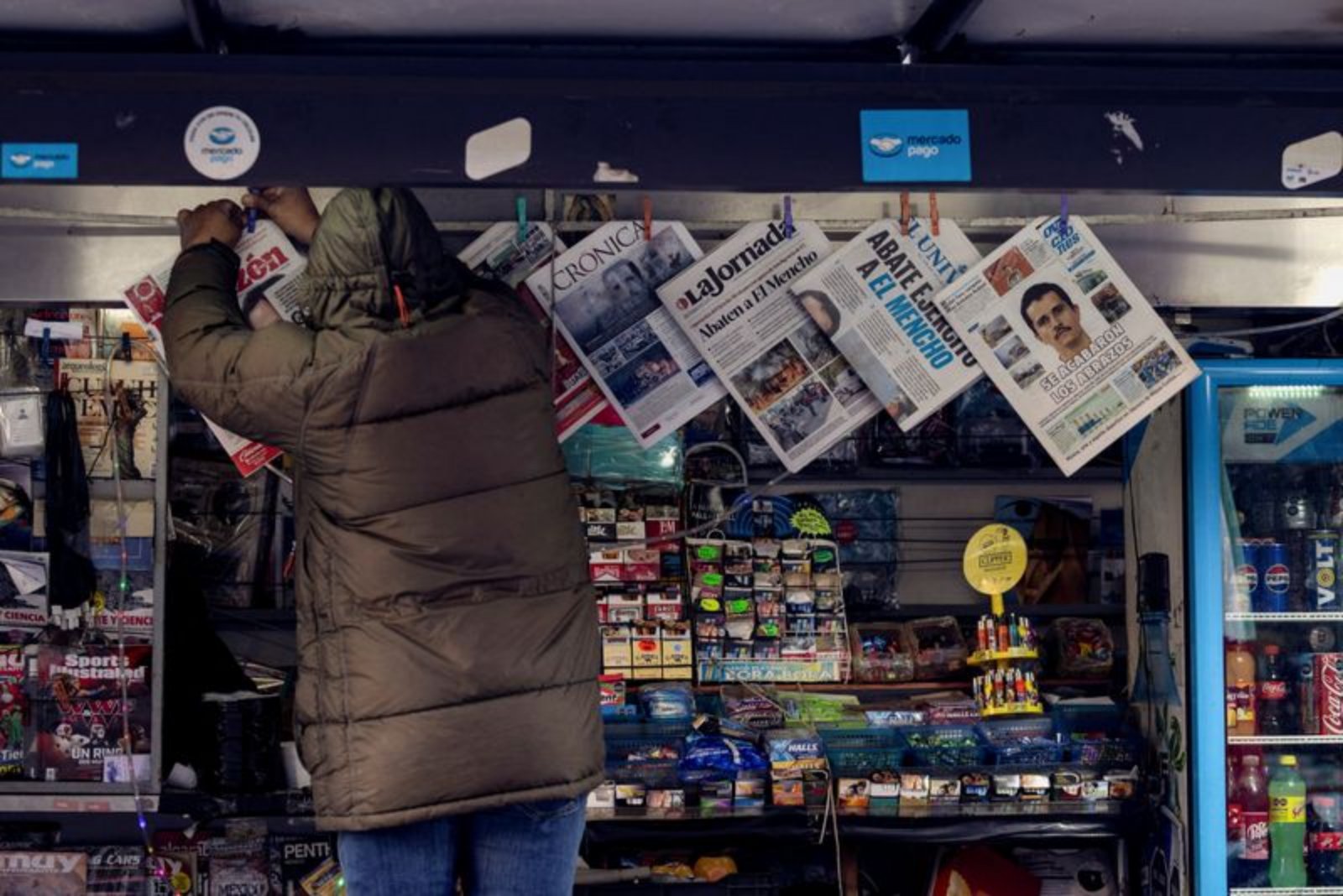
Mexican security forces' operation that resulted in the killing of the country’s most wanted cartel leader on Sunday triggered both physical reprisals and a torrent of misinformation online. In multiple states, supporters of Nemesio Oseguera Cervantes, known as El Mencho, erected roadblocks, set buses and stores on fire and attacked fuel stations in apparent retaliation. At the same time, social media lit up with dramatic but false reports and images that portrayed even greater chaos.
Among the widely shared claims were assertions that gunmen had seized control of the Guadalajara airport and that a plane on the runway was ablaze. Other posts showed smoke pouring from a church and from several buildings in Puerto Vallarta, a city noted in the reporting as popular with tourists. These images and accounts were false but circulated tens of thousands of times across platforms, according to researchers tracking the spread of content.
Official reaction and attribution
Mexico's Security Secretary, Omar Garcia Harfuch, told reporters that authorities had already identified "various accounts" and planned a deeper probe to determine which of those accounts had "direct relationships with an organized crime group." He added that additional accounts appeared to be "dedicated to spreading lies" without established criminal ties.
President Claudia Sheinbaum said the government was moving quickly to counter misinformation, noting that there were "many, many fake news stories" circulating after the killing of El Mencho.
Researchers' assessment of the online campaign
Experts monitoring the digital response to the killing described what they characterized as a coordinated propaganda effort by criminal organizations. Jane Esberg, an assistant professor at the University of Pennsylvania who studies Mexican criminal groups' use of social media, said the objective appeared to be to portray the government as lacking control over vast swaths of the country.
"They are trying to show that the Mexican government doesn’t have control over the country," Esberg said, adding that the social-media strategy helped create the impression of a nationwide cartel presence even as it obscured the true scale of violence and the specific challenges faced by security forces.
Researchers noted that misinformation after major incidents is not new, but recent technological developments have altered how quickly and convincingly false content can spread. The introduction of artificial intelligence into content creation has, according to the reporting, enabled more elaborate and polished fake material than previously typical.
Narco influencers and content recycling
Criminal groups in Mexico have long used social platforms for propaganda, whether to attack rivals or to publicize community-oriented actions such as aid distributions during the coronavirus pandemic. Historically, the material circulated by these groups often consisted of lower-technology items - for example, recycled video clips from previous incidents or violent imagery sourced from unrelated conflicts abroad.
In recent years, the emergence of "narco influencers" - social media personalities who amass large followings and at times glorify organized crime - has provided additional distribution channels for this content. Researchers say those accounts can amplify messages rapidly and shape narratives in ways that complicate public understanding.
Verification challenges and the limits of attribution
Those observing the flow of misinformation also pointed to practical obstacles in attributing online content to criminal groups. While authorities have identified accounts suspected of being linked to cartels, experts warned it is often difficult to determine conclusively which accounts are operated directly by organized crime and which are independent actors spreading falsehoods.
Pablo Calderon, an associate professor in politics and international relations, said that while the security operation that resulted in El Mencho's death was a success for Mexican forces, the narrative had shifted online toward chaos because of how organized crime and sympathetic accounts amplified violent imagery and claims.
"Sunday was a good day for Mexican security forces," Calderon said. "But organized crime has been successful in shifting the narrative, away from the (military raid) to chaos."
Implications for reporting and public perception
Experts emphasized that misinformation campaigns can be particularly harmful in a country where violent conditions constrain journalists' access to some regions, complicating the ability to verify events on the ground. The combination of real acts of reprisal with fabricated reports makes it harder for authorities, the media and the public to determine the extent and location of actual unrest.
Officials said they were investigating the sources of the false accounts while attempting to correct the record as new information became available. In the immediate aftermath, however, the speed and scale of the false claims on social media magnified fear and uncertainty beyond what researchers and officials judged to be the factual circumstances.
As authorities pursue both the security response and efforts to identify and disrupt misinformation networks, observers note that separating factual incident reporting from organized attempts to manipulate perception remains a central challenge for Mexico's institutions and for anyone relying on social media for real-time updates.