
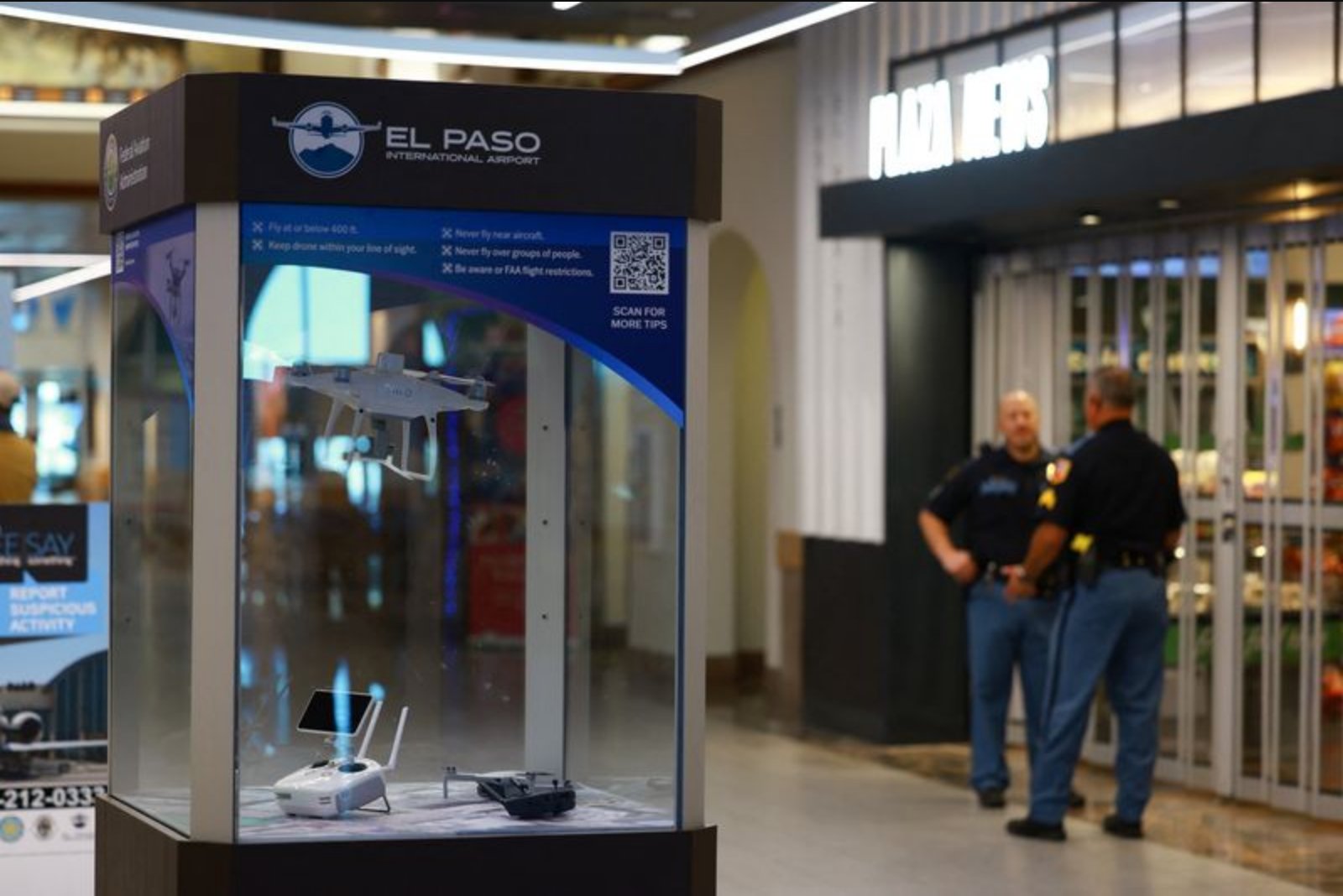
WASHINGTON, Feb 11 - Federal aviation officials briefly shut down El Paso International Airport after safety concerns arose around testing of a new laser-based counter-drone technology at the nearby U.S. Army Fort Bliss, according to sources familiar with the matter.
The closure is the latest aviation disruption tied to government testing of counter-drone systems. In March, exercises conducted near Reagan Washington National Airport by the U.S. Secret Service and the Navy resulted in numerous flight crews receiving erroneous alerts indicating potentially nearby aircraft, officials and lawmakers have said.
At a Senate Commerce Committee hearing last year, U.S. Senator Ted Cruz said those faulty alerts caused some flights to abort landings. Cruz said the alerts stemmed from government testing that was using the same radio spectrum band as the alerting systems used by aircraft, creating interference that affected at least a dozen flights. Cruz called the testing inappropriate and "deeply disturbing" in the wake of a January 2025 fatal collision between an American Airlines regional jet and an Army helicopter that killed 67 people.
A Secret Service spokesperson denied that the agency had conducted any drone system testing and said the agency "has been coordinating with the FAA to ensure our systems do not interfere with FAA frequencies or commercial air traffic operations."
The FAA has said some flight crews aborted landings and executed go-arounds after receiving the alerts. These alerts are designed to prevent collisions and are generated by onboard Traffic Alert and Collision Avoidance Systems, which operate independently from ground-based air traffic control.
Last year, reporting tied the false alerts to testing at the Naval Observatory, the official vice president's residence. Another source said the FAA spent several days working to identify the origin of the interference.
"We were able to pinpoint the source and correct it and there were no further issues," the FAA said last year.
Officials have stressed the safety implications when ground-based testing overlaps with the frequency bands used by aircraft systems. In the most recent episode, the FAA's short-term closure of El Paso airport was attributed to a precautionary response while concerns about laser-based counter-drone testing at Fort Bliss were reviewed.
The incidents highlight the technical challenge of conducting counter-drone evaluations near active airports and populated flight paths. Airborne collision avoidance systems are a last line of defense for crews, and interference with their operation can lead to aborted approaches and other safety maneuvers.
Reporting on these events has included statements from federal agencies, congressional testimony, and on-the-record denials from agencies accused of testing. Aviation safety officials continue to investigate and seek solutions that allow necessary counter-drone development without compromising commercial flight operations.