
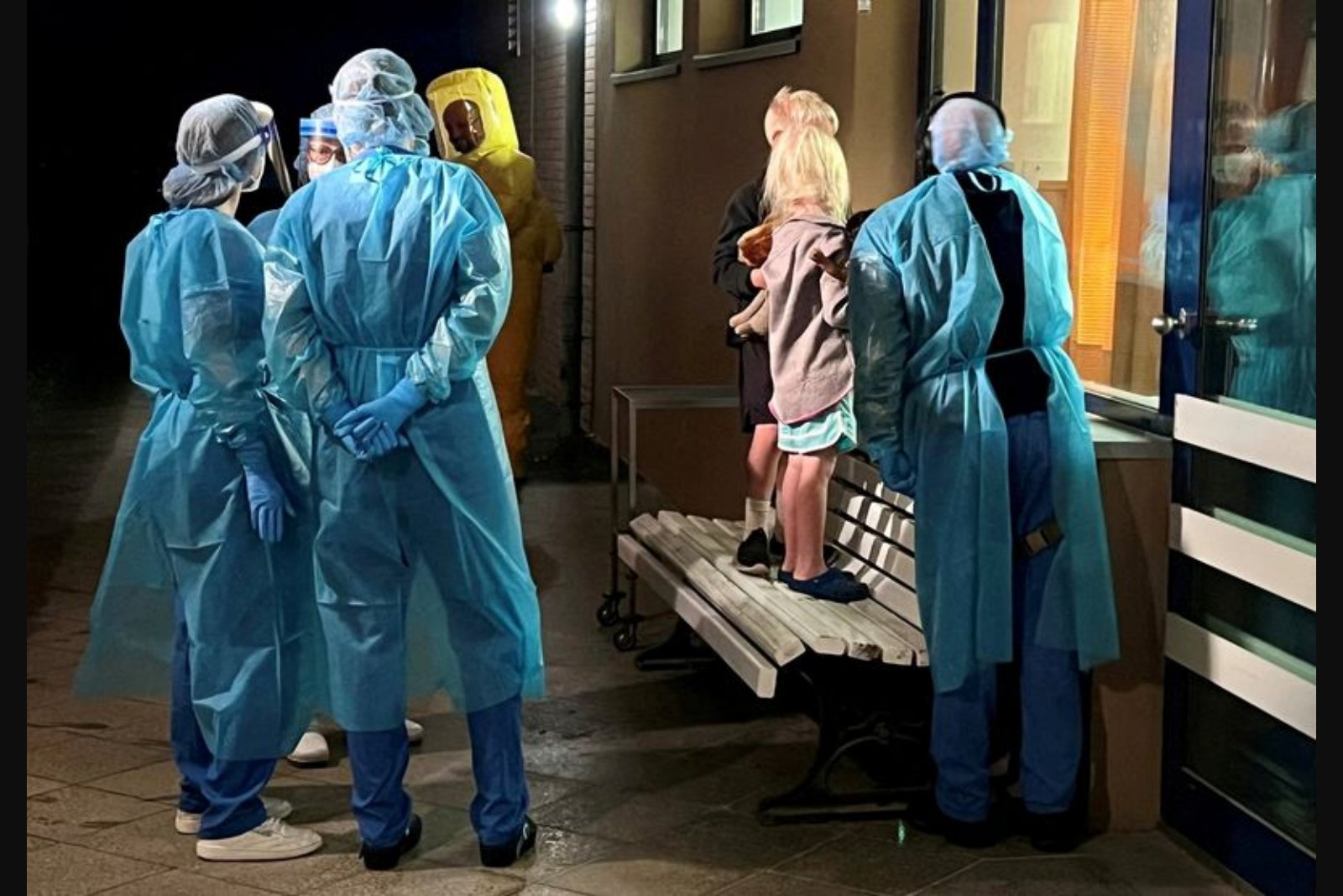
A U.S. missionary who tested positive for Ebola and is being treated at a hospital in Germany has received a combination of drugs intended to reduce symptoms after virus exposure and other supportive therapies, U.S. health officials said on Friday. Health privacy laws prevented the Centers for Disease Control and Prevention from identifying which particular treatments are being administered.
The patient has been publicly named by the Serge Christian mission organization as Dr. Peter Stafford. The current outbreak in the Democratic Republic of Congo, caused by the rare Bundibugyo strain of Ebola, has infected almost 750 people and resulted in 177 deaths. The World Health Organization has declared the outbreak an emergency of international concern and has highlighted at least one investigational antiviral as a promising option.
There are no vaccines or drugs specifically approved to treat the Bundibugyo species of Ebola, officials reiterated. WHO officials have said that developing a vaccine could take as long as six to nine months.
Antiviral candidate: obeldesivir
Gilead Sciences’ experimental antiviral pill, obeldesivir, was identified by WHO as a promising option in the response to the Congo outbreak. Thomas Geisbert, a University of Texas Medical Branch researcher who worked on the development of Merck’s Ervebo vaccine for the Zaire species and who has collaborated with Gilead, described preclinical testing results for obeldesivir.
Geisbert and colleagues tested obeldesivir in nonhuman primates against Ebola Zaire and Ebola Sudan as well as against a related filovirus, Marburg. Those studies did not include the Bundibugyo species. In those animal trials, obeldesivir completely prevented Ebola Sudan in treated animals, and provided 80 percent to 100 percent protection against Marburg and Ebola Zaire, he told Reuters.
"I think that that’s something that potentially has some utility here," he said.
Geisbert noted there is no data showing whether obeldesivir is effective in people who are already symptomatic with Ebola, and he emphasized the drug has not been tested specifically against the current outbreak strain. The compound has, however, undergone a late-stage trial in hundreds of people with COVID-19, where it was generally well tolerated, according to his comments.
A Gilead spokesperson, Ashleigh Koss, said the company is engaged with global and regional health authorities and that preclinical data predict obeldesivir will be active against the Bundibugyo strain.
Antibody option: MBP134
Another investigational therapy under consideration is an experimental antibody cocktail called MBP134. Geisbert helped develop MBP134 with Dr. James Crowe of the Vanderbilt Vaccine Center. The cocktail has been licensed to Mapp Biopharmaceutical, the San Diego firm that developed the ZMAPP antibody treatment used during the 2014-2016 West Africa Ebola outbreak.
According to a U.S. official, Mapp is working with the U.S. Biomedical Advanced Research and Development Authority, or BARDA, to make MBP134 available for potential use in individuals at high risk of severe disease.
The two-antibody cocktail is derived from antibodies isolated from the blood of an Ebola survivor and was designed to target multiple Ebola species, including Sudan, Zaire and Bundibugyo. Geisbert described experiments in which monkeys were infected with Bundibugyo and received the antibody treatment seven days after infection, at which point the animals had developed symptoms - a scenario intended to mimic a patient presenting to a clinic.
"We were able to protect five or six of those from lethal disease, so that was pretty convincing," he said, adding that he believes the product is a strong candidate for Bundibugyo.
Mapp said it is coordinating with the WHO and other authorities in response to the outbreak. Larry Zeitlin, the company’s president, stated via email that he could not disclose whether MBP134 is being used to treat Americans in Europe.
Clinical and policy considerations
U.S. health officials cited patient privacy protections in declining to disclose the precise treatments being given to the U.S. missionary. The investigative options under discussion are based largely on preclinical animal data and safety information from other human studies, rather than direct clinical evidence in patients infected with Bundibugyo. WHO and national authorities are balancing those data against the urgency of a spreading outbreak while vaccine development timelines are measured in months.
The situation highlights the role investigational therapeutics can play as interim tools to reduce morbidity and mortality and to help curb outbreaks while vaccine candidates are advanced.