
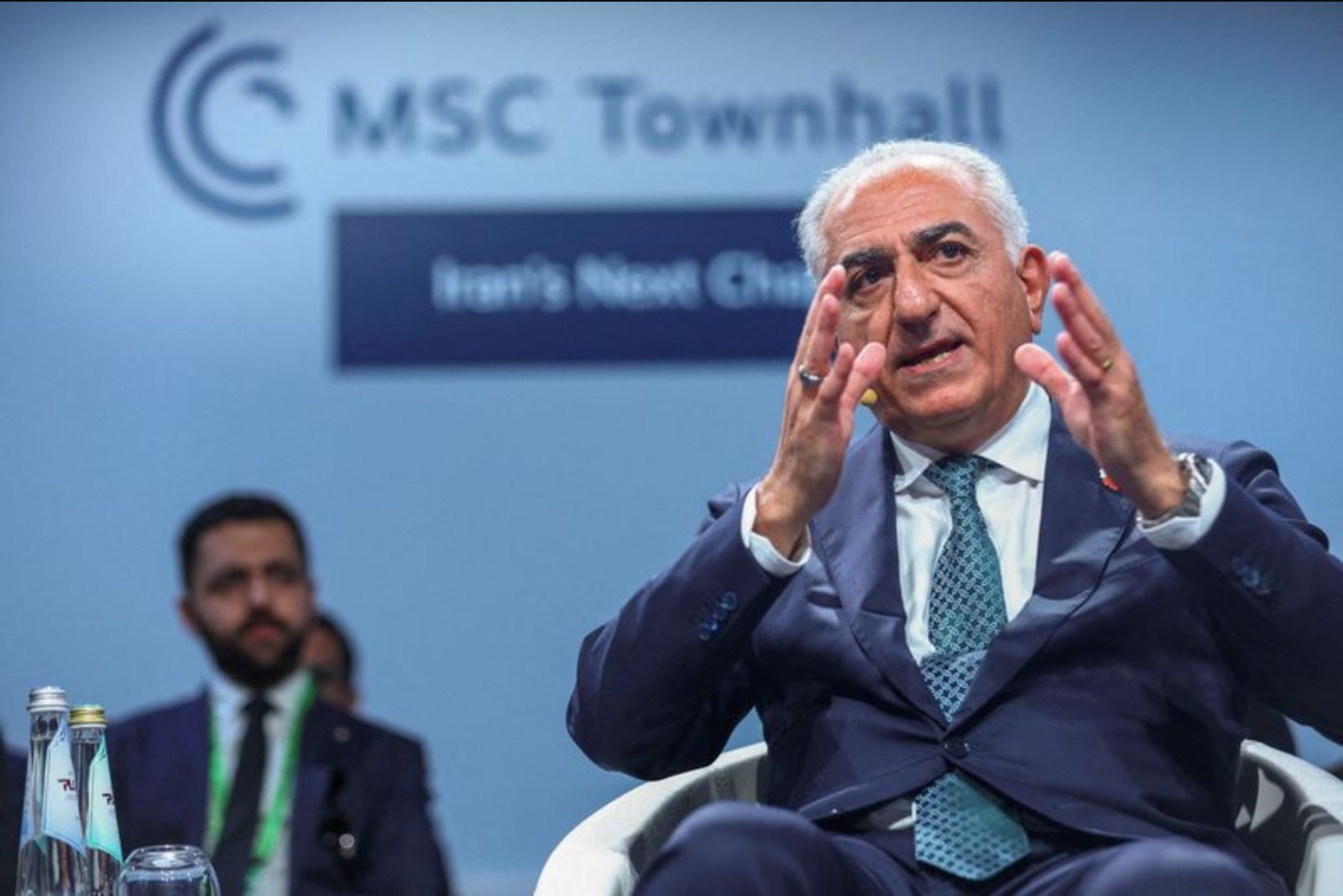
Reza Pahlavi, an opposition politician living outside Iran, called on U.S. policymakers to consider military action to protect civilians and accelerate political change inside the Islamic Republic. He made the remarks during an interview on the sidelines of the Munich Security Conference - an event that excludes officials from the Iranian government - saying there were signs the Tehran leadership was close to collapse and that an attack could either weaken it or hasten its downfall.
"It’s a matter of time. We are hoping that this attack will expedite the process and the people can be finally back in the streets and take it all the way to the ultimate regime’s downfall," Pahlavi said. He is based in the United States and has lived abroad since before his father was overthrown in the 1979 revolution.
Pahlavi’s comments come against a backdrop of a broad security response inside Iran. Authorities have conducted a campaign of mass arrests and intimidation following what officials described as the bloodiest unrest since 1979. The crackdown followed protests that began on December 28 as a modest demonstration in Tehran’s Grand Bazaar over economic hardship and then spread across the country.
Iran’s opposition landscape remains divided. Rival groups and ideological currents - including monarchists who support Pahlavi - have struggled to form a cohesive, organized presence within the country. Pahlavi acknowledged this fragmentation and referenced skepticism from senior U.S. figures about his level of support among Iranians.
At the same time, the U.S. administration has been pursuing parallel tracks: engaging in diplomacy with Tehran about a prospective nuclear deal while increasing its military posture in the region. Diplomatic contacts continued recently, with U.S. and Iranian diplomats meeting in Oman and further talks expected in the following week.
Against that diplomatic activity, Pahlavi expressed hope that a point might be reached where negotiators conclude discussions are unproductive, and a decision would follow for the United States to act in support of the Iranian people. "People are hoping that at some point the decision will be made that there’s no use, there’s no point, we’re not going to get anywhere with negotiations. Therefore, that’s time for the United States to intervene and do what President Trump promised he will do, to have the people’s back," he said. "Intervention is a way to save lives," he added.
President Trump, speaking to U.S. troops in North Carolina, said Iran had been difficult in nuclear negotiations and suggested that instilling fear in Tehran might be necessary to resolve the standoff peacefully. In parallel, two U.S. officials, speaking on condition of anonymity, said the U.S. military had been preparing for the possibility of a sustained, weeks-long operation against Iran if ordered to carry out an attack.
The combination of internal repression inside Iran, continued diplomatic engagement, and reported U.S. military preparations creates a complex environment. Pahlavi's appeal for intervention rests on the premise that external action could protect civilians and speed political change; however, the article also documents the fragmentation of opposition forces and the broad security measures taken by Iranian authorities to deter further protests.
Contextual note: Information in this article is drawn from statements and reported developments, including remarks made by political figures, accounts of protests and arrests inside Iran, and public comments by senior U.S. officials about negotiations and military posture.