
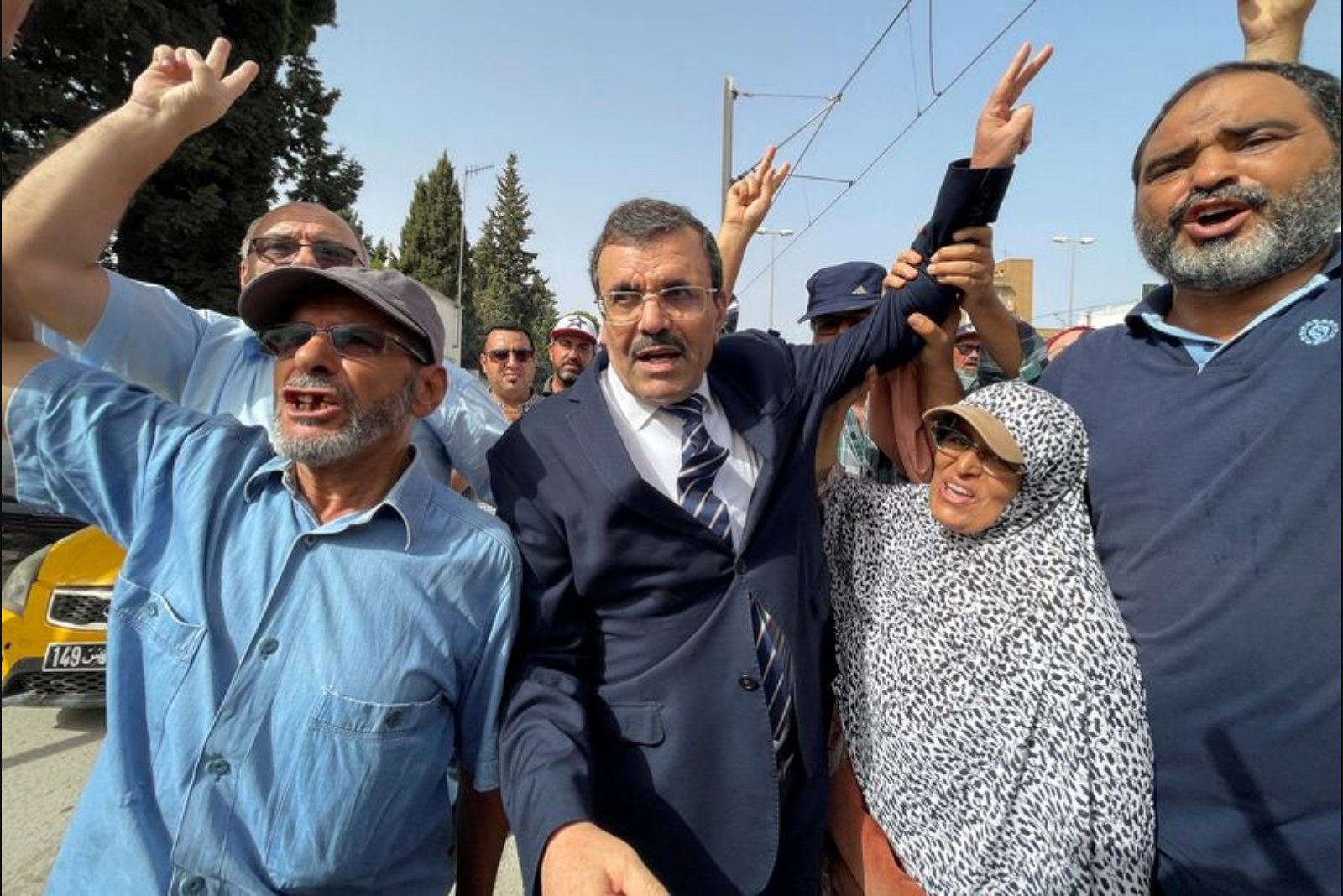
A Tunis court on Friday sentenced former prime minister Ali Larayedh to 24 years behind bars on charges that he facilitated the travel of Tunisian jihadists to Syria over the last decade, state media reported.
Larayedh has been detained since 2022. During a hearing on Thursday he told the court: "I am innocent. I am being subjected to injustice, abuse and ingratitude." Under Tunisian law he retains the right to appeal both his conviction and the sentence.
His political party, the Islamist opposition Ennahda, described the case as politically motivated. Ennahda characterized the proceedings as part of a broader crackdown on dissent that followed President Kais Saied’s consolidation of power in 2021, when he dissolved parliament and began ruling by decree. The party has long rejected accusations that it helped Tunisians travel to join foreign militant groups.
Larayedh served as Tunisia’s prime minister from 2013 to 2014, a period the government and observers have described as turbulent in the aftermath of the 2011 revolution. In the years after that revolution, hundreds of Tunisians travelled to Syria, Iraq, and Libya to join or fight alongside Islamic State groups, a trend that has been at the center of political controversy in Tunisia.
The case against Larayedh involved seven other defendants, including former officials from the Interior Ministry. The state-run TAP news agency quoted a judicial official saying those defendants received sentences that ranged from three years to 24 years in prison.
Key facts are clear: Larayedh has been sentenced to 24 years; he denies guilt and may appeal; Ennahda frames the prosecution as politically driven following the 2021 expansion of presidential powers. The legal proceedings also included other former officials who received prison terms of varying lengths, according to a judicial source cited by TAP.
Further legal developments, including any appeals, will determine whether the sentences are upheld or altered. For now, the conviction marks a significant legal outcome for a former head of government who was active during Tunisia’s post-revolutionary transition.