
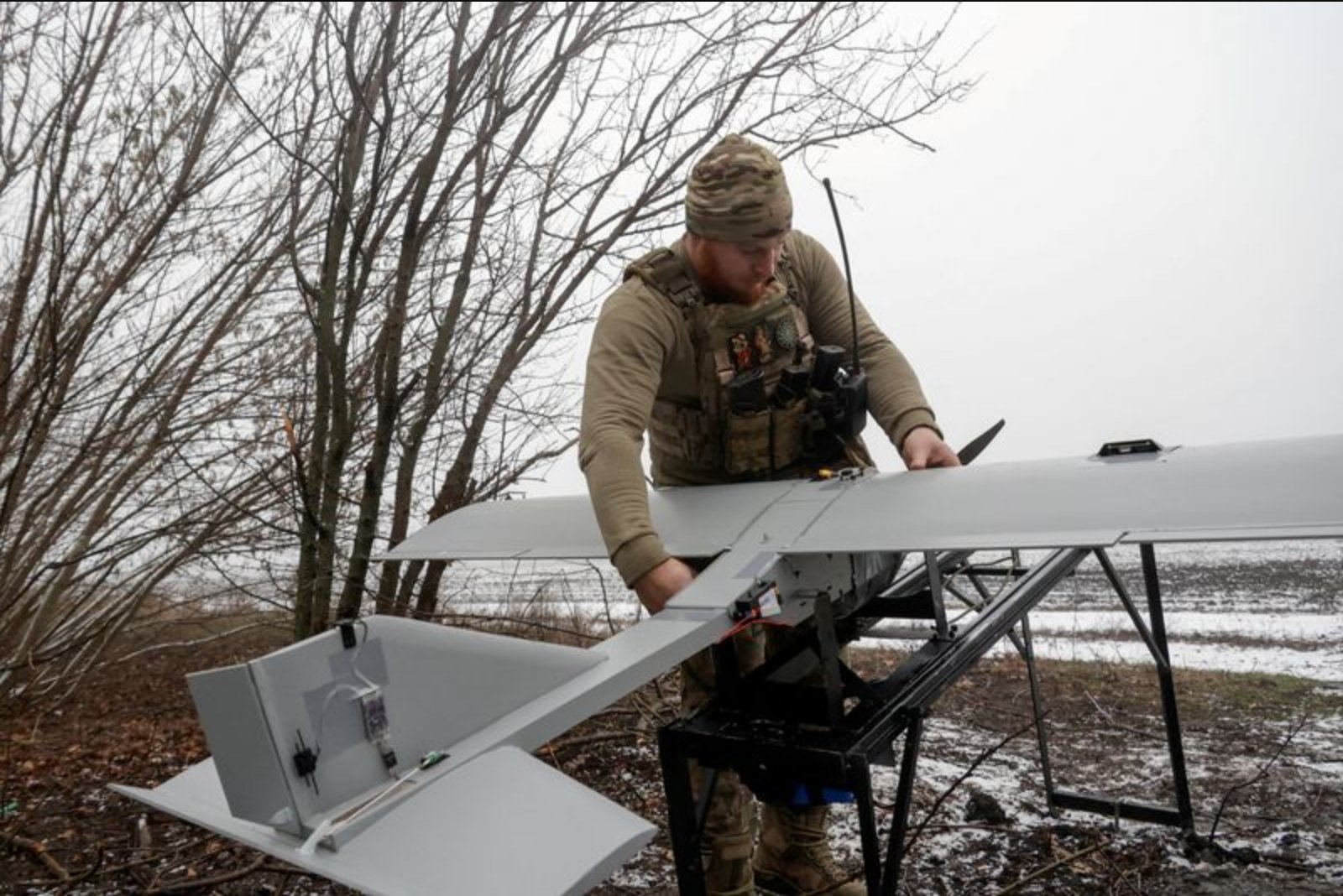
Europe's five largest defence spenders - France, Germany, Italy, Poland and Britain - have committed to a cooperative programme aimed at expanding military drone capabilities and procurement. A document and a Polish defence ministry source indicate the group intends to work together on autonomous systems as part of a broader push to boost the European defence industry.
The ministers, meeting as the European Group of Five Defence Ministers in Krakow, Poland, agreed that the conflict in Ukraine has demonstrated the operational value of autonomous interceptor drones as a less costly alternative to traditional air-defence missiles. Allies supportive of Kyiv's experience are seeking to adapt lessons learned into their own capabilities.
The ministers' statement - described as still subject to change - outlines support for a significant increase in the production capacity of the European defence industrial base. It also welcomes the EU's commitment to offer member states greater fiscal flexibility for defence spending and to create lending instruments aimed at supporting such efforts. At the same time, the statement underscores that the EU's role should be to support defence capabilities that remain primarily a national responsibility.
In addition to industrial measures, the ministers pledged coordinated action within NATO and the EU to counter Russian hybrid threats and reaffirmed continued political and material support for Ukraine alongside efforts to achieve peace.
As part of the package, the ministers agreed to launch the Low-Cost Effectors and Autonomous Platforms (LEAP) initiative. The stated purpose of LEAP is to deepen cooperation on the development and procurement of low-cost effectors and autonomous platforms to deliver military effect.
For clarity, the statement defines "effectors" as the parts of a system that create a physical impact, and "autonomous platforms" as unmanned systems capable of independent decision-making. The initiative aims to combine procurement and development efforts across participating countries to scale production and deployment of such systems.
The meeting took place amid heightened European concern about the long-term commitments of external allies to continental defence, prompting national leaders to seek greater self-reliance in capability development and industrial output. The ministers' text links industrial expansion and fiscal tools to the broader objective of ensuring European armed forces can field cost-effective, modern defences.
Context and next steps
The ministers' agreement to launch LEAP formalises intent but leaves scope for changes to the statement. The initiative is presented as a cooperative measure within existing NATO and EU frameworks rather than a transfer of primary defence responsibility to supranational institutions.