
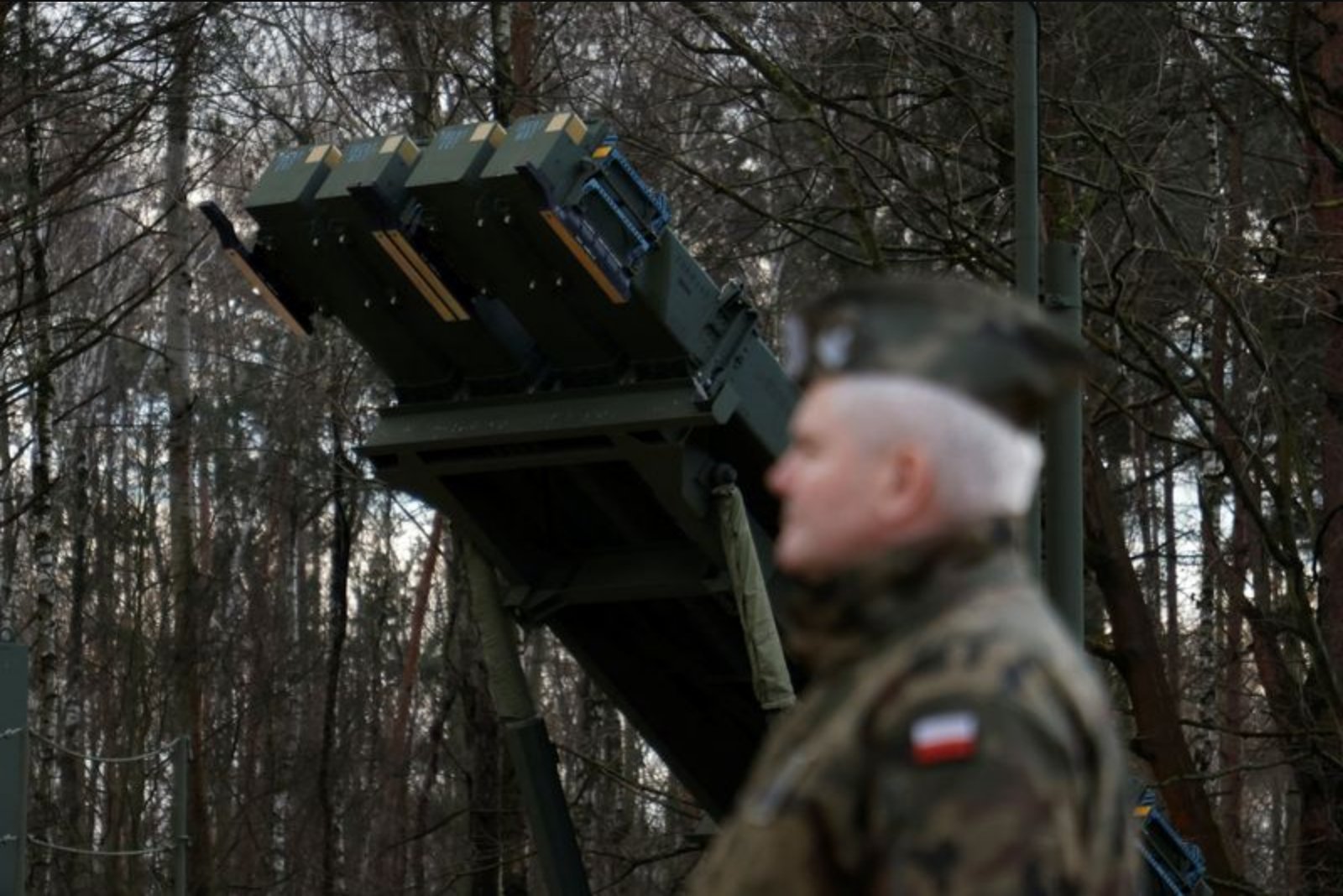
Europe has emerged as the world's biggest recipient of arms in the five-year period ending in 2025, according to data released by the Stockholm International Peace Research Institute (SIPRI). Governments across the continent sharply increased purchases after perceiving a heightened threat from Russia and growing doubts about the reliability of U.S. security guarantees.
SIPRI's data show that European countries more than trebled their arms imports in 2021-25 compared with 2016-2020. Much of that additional hardware was intended to arm Ukraine in its defence against the Russian invasion and to rebuild national armed forces that had been under-resourced for decades.
"The sharp increase in arms flows to European states pushed global arms transfers up almost 10 per cent," said Mathew George, Director of the SIPRI Arms Transfers Programme. The institute's report indicates Europe now accounts for 33% of global arms imports, up from 12% in the prior five-year span.
Despite efforts to expand local production capacity, European buyers continued to rely heavily on U.S. systems. Purchases of American-made platforms were particularly notable for combat aircraft and long-range air-defence systems, reflecting priorities in both replenishing stocks and enhancing defensive reach.
By region, the Middle East saw a 13% decline in arms imports. SIPRI senior researcher Pieter Wezeman noted that the reduction largely reflects very large Saudi orders placed in the earlier period that were still in the process of being incorporated. Nevertheless, Saudi Arabia and Qatar remained among the four largest individual national buyers during 2021-25.
Wezeman also pointed out that, even before the latest U.S. and Israeli attacks on Iran, states in the Middle East had placed substantial new orders that are not yet reflected in delivery figures. He suggested that the recent conflict is likely to further increase procurement, particularly of anti-missile and air-defence systems.
"They will first replace what they have used, but also that they are going to look at buying more equipment to protect themselves even better than they can do now," Wezeman said.
On the supply side, the United States expanded its share of global arms exports to 42% from 36%, consolidating its leading supplier role. France ranked as the second-largest exporter with 9.8% of global exports. Russia's export share fell sharply to 6.8% from 21% following its 2022 invasion of Ukraine.
Collectively, European suppliers accounted for 28% of global arms exports - a figure roughly four times Russia's export share and about five times that of China, according to SIPRI's compilation.
The SIPRI data portray a reordering of global arms flows driven by conflict-related demand in Europe and evolving procurement patterns elsewhere. The report highlights both shifting import concentrations and supplier advantages in a market shaped by recent geopolitical developments.