
European capitals have rebuffed a U.S. appeal for direct participation in military action against Iran, with senior officials saying they will not be drawn into a conflict whose aims appear undefined and for which they were not consulted. German Chancellor Friedrich Merz was stark in his condemnation of the way the campaign has been pursued, and made clear that Berlin will not commit military assets to ensure freedom of navigation in the Strait of Hormuz while hostilities continue.
Merz told lawmakers he accepted the principle that Iran should not be permitted to threaten its neighbours, but voiced doubts about the rationale and planning behind the U.S.-Israeli operation. "To this day, there is no convincing plan for how this operation could succeed. Washington has not consulted us and did not say European assistance was necessary," he said, and added that German policy was therefore to avoid military involvement in guaranteeing navigation through the strait for the duration of the conflict.
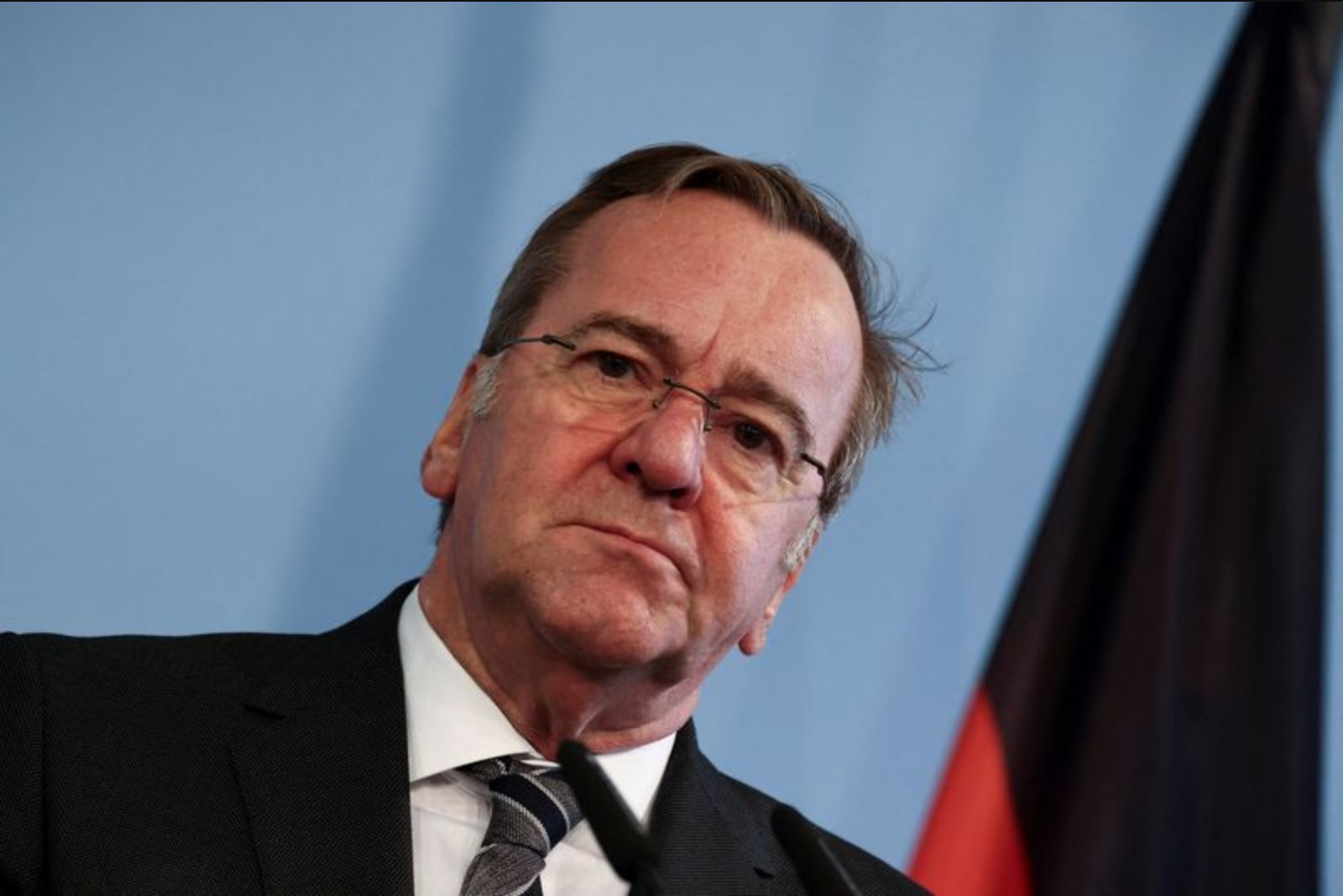
Germany's defence minister, Boris Pistorius, put the position succinctly: "This is not our war, we have not started it." France offered similar language, with President Emmanuel Macron stating, "We are not party to the conflict." That stance is shared across a range of European governments, reflecting an unwillingness to be pulled into an unpredictable confrontation whose objectives remain unclear to them.
Public opinion in several countries has reinforced leaders' caution. In Britain, a YouGov poll showed 49% of respondents opposed the attacks while 28% supported them, complicating political responses in Westminster. The initial backing from some parties has been tempered by the public mood: figures on the populist and conservative right have scaled back early expressions of support for the U.S. and Israeli strikes, and some have criticized the White House's tone toward British political leaders.
In Spain, the government forcefully rejected the strikes and dismissed threats of trade penalties if Madrid refused to host jointly operated bases for the campaign. Deputy Prime Minister Maria Jose Montero said Spain would not be "anybody's vassal," would not tolerate threats and would defend national values. A poll by Spanish firm 40db found 68% of Spaniards opposed the war.
German sentiment is similarly resistant. An ARD DeutschlandTrend survey reported 58% of Germans opposed the war, while 25% supported it. That opposition has cut across political lines, with criticism even coming from the far-right Alternative for Germany party. Its co-leader, Tino Chrupalla, observed that the president who began as a "peace president" could end up being seen as a "war president." The political pressure at home has clearly influenced European leaders' reluctance to provide military support.
European officials also voiced concerns about coordination and the clarity of U.S. objectives. One European official, speaking on condition of anonymity because of sensitivities, said American war aims were not clearly defined and likely differed from Israel's objectives, particularly on the question of regime change. That disconnect has deepened reluctance in European capitals to join an operation they were not invited to shape.
Another point of tension has been U.S. policy on energy. Several European leaders criticized what they regarded as an unexpected U.S. decision to loosen oil sanctions on Russia in an effort to cool rising global prices. They said the move had blindsided allies and added to the sense that Washington has acted unilaterally at times when coordination was needed.
Despite refusing direct combat roles, European states have moved to address the security threat to international shipping caused by disruptions in and around the Strait of Hormuz. Britain has said it is working with partners on a plan to reopen the strait, which carries about 20% of the world’s oil, while France has been attempting to assemble a coalition to secure the waterway once conditions stabilise - explicitly envisaging such a mission without an American role.
French consultations in recent days have included other European states, several Asian countries including India, and Gulf Arab partners. Paris says any maritime security effort would be phased, beginning with political and technical discussions and involving the shipping industry, insurers and other commercial stakeholders before deploying warships to escort oil tankers and commercial vessels. President Macron cautioned that this work would require a de-escalation with Iran and careful planning involving many civilian and military actors.
Such a European-led approach would necessitate detailed talks on operational arrangements - a process Paris describes as both political and technical. Discussions would need to account for the maritime industry’s needs and the concerns of insurers, reflecting the economic as well as strategic dimensions of protecting sea lanes. European leaders have indicated they prefer a cautious, deliberative path rather than immediate military engagement.
Across capitals there is a clear effort to balance unity with caution. Officials say they are trying to manage the unpredictable tenor of U.S. leadership while preserving Transatlantic relations on issues ranging from the war in Ukraine to trade disputes and alliance commitments. The possibility that fractious bilateral exchanges could spill into larger disagreements has led European leaders to emphasise collective calm and self-reliance.
EU foreign policy chief Kaja Kallas summarised the mood in Brussels, saying the bloc had become more composed because it now expects unpredictability and has learnt to respond by staying focused and maintaining a cool head. That posture reflects a strategic calculation that the risks of active participation in the current campaign outweigh the potential benefits, given the unclear objectives and the domestic political costs of joining a military operation with no endgame in view.
In practical terms, Europe’s choice to remain on the sidelines militarily while exploring independent measures to protect shipping and limit economic disruption underscores the tension between alliance solidarity and national political constraints. Governments are seeking to preserve relationships with the United States while ensuring their policies align with domestic opinion and strategic assessments of what can realistically be achieved.
For now, European capitals appear focused on contingency planning, multilateral technical work and diplomatic engagement to reduce risks to commerce and energy supplies, rather than committing forces to a campaign they were not asked to shape. That posture will be watched closely in Washington and in capitals across the Middle East as policymakers evaluate whether non-U.S. measures can help stabilise critical maritime routes without escalating the conflict.