
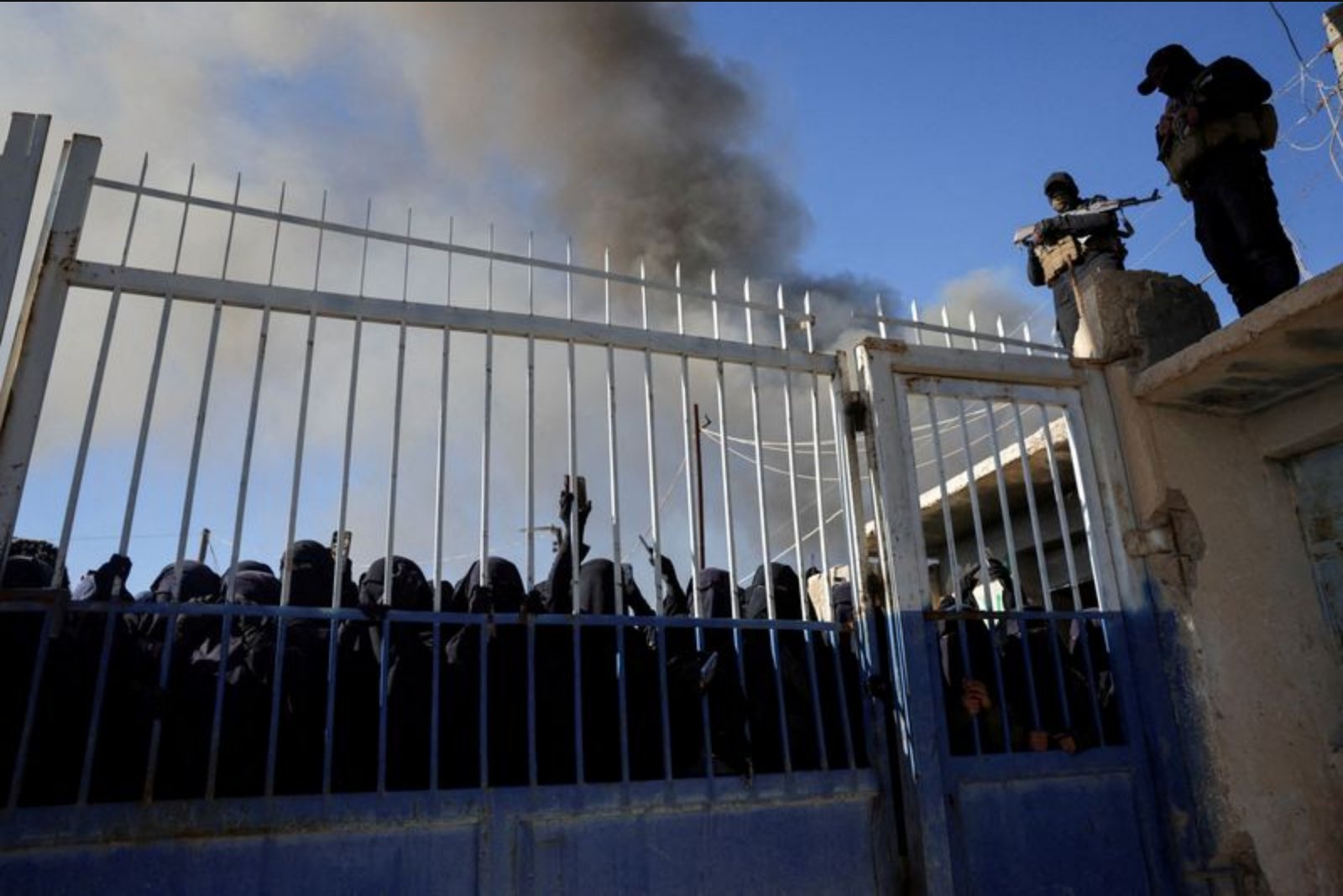
An internal EU memorandum dated February 23, distributed from the Cyprus presidency of the Council of the European Union to member states, has expressed security concerns about the recent escape of thousands from the al-Hol camp in northeastern Syria and the implications for militant recruitment.
The memo states that the exact status of third-country nationals who fled al-Hol remains unclear and reports indicate that a majority of the camp’s population managed to escape. "This raises concerns about how terrorist groups might seek to capitalise on the current situation to increase recruitment efforts among escapees," the document says.
Camp background and recent change of control
Al-Hol, located near the Iraqi border, was one of the principal camps holding relatives of suspected Islamic State fighters detained during the U.S.-backed campaign against the jihadist group in Syria. Control of the camp reportedly changed hands in January, when Syrian government forces under President Ahmed al-Sharaa drove the Kurdish-led Syrian Democratic Forces from the area. The SDF had been responsible for guarding the site for several years.
The memo records that the day before the government takeover the camp’s population stood at 23,407 people, including 6,280 foreigners from more than 40 nationalities. It adds that the chaotic takeover caused a breakdown in security and services at al-Hol, precipitating the escape of a significant portion of the camp’s residents.
Transfers of detainees and unfinished targets
The U.S. military said on February 13 that it had completed a mission transferring 5,700 adult male Islamic State fighters from prisons in Syria to Iraq. Earlier statements had indicated that as many as 7,000 inmates could eventually be moved, and the EU memo noted that the initial target had not been met.
Security environment and competing accounts
In a section titled "Security concerns stemming from the evolving situation in northeast Syria", the memo states that the "chaotic takeover led to the collapse of security and services in the al-Hol camp, triggering the escape of a significant portion of its population". The document also says the U.N. refugee agency in Syria and the Syrian government "have confirmed that an uncontrolled exodus has occurred over the past few weeks".
Damascus has accused the SDF of withdrawing from al-Hol on January 20 without coordination. The SDF, for its part, has said its forces were "compelled" to withdraw from the camp to areas surrounding cities it described as being under threat.
A Syrian government security source told local reporters last week that security authorities, "working in cooperation with international partners, had established a unit to 'pursue those who are wanted'".
Capacity and conditions at camps
The EU memo assesses Damascus’ capacity to manage these facilities as "limited and facing significant operational challenges". It also states that the government’s previously stated intention to gradually phase out al-Hol camp "has been overtaken by recent events, which raise grave security concerns".
According to the memo, al-Hol and the Roj camp together host about 25,000 people, primarily women and children, "with many of these being highly radicalised and living in degrading humanitarian and security conditions".
Situation at Roj and nationality issues
Roj camp remains under SDF control for now. The SDF last week released 34 Australian nationals from Roj, only for them to return later. The Australian government has ruled out assisting families of Islamic State militants to return home. Roj is also the camp where British-born Shamima Begum is located.
The EU memo adds there is "reason for concern regarding the possible escape of families" from Roj once the Syrian government takes control.
Unanswered requests for comment
Syria’s Information Ministry and the U.S. Central Command did not immediately respond to requests for comment, according to the memo.
EU officials who received the memorandum were notified of the reported exodus and the potential security implications for member states and regional partners. The document frames the situation as a rapidly evolving security challenge with multiple operational and humanitarian dimensions.
The memo underscores the uncertainty around the whereabouts and status of many escapees, the operational limits faced by Syrian authorities in managing large detention and displacement sites, and the perceived risk that militant organisations may seek to exploit the disorder to expand recruitment among displaced or escaped populations.