
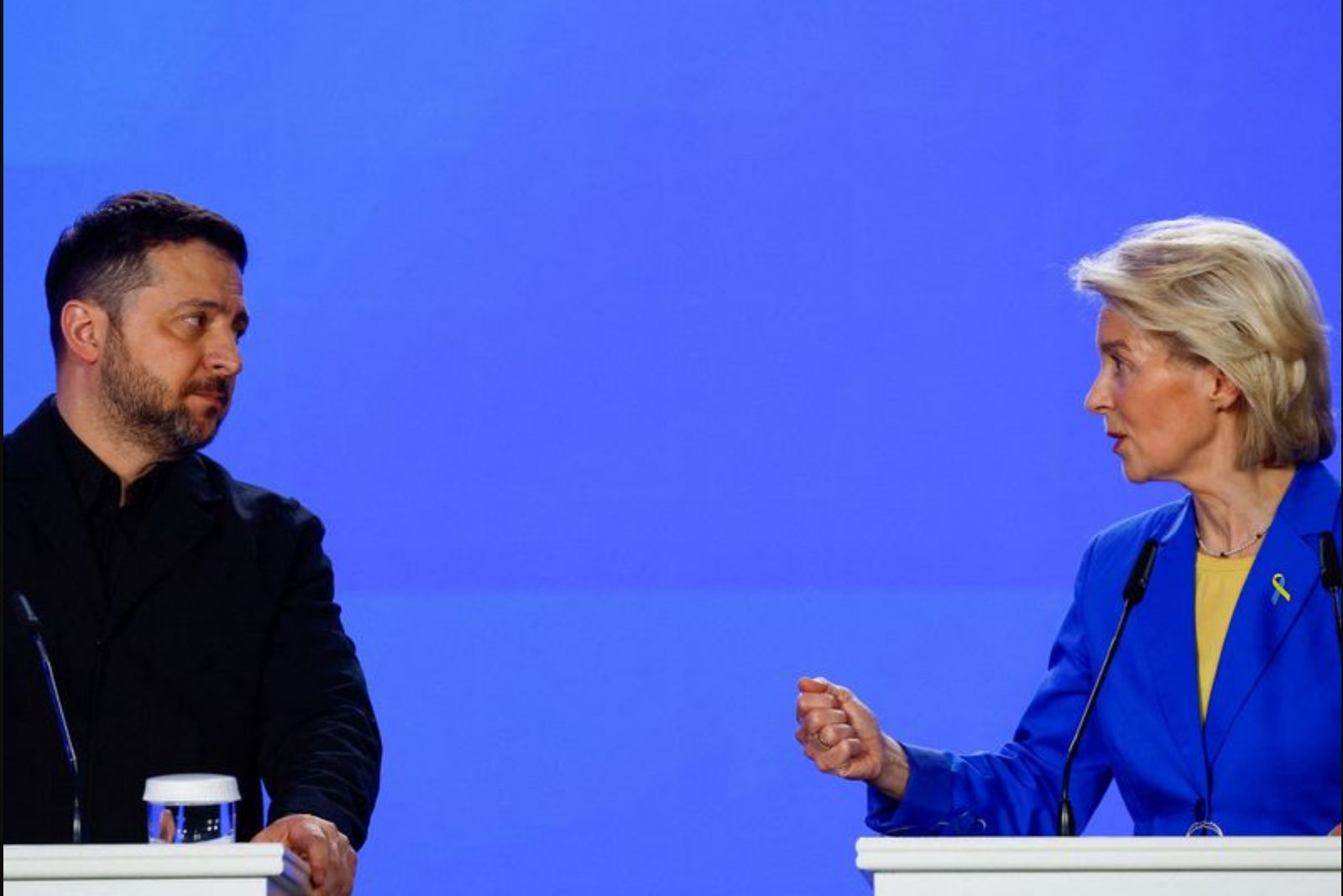
Ukraine’s push for a firm, expedited trajectory into the European Union as a component of a negotiated end to the war with Russia faces substantial resistance from capitals across the bloc. Kyiv’s stated aim of a 2027 membership date, put forward by President Volodymyr Zelenskiy as part of a settlement that would anchor Ukraine in the EU, has raised concern among several member governments about the potential consequences of shortening the traditional accession timeline.
Backers of a fast-track route argue that a clear membership pathway could be central to convincing the Ukrainian public to accept a peace arrangement, particularly if the country ends up without control over all territories or outside NATO membership. Those outcomes are widely expected, according to analysts cited by diplomats and officials, and a formal EU commitment would provide a tangible signal of long-term security and economic integration.
Yet many EU governments, including influential members such as France and Germany, have expressed private scepticism about fundamentally altering the accession framework. Several European diplomats and officials interviewed for this report described unease across capitals about a reform that would allow a candidate to join before completing the full slate of membership requirements.
Among the practical concerns is the fear that an early accession promise could dull the impetus for continued reforms inside Ukraine. Officials noted the risk that Kyiv - along with other aspiring members - might slow or abandon necessary steps such as anti-corruption measures if full membership had already been granted.
Ukrainian Deputy Prime Minister and the government’s chief EU negotiator, Taras Kachka, has signalled Kyiv’s willingness to address such concerns. He proposed several safeguards designed to reassure sceptical members, including a robust monitoring mechanism to verify adherence to democratic standards and a transition phase delaying EU farm subsidies until benchmarks are met. Kachka has also stressed that a political commitment to a membership date would play a crucial role. "This is necessary for the peace process, for the establishing of long-lasting and just peace in Europe," he said.
How the current accession route works
The established process for joining the EU is lengthy and technically demanding, requiring years of negotiations, legal alignment and institutional reform. Accession is structured around chapters and clusters of policy areas, and progress at each stage requires the unanimous consent of all existing member states. That unanimity requirement has already slowed Ukraine’s path: Hungary has used its position to block progress early in the process.
Within the Commission, proposals have been discussed to alter that sequence. European Commission President Ursula von der Leyen has privately advanced a concept that would allow a country to be admitted after it meets certain baseline conditions but before it has fully implemented all membership criteria. Under that model, a newly admitted state could face restrictions on access to EU funds and on decision-making rights until it completes the remaining benchmarks.
Such a recalibration could, in theory, enable faster entry for Ukraine and other aspirants like Moldova, Montenegro and Albania. Yet diplomats caution that even with structural change, the target of January 1, 2027 touted by Kyiv remains unrealistic. Any accession would still require the ratification of all 27 member states, a political hurdle that is not easily overcome.
Political realities inside member states
Officials and analysts say the domestic political environment across Europe is a major restraint on bold moves to accelerate accession. The rise in support for populist and anti-enlargement parties in several capitals makes governments reluctant to be seen as fast-tracking a sensitive process before they build public consent. "The growing support for populist and anti-enlargement parties in several capitals makes governments cautious about being seen to accelerate a process they have not yet built public consent for," said Anastasia Pociumban, a research fellow at the German Council on Foreign Relations.
Some EU officials are blunt about Kyiv’s readiness. "The concept of reverse enlargement is dead," said one EU diplomat, referring to the idea of admitting a country before it has completed the full acquis. "There is also no support for giving a concrete accession date." A Western European official was similarly stark: "Ukraine is just not ready and has rampant corruption."
Von der Leyen has sought to manage expectations publicly in talks with Kyiv, telling President Zelenskiy that "dates by themselves are not possible" even while acknowledging reforms that Ukraine has pursued under wartime conditions.
What comes next
Despite the resistance among member governments to rapid accession, the Commission is expected to continue seeking ways to deepen Kyiv’s integration into the EU over the coming years. One school of thought favours a phased approach in which aspiring members are gradually incorporated into parts of the single market and into EU programmes ahead of full membership.
Corina Stratulat, associate director at the European Policy Centre, summed up that perspective: "I think a full accession within the next few years remains unlikely. What seems more likely to happen instead is accelerated integration - single market access, energy, digital, transport - phased participation in EU programmes and policies." This incremental model would allow Kyiv to participate increasingly in economic and regulatory frameworks while leaving formal accession for a later date, if and when political and technical conditions are met.
For Kyiv, the tension between the political value of a fixed membership date and member states’ caution creates a difficult negotiating environment. The Ukrainian government is proposing monitoring and transition arrangements designed to mitigate EU concerns, but capitals remain hesitant to accept a timetable that could be perceived domestically as risky or premature.
As the EU and Kyiv continue to negotiate the shape of future relations, decisions about accession architecture will have implications beyond diplomacy. They will affect sectors such as agriculture, where farm subsidies are a central question; energy, which figures in integration proposals; digital and transport industries, which are cited as likely candidates for phased access; and defence and security, given the Commission’s argument that membership would carry military implications if Moscow were to attack an EU member.
The debate thus remains active within EU institutions and member governments: Kyiv presses for a clear political anchor to underpin any peace deal, while many capitals insist that speed must not undercut the standards and political consensus that underpin the union.