
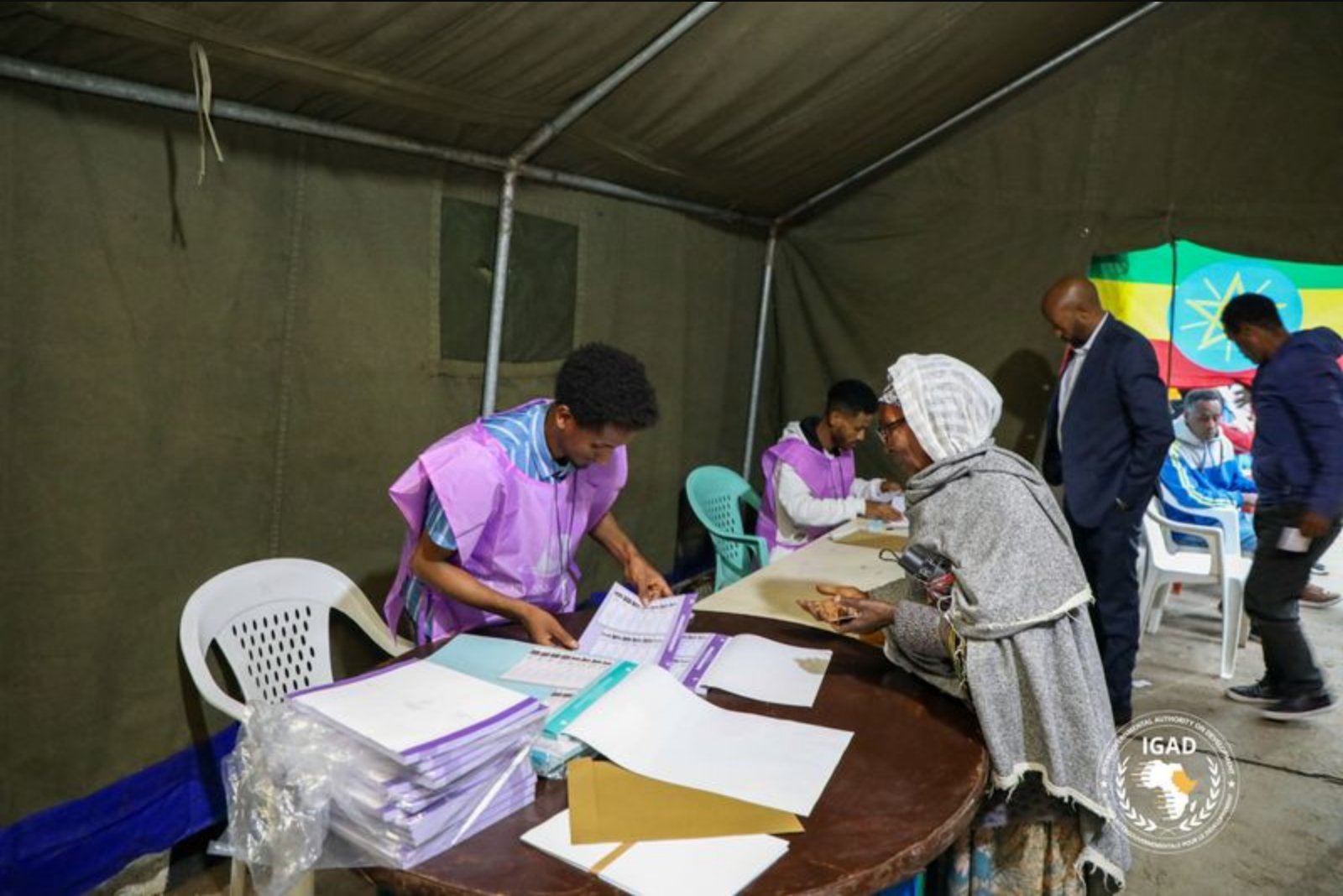
Voting opened in Ethiopia on June 1 for parliamentary and regional contests that many observers expect will hand a substantial win to Prime Minister Abiy Ahmed's ruling Prosperity Party. More than 50 million people are registered to take part in the polls, though significant portions of the country face disruptions that will limit participation.
No balloting will be held in the northern Tigray region, where organisers cited "unfavourable conditions" in the aftermath of a two-year civil war and amid continuing political turmoil. Officials also reported that at least eight of Amhara's 138 constituencies will not hold votes because of insecurity.
Abiy cast his ballot in his hometown of Beshasha in the Oromiya region, using the campaign as an opportunity to underscore his view that the electorate supports his administration's approach. "The Ethiopian people have demonstrated that they do not need anyone to advise or lecture them in order to build their state and establish a democratic system," he said. "These next five years will be a period where we see many historic turning points for Ethiopia." His party has campaigned on the government's record on the economy, arguing that recent gains will continue.
The head of the African Union Election Observation Mission, former Kenyan President Uhuru Kenyatta, described voting as progressing smoothly and expressed hope that the process would be orderly. "Ethiopia being the capital of this great continent, a success here resounds across the continent, so we are wishing the people of Ethiopia well, and we hope and trust that the process shall be in order," Kenyatta said.
Political backdrop
Abiy rose to power in 2018 after mass protests prompted the end of the long-dominant EPRDF coalition. His Prosperity Party previously secured 410 of 484 parliamentary seats in elections held in 2021, and analysts anticipate a commanding performance in the current vote given opposition fragmentation.
Prosperity Party candidates have highlighted improvements in food security and strong economic growth, with officials projecting a growth rate that will top 10% in 2026. Ethiopia is Africa's second-most populous country, with an estimated population of 135 million and nearly half under the age of 18.
Security challenges and regional insurgencies
Despite the ruling party's political strength, the government faces armed challenges in the country's two largest regions. In Oromiya, fighting between government forces and the Oromo Liberation Army separatist group has resulted in hundreds of deaths in recent years. In neighbouring Amhara, the Fano militia has captured large swathes of rural territory since 2023, contributing to decisions to suspend voting in several constituencies.
Although a peace accord in 2022 formally ended the civil war in Tigray that researchers say caused hundreds of thousands of deaths, political developments there have raised fresh concerns. Officials and analysts warned that a recent move by the main political party in Tigray to reassert control over the region's administration could increase the risk of renewed unrest.
Electoral dynamics and opposition stance
The Prosperity Party is expected to win decisively against an opposition that observers say remains divided and weakened by internal disputes. Results from the elections are expected by June 11.
Opposition parties have accused the federal government of using arrests and legal impediments to hinder their activities, charges the government denies. Critics and human rights advocates also contend that freedoms loosened when Abiy first took office have contracted in recent years, pointing to detentions of journalists, restrictions on civil society groups, and military operations they say have involved abuses. The government has rejected allegations of systematic human rights abuses and maintains that its actions aim to protect national security.
Foreign policy note
Ties between Ethiopia and Eritrea, once the focus of a rapprochement recognized with international attention, have become strained. Abiy has repeatedly asserted that access to the sea is an essential concern for landlocked Ethiopia, language that Eritrea has regarded warily. Abiy has said he intends to pursue any claim to sea access through dialogue, while describing it as an "existential" issue for Ethiopia.
Outlook
The vote is likely to consolidate the Prosperity Party's parliamentary dominance, but the absence of polling in parts of Tigray and Amhara and the presence of armed groups in Oromiya and Amhara leave the electoral process and the post-election period clouded by security and political uncertainty. How the government responds to opposition complaints and regional political moves, particularly in Tigray, will be central to the country's trajectory in the coming months.