
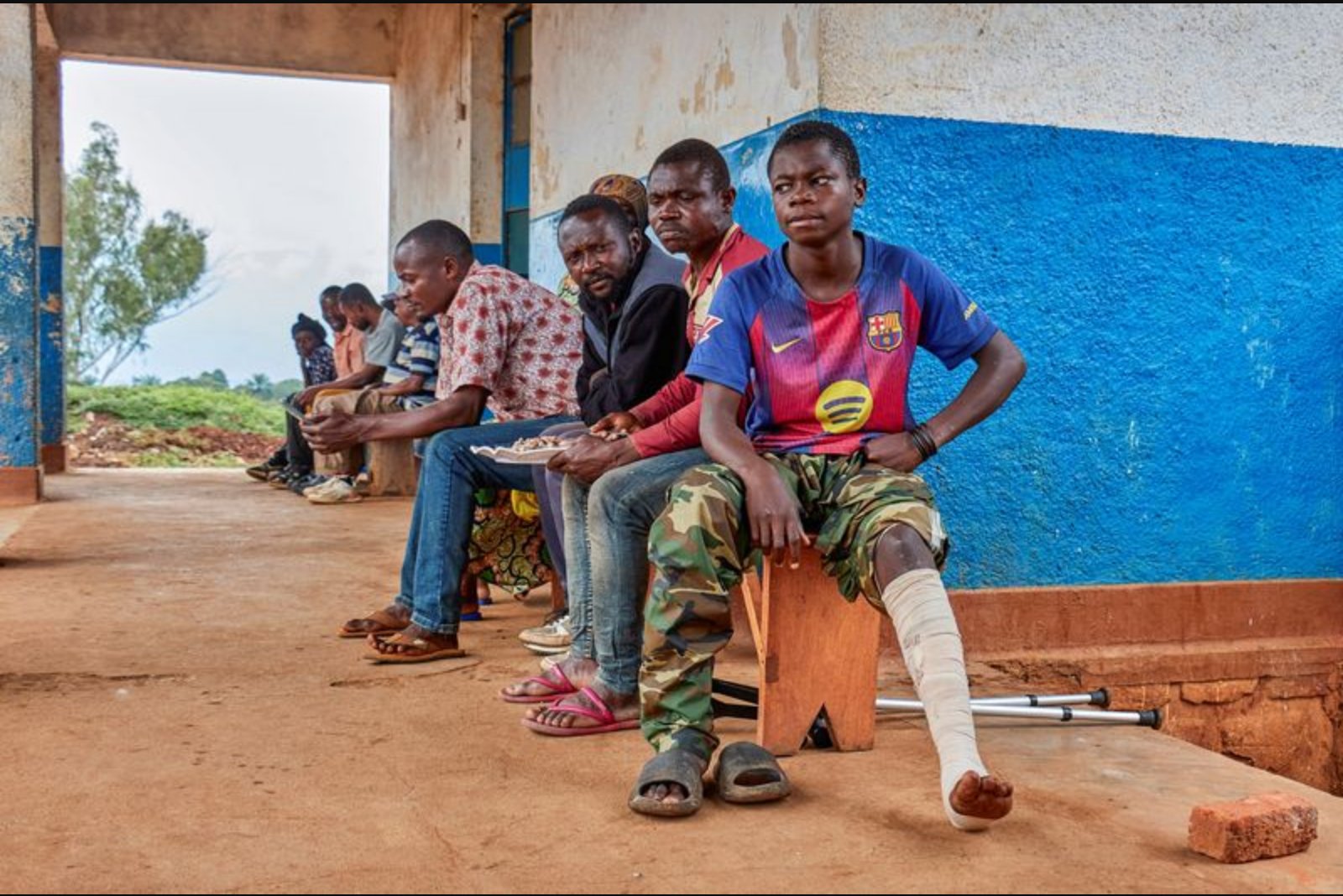
Soldiers and medical staff in the eastern Congolese town of Fizi are confronting a mounting humanitarian and security crisis as combat in the highland mountains north of town intensifies. Nurses at the general hospital rushed a wounded soldier into surgery after he arrived slumped on the back of a motorbike, having been shot in both legs on the front line. The injury was one of many that have arrived at the facility in recent weeks as fighting between the army and rebel forces has surged.
The combat has largely taken place away from urban centres and, according to observers, has attracted less attention from international mediators. That relative isolation has allowed the clash of forces to grow in scope, drawing in more participants and introducing challenges for the Trump administration's efforts to broker peace and to secure prospects for Western minerals investments in the region.
Earlier this week the AFC/M23 rebel group cited ongoing clashes as the reason for a remote drone strike on Kisangani airport, located hundreds of kilometres from the front lines. The rebels said the strike was retaliation for government aerial attacks on villages in South Kivu. Congo's army has not issued a comment on the drone strike or on the rebels' assertions that it attacked villages.
Hospitals in the area are feeling the strain. The general hospital in Fizi, which receives support from the International Committee of the Red Cross, was treating 115 wounded patients when a visiting journalist saw the facility at the end of January. That is more than four times its 25-bed capacity. "Most of our patients have injuries in their upper or lower limbs, they often arrive with wounds that are already infected because of limited facilities on the frontline," said Richard Lwandja, a surgeon at the hospital.
The recent wave of violence follows a period of rapid rebel advances. AFC/M23 conducted a lightning advance early last year and in February 2025 seized Bukavu, the capital of South Kivu. The group then moved south again in December and briefly took Uvira on the border with Burundi. The rebels withdrew after a few days under pressure from the United States, which had brokered a peace accord between Congo and Rwanda in June.
International actors including the United Nations and Western governments have said Rwanda backs AFC/M23 and exercises command and control over the group, a claim Rwanda denies. Meanwhile, the focus of the latest clashes has been the highlands around Minembwe in Fizi territory, where the Congolese army has launched an operation against AFC/M23 and its local ally, the Twirwaneho. The Twirwaneho is a group formed by Congolese Tutsi known as the Banyamulenge.
"The highlands around Uvira are highly strategic: whoever controls them has access to major towns in the lowlands," said Regan Miviri, an analyst at the Ebuteli research institute in Kinshasa. Because the region is so remote, Miviri added, "the fighting there draws less attention and less diplomatic pressure." The government has signalled its priority is to secure Uvira and to prevent the conflict from spreading toward Tanganyika and Katanga, regions that include some of Congo's most important mining centres.
Both sides present opposing narratives for their actions in South Kivu's highlands. AFC/M23 frames its presence as an effort to protect the Banyamulenge, while Kinshasa accuses the coalition of exploiting long-standing local tensions over land, cattle and political representation. The escalation coincides with a diplomatic development: Congo and AFC/M23 agreed in Doha this week to activate a Qatari-mediated ceasefire monitoring mechanism. A United Nations team is expected to deploy to Uvira in the coming days.
At Fizi's hospital, staff say the inflow of wounded shows no sign of slowing and warn that resources are being stretched to the limit. "Roads are often impassable and supplies run out," said Robert Zoubda, a Red Cross nurse. "If this continues, we’ll have to install more tents." Medical personnel and supporting organizations are grappling with the logistical realities of treating large numbers of patients far from the front lines, while diplomatic efforts attempt to keep pace with shifting combat dynamics.