
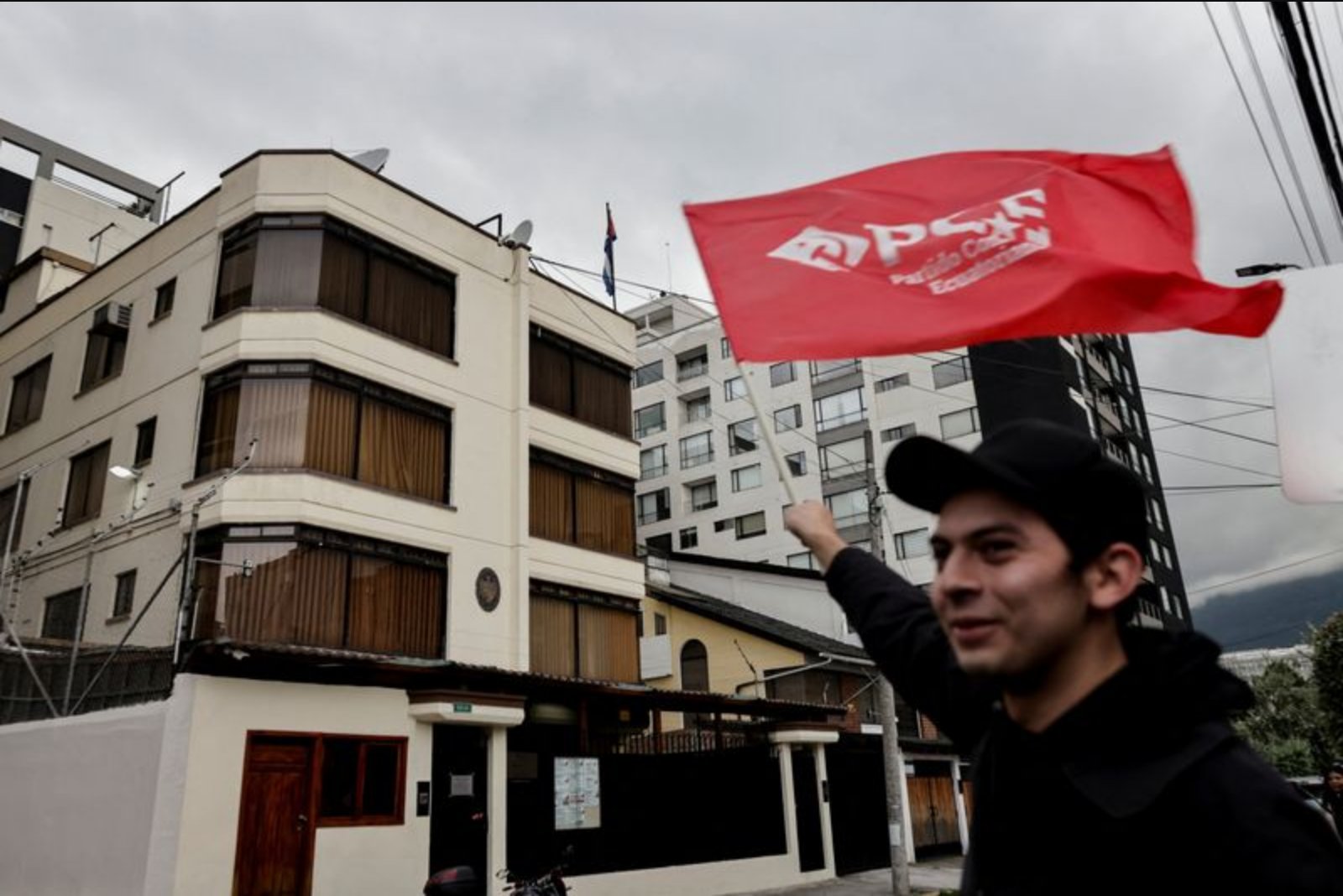
QUITO, March 4 - Ecuador's government declared Cuban Ambassador Basilio Gutierrez and his diplomatic personnel "persona non grata," the foreign ministry announced on Wednesday, and ordered them to depart the country within 48 hours.
The ministry cited Article 9 of the Vienna Convention on Diplomatic Relations in its notification. Authorities did not provide an explanation for the decision in the statement.
In Havana, Cuba's foreign ministry denounced the move, describing it as "arbitrary and unjustified" and calling it an "unfriendly and unprecedented act" that it said undermines historic ties between the two nations. Cuba's statement additionally suggested the expulsion could be connected to U.S. pressure ahead of an upcoming weekend summit in Miami that will bring together regional representatives.
Witnesses reported seeing Ecuadorean police and military personnel patrolling outside the Cuban embassy in Quito following the announcement. The government in Quito did not clarify whether the declaration of persona non grata signals a formal break in diplomatic relations with Cuba.
The sequence of public statements and visible security activity around the embassy marks a clear rupture in normal diplomatic procedures, at least on a public and operational level. Beyond the formal invocation of the Vienna Convention, official commentary from Ecuador about motives or next steps was not provided.
For its part, Cuba framed the action as harmful to bilateral ties and described the measure in strong terms. Havana also linked the timing of the expulsion to regional diplomatic activity, suggesting external influence in the decision, though the Ecuadorian government did not address that allegation in its public notice.
The immediate practical effect of the declaration is the requirement that the ambassador and his staff leave Ecuador within the 48-hour window set by the ministry. The longer-term consequences for formal diplomatic engagement between the two countries remain unspecified by Ecuadorian officials.
Summary
- Ecuador declared Cuban Ambassador Basilio Gutierrez and his diplomatic staff persona non grata and ordered them to leave within 48 hours.
- The foreign ministry cited Article 9 of the Vienna Convention on Diplomatic Relations but did not explain the reasons for the action.
- Cuba called the move "arbitrary and unjustified" and an "unfriendly and unprecedented act," and suggested it may be linked to U.S. pressure ahead of a regional summit in Miami.
- Witnesses observed Ecuadorean police and military personnel outside the Cuban embassy in Quito. Ecuador has not stated whether the move ends formal diplomatic relations.
Key points
- The diplomatic declaration compels the Cuban ambassador and his staff to depart Ecuador within a 48-hour timeframe.
- Cuba publicly rejected the expulsion, characterizing it as unjustified and damaging to historic bilateral ties.
- Visible security presence was reported at the Cuban embassy in Quito, while Ecuador did not confirm whether relations are fully severed.
Risks and uncertainties
- Unclear diplomatic status - Ecuador did not specify whether the action constitutes a formal break in relations, leaving the future of bilateral engagement uncertain.
- Potential strain on historic ties - Cuba described the move as undermining long-standing relations between the two countries.
- Uncertainty over motives - Ecuador did not explain the reasons for the declaration, and Havana attributed the timing to possible external pressure ahead of a regional summit.