
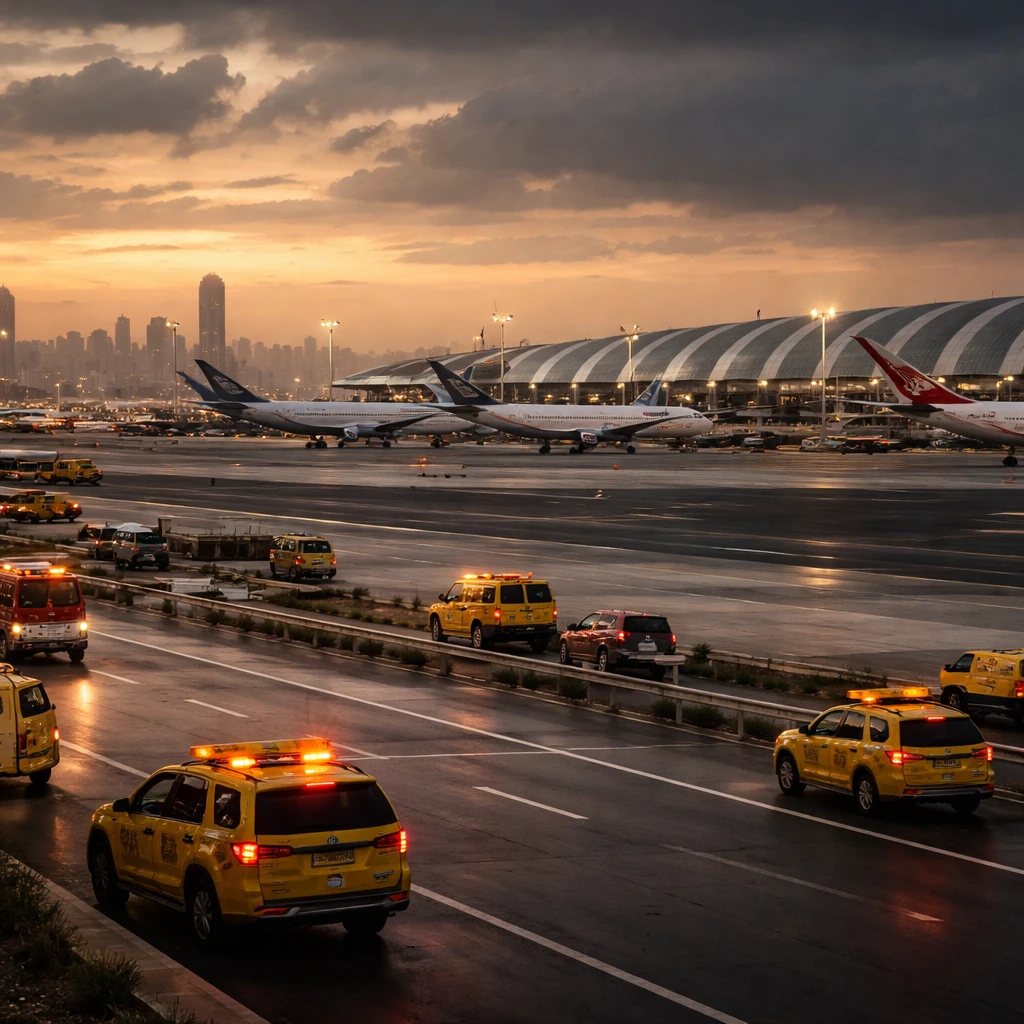
Two unmanned aerial vehicles fell near Dubai International Airport (DXB) on Wednesday, and Bahrain took precautionary action by relocating some Gulf Air passenger aircraft that were empty, along with certain cargo planes, to other airports as the Gulf aviation disruption extended into another day.
The incidents occur amid a broader wave of attacks on infrastructure across the region that has continued to impede air travel as the U.S.-Israel war against Iran entered its 12th day. Authorities and industry trackers say the fighting has produced tens of thousands of flight cancellations, reroutings and schedule alterations around the world, with much of the Middle East's airspace - including that over Qatar - effectively shut due to missile and drone threats.
DXB, the world’s busiest hub for passenger traffic, along with other Gulf airports, plays a central role in long-haul connections. The sustained disruptions represent the most severe shock to aviation since the pandemic, affecting both passenger itineraries and time-sensitive air cargo shipments.
Beyond interruptions to passenger movement, the conflict has also hit a key oil export corridor, contributing to a rise in jet fuel prices. That fuel cost pressure has been reflected in higher fares on some routes and has amplified concerns about a broader weakening in travel demand. The knock-on effects have reached outside the region: Vietnam's government warned on Wednesday that its domestic carriers may face fuel shortages as soon as next month.
Bahrain's Civil Aviation Affairs issued a statement saying several Gulf Air aircraft that were without passengers, along with some cargo airplanes, were moved to alternative airports to "ensure the continuity and efficiency of air operations" during the crisis. The agency did not elaborate on specifics and Gulf Air was not immediately available for comment.
Tracking information from FlightRadar24 indicated that over the preceding 24 hours a number of passenger jets altered course toward destinations in Saudi Arabia. Dubai's media office confirmed that two drones fell near the airport but maintained that air traffic was operating as normal. Reuters witnesses at the scene reported no visible damage to airport infrastructure, but said four people were injured in the incident.
The latest strikes represent a renewed threat after DXB sustained damage on the first day of the conflict, along with reported damage at Abu Dhabi and Kuwait international airports. Regional carriers, including Emirates, Etihad and Qatar Airways, have restarted portions of their networks but are functioning well below normal capacity levels.
Data from Flightradar24 showed that daily flights operated by the principal United Arab Emirates carriers exceeded 600 over the recent weekend, but the growth in flights stalled and then declined slightly by Tuesday, underscoring the fragile recovery in schedules amid ongoing security concerns.
As the situation evolves, airlines, airports and shippers face continued operational challenges from contested airspace, fuel price volatility and disruptions to cargo flows. The immediate priority for aviation authorities has been to maintain safety while attempting to preserve as much connectivity as possible under shifting conditions.