
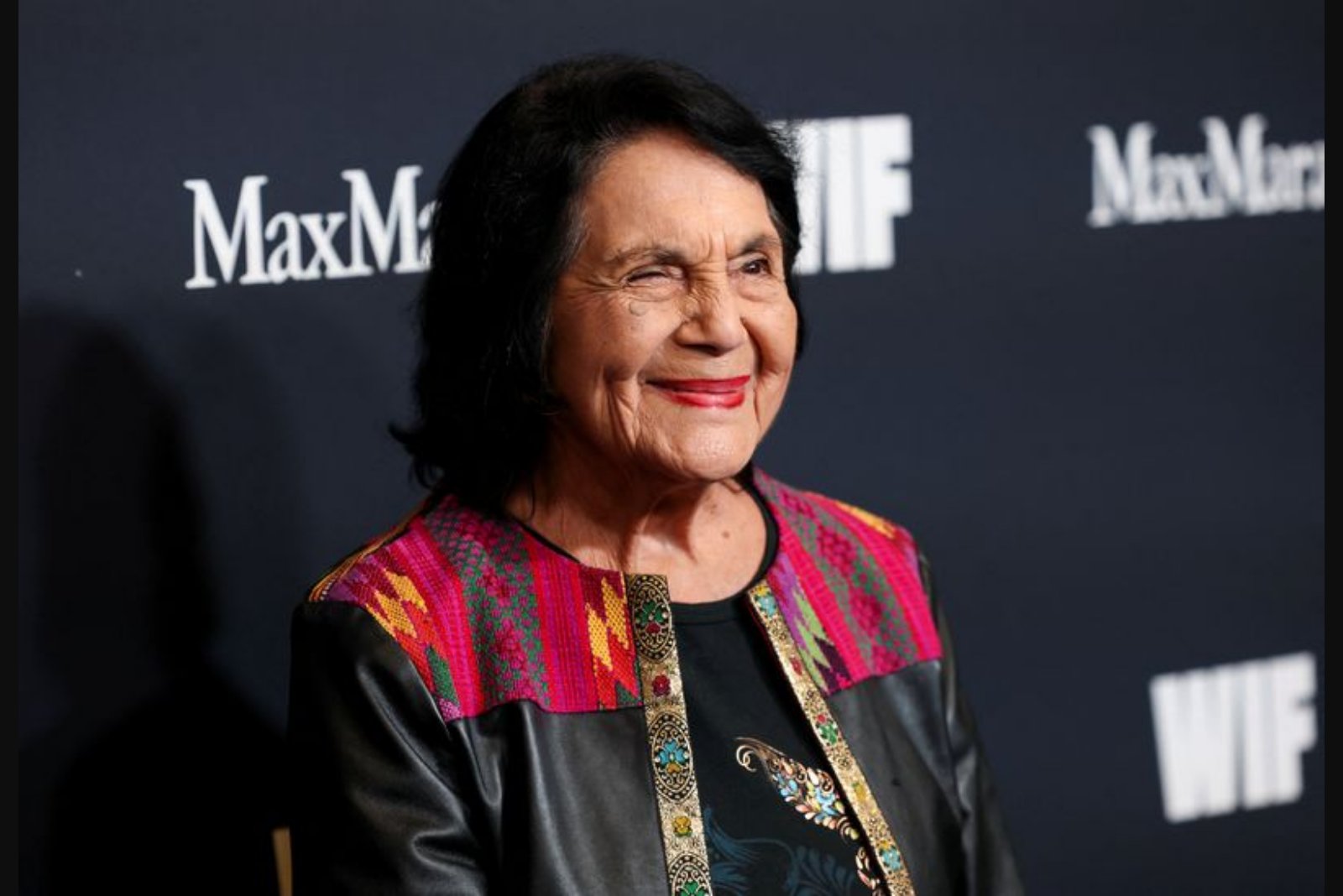
Dolores Huerta, the longtime civil rights activist and co-founder of the United Farm Workers (UFW), has accused Cesar Chavez of sexually assaulting her in the 1960s. Huerta disclosed the allegation on Wednesday, saying she was coming forward in the wake of a multi-year New York Times investigation published the same day that catalogued multiple allegations of sexual misconduct against Chavez.
The investigation included testimony from women who said Chavez molested and raped them when they were minors. Chavez, who rose to prominence as a labor organizer through boycotts and fasts aimed at securing better pay and working conditions for migrant agricultural laborers, died in 1993 at the age of 66.
In her statement, Huerta, 96, said she had kept what happened to herself for decades because she feared that "exposing the truth would hurt the farmworker movement I have spent my entire life fighting for." She characterized Chavez's conduct as inconsistent with the values of the community and movement she helped build: "Cesar’s actions do not reflect the values of our community and our movement."
Huerta said she experienced two sexual encounters with Chavez in the 1960s. She described the first as having been "manipulated and pressured" into sex and said she "didn’t feel I could say no because he was someone that I admired, my boss and the leader of the movement." According to Huerta, the second encounter was forced: she said she was compelled to have sex with him "against my will, and in an environment where I felt trapped."
Both incidents, Huerta said, resulted in pregnancies she kept secret, arranging for the children to be raised by other families.
The disclosures in the Times report and Huerta's statement have prompted immediate institutional and public responses. The UFW canceled planned celebrations honoring Chavez. Several cities moved to cancel or rename activities that had been organized to commemorate the labor leader. March 31, Chavez's birthday, is recognized as a federal commemorative holiday and is observed in several states with marches, service projects and educational programs.
Prominent U.S. Latino organizations voiced condemnation on Wednesday. The Congressional Hispanic Caucus said it would support "renaming streets, post offices, vessels, and holidays that bear Chávez’s name to instead honor our community and the farmworkers whose struggle defined the movement." Voto Latino, a voter advocacy group, issued a statement saying Chavez’s "heinous actions cannot and must not erase the work of the thousands of women, men, and families who built the farmworker movement."
The Cesar Chavez Foundation, which maintains memorials including his California gravesite, said it would collaborate with the UFW to "create confidential channels for those who may have been harmed by Chavez to share their experiences and seek support."
Huerta's decision to speak publicly after so many years reflects her stated concern about the potential harm disclosure might have caused to the cause she championed. The new allegations and institutional reactions have already influenced plans for public recognition of Chavez, and they have drawn sharp statements from Latino advocacy organizations about how his legacy should be treated moving forward.
At the same time, the organizations involved have indicated steps to support people who say they were harmed, while decisions about commemorations and naming remain in motion in various jurisdictions.