
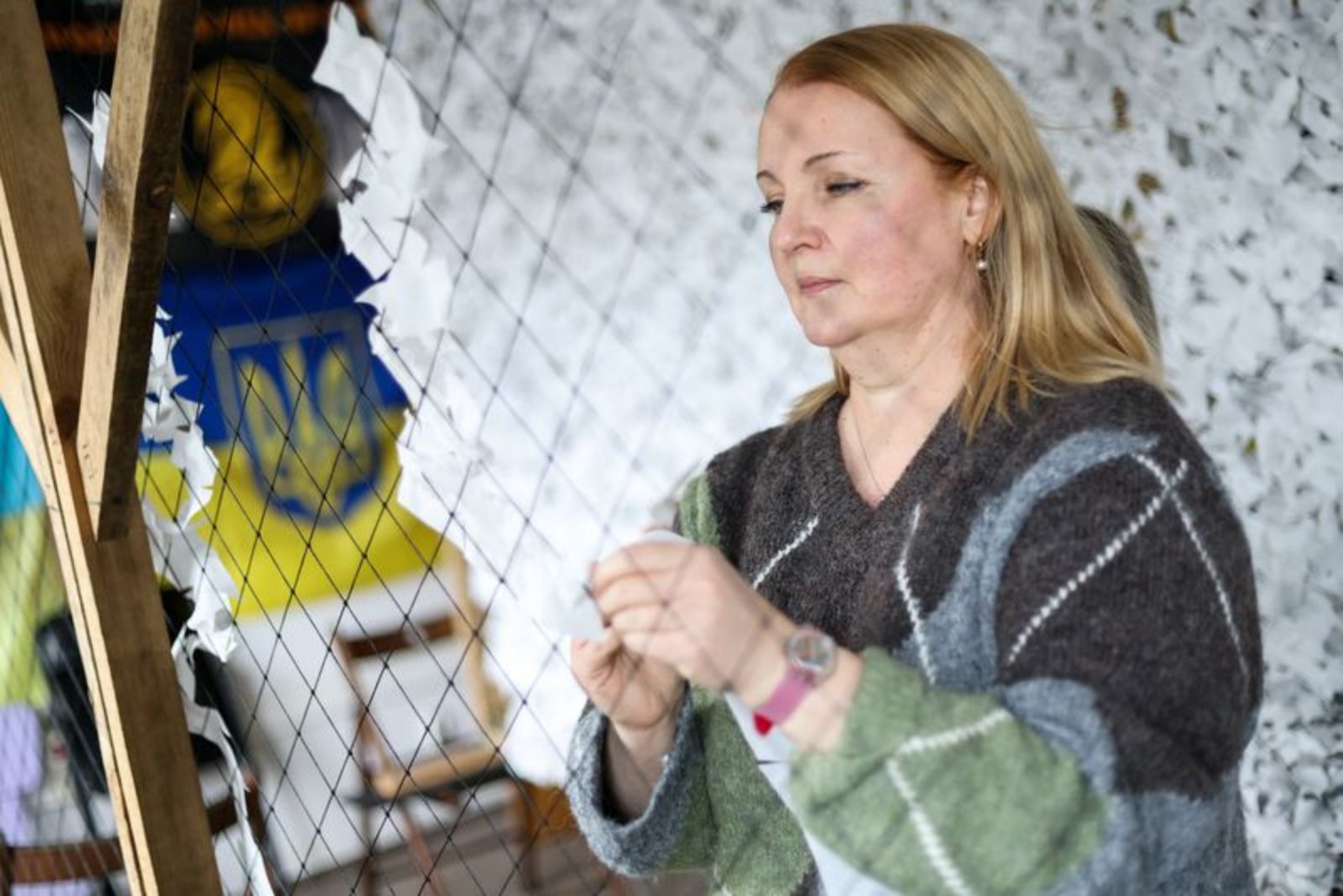
Maryna Bondarenko keeps three packed suitcases in her apartment in Poland, a tangible reminder of an expected short exile that has stretched into years. The 51-year-old journalist left Kyiv with her son and her mother after Russia launched its invasion on February 24, 2022 and had anticipated returning within a month or two. Four years later she remains in Poland, employed in a Ukrainian-language newsroom serving a community estimated at more than 1.5 million Ukrainians living in Poland.
"There were so many moments when we thought: 'This is it, we’re finally going back.' We went to the post office several times, packed our belongings into boxes, absolutely certain that we were going back," she said.
Russia’s full-scale invasion has produced the largest refugee crisis in Europe since World War Two. According to United Nations figures, more than 5 million Ukrainians are scattered across Europe, with many concentrated in Central and Eastern Europe.
Separation and resilience
Around three-quarters of those who fled are women and children, a demographic skew that followed Ukraine’s imposition of martial law prohibiting men of military age from leaving the country. For Bondarenko the separation from her husband remains a persistent strain. Her husband, Andrij Dudko, 44, a former television cameraman, is serving as a drone operator on the front line.
Repeated waves of Russian air strikes, which in recent winters have cut power to tens of thousands of people in Kyiv, have influenced Bondarenko’s decisions about returning. "We get ready to leave, and then there’s another massive attack. We get ready again, and then cold winter comes and there is no heating, no power, no water. And I just can’t bring my child there, under the rockets," she said.
In Poland, sizeable Ukrainian communities have formed in cities including Warsaw and Krakow. Those concentrations have at times prompted friction with local residents who accuse newcomers of taking welfare benefits and jobs. Bondarenko made clear she wants to go home, but acknowledged that Ukraine will be profoundly changed when she does return.
Ukraine’s government has expressed the aspiration that 70% of Ukrainians living abroad will eventually return. Yet surveys indicate that, as exile endures, the proportion of those saying they want to go back is falling.
Younger generations and changing attachments
For many younger Ukrainians who grew up abroad after fleeing, their country of origin has become a distant memory. Bondarenko’s 11-year-old son, Danylo, says he likes life in Poland despite experiencing some hostility at school. "I don’t really remember anyone from Ukraine. I remember I had one friend, but I do not really remember him and I’ve lost contact with him," he said. "I don’t think that I will return to Ukraine."
Different paths in other countries
Not all Ukrainians went to Central and Eastern Europe. A smaller number sought refuge in Turkey, where two women from Kharkiv illustrate divergent adaptations to life abroad. Iryna Kushnir and Olga Yermolenko, who were friends at high school in Kharkiv, both fled to Istanbul when the war began.
Kushnir, 42, left her 19-year-old daughter Sofia in Ukraine for studies and initially expected to stay in Istanbul only briefly. Four years on, she is married to a Turkish man and has a teaching position at the Ukrainian department of Istanbul University. "Like all Ukrainians, I planned to return home, but life turned out differently," she said. She also said she is proud that her daughter has chosen to remain in Ukraine.
Yermolenko, 43, works remotely from Istanbul as a financial specialist serving Ukrainian clients. Her mother, Tetyana, 73, remains in Kharkiv and the two keep in constant touch. Yermolenko described a split sense of belonging: "I cannot say I am involved 100% in Turkish life. It is a bit strange feeling to be caught between your previous life and a possible future life," she said. She has begun learning Turkish but tries to limit how often she dwells on the war’s duration.
Even so, the conflict intrudes into daily life. Yermolenko said she follows developments in Kharkiv closely and uses a Telegram channel that reports events there in real time. "I open the news - there’s a Telegram channel that reports what’s happening in Kharkiv in real time - and I see a missile flying toward my home," she said. "In that moment, the feeling is terrifying. I’m very scared. And of course, I immediately call my mom to make sure she’s okay."
Outlook
The experiences of these families reflect wider patterns: initial expectations of brief displacement have given way to prolonged stays abroad for many, complicated by concerns over personal safety, disruption of public utilities in Ukraine and evolving ties to host societies. The changing intentions about return, the demographic composition of those who left and the social tensions in host cities together point to a protracted period of adjustment for displaced Ukrainians and for the communities that host them.