
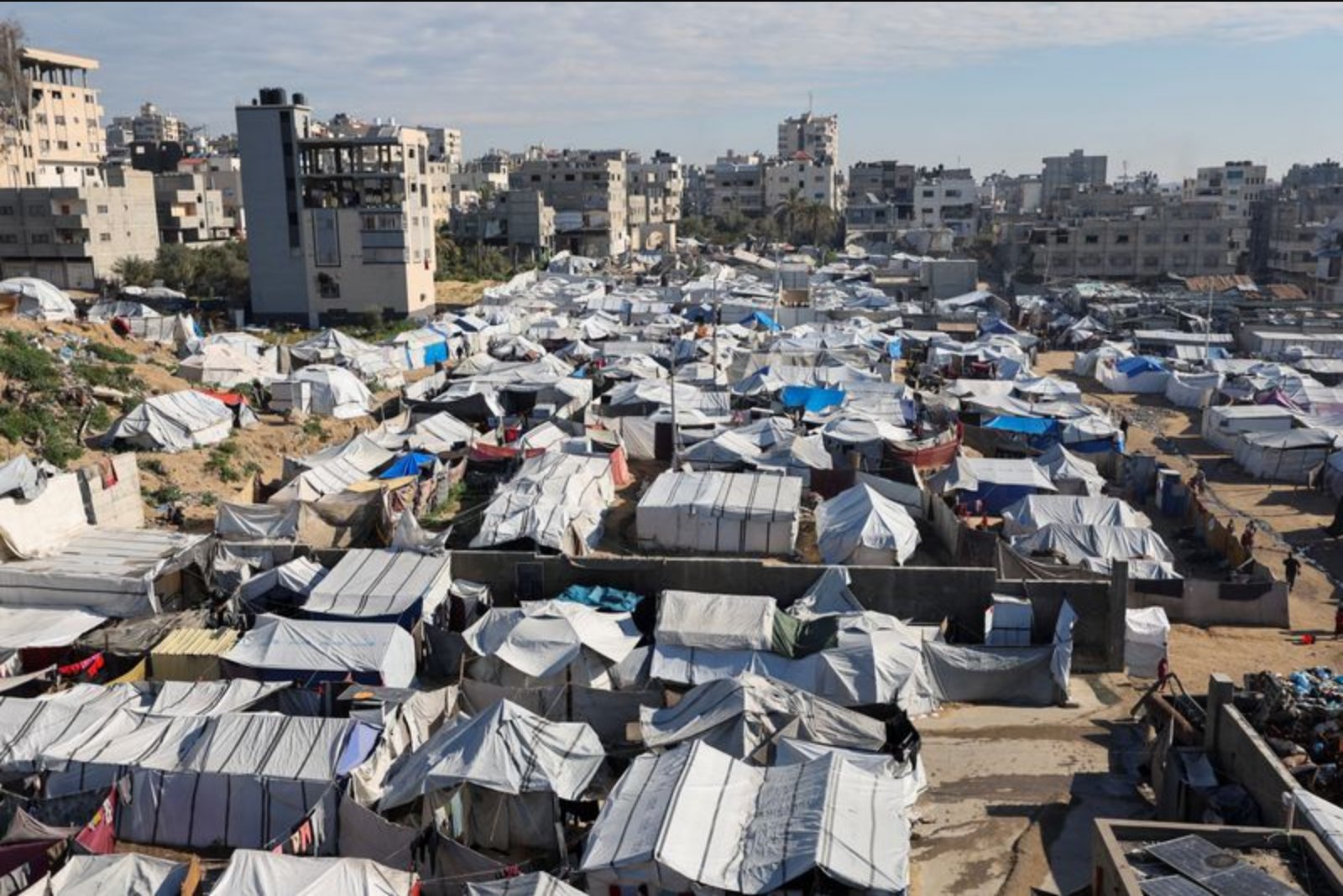
Negotiations intended to implement President Donald Trump’s plan to end the Gaza war have been put on hold since last week, according to three people with direct knowledge of the discussions. The suspension followed a joint U.S.-Israeli strike on Iran that precipitated a broader Middle East war, the sources said, and has interrupted talks over whether Hamas would relinquish arms in exchange for amnesty—a key element of the plan designed to allow reconstruction and further Israeli pullbacks.
That disarmament question - central to the Trump administration’s flagship Middle East initiative - has been the subject of sustained backchannel mediation by White House intermediaries between Israel and Hamas. But, the sources said, those negotiations were paused when the Iran conflict began on February 28. The pause, they added, has not been previously reported.
A White House official disputed the characterization that talks had been suspended, saying: "Discussions on disarmament are ongoing and positive. All of the mediators agree that this is a critical step to enable rebuilding for the people of Gaza." The official acknowledged travel impacts from the regional situation but asserted that discussions and progress were continuing.
By contrast, one source involved in the work of Trump’s Board of Peace mission described the interruption as a short-term delay tied to travel disruptions when flights across the region were affected, limiting the movement of mediators and representatives. Many of the meetings have taken place in Cairo, and the source said that logistical problems around travel contributed to the pause.
Another participant close to the mediation effort said Hamas had been due to meet with Egyptian, Qatari and Turkish mediators on the day the Iran conflict erupted, but that the session was cancelled and no rescheduled date has been set. A Hamas official confirmed that, for now, talks connected to Trump’s Gaza plan are frozen but declined to offer further detail.
Despite the cessation of in-person meetings, sources allied to the Board of Peace argued that the broader war could, over time, accelerate resolution of the disarmament issue by weakening Iranian financial influence on Hamas. Iran has long been a backer of Hamas, supplying financial and other forms of support, the sources noted.
Observers of the Gulf donor response have begun to voice doubts. Zaha Hassan of the Washington-based Carnegie Endowment for International Peace said countries that pledged funds for the Board of Peace mission - including the United Arab Emirates and Qatar - may now be wondering whether their commitments represent "really money well spent now that they are dodging rocket fire." Those Gulf pledges had been secured less than a month before the regional conflict widened; donors are now themselves exposed to attack.
An Israeli government official, commenting without directly addressing the status of the talks, emphasized that the disarmament of Hamas was non-negotiable. "It will be done the easy way or the hard way," the official said. Israel has repeatedly warned that it could resume large-scale operations in Gaza should militants fail to lay down arms. While the Israeli military has reduced the intensity of strikes in Gaza since the wider war began, it has continued to conduct attacks, including bombing runs in Iran and Lebanon, citing ongoing threats from Hamas and allied groups.
Health officials in Gaza report at least 16 Palestinians have been killed since February 28. Residents of the territory note a heightened expectation of renewed Israeli operations once the Iran conflict subsides. "The moment the war on Iran is over, (Israel) will come back at us with the same frequency, with the same violence," said Talal Hamouda, 46, who lives with his wife and five children in Jabalia in northern Gaza.
Hamas itself has been working to consolidate control in areas it governs in Gaza since the wider regional fighting began. Sources close to the group reported that in recent days Hamas fighters ambushed several Israeli-backed militia members in Gaza’s north and south, killing at least two people.
Much of Washington’s coordination on Gaza policy had been directed out of a U.S.-led military compound in southern Israel. Diplomats working out of that compound and other foreign officials based in the region said that momentum behind the Trump plan appeared to ebb as the Iran conflict escalated. Three diplomats indicated the Civil Military Coordination Centre scaled back to minimal operations at the start of the regional war because of concerns that the facility could be targeted by Iranian missiles.
Those diplomats said senior U.S. officials have shifted attention toward the Iran conflict, leaving the Gaza initiative with limited top-level engagement. Nevertheless, officials added, working-level conversations among participating countries have continued, with the hope that the framework could be revived once the broader hostilities conclude.
Natan Sachs, a senior fellow at the Washington-based Middle East Institute, warned that keeping the initiative on track depends on "sustained attention from the Trump administration" and that the ongoing war with Iran "has the potential to undermine exactly that." Without sustained U.S. focus, Sachs said, the divergent objectives of the parties involved could produce differing outcomes and possibly a resumption of fighting.
Summary - Mediation tied to a U.S. plan to end the Gaza war has been paused since last week following a joint U.S.-Israeli strike on Iran that expanded the regional conflict. The suspension affects talks over Hamas disarmament, a central precondition for reconstruction and further Israeli withdrawals. While U.S. officials say discussions continue, mediators and others involved point to travel disruptions and shifting priorities as reasons for the interruption.
Key points
- Disarmament negotiations linked to Trump’s Gaza plan were interrupted when a joint U.S.-Israeli attack on Iran sparked a wider regional war; travel disruptions have limited mediator movement. - Impacted sectors: defense, logistics, reconstruction financing.
- Gulf Arab states had recently pledged billions for Gaza reconstruction, but donors now face direct security threats and may reassess contributions. - Impacted sectors: international finance, humanitarian aid.
- Operational coordination from a U.S.-led compound in southern Israel was reduced amid concerns of Iranian missile targeting, and senior U.S. focus appears diverted to the Iran conflict. - Impacted sectors: military coordination, diplomatic engagement.
Risks and uncertainties
- Further escalation of the Iran conflict could prolong the pause, undermining reconstruction financing and delaying disarmament - risk to construction, humanitarian relief, and donor-funded projects.
- Reduced senior-level attention from the U.S. may weaken the momentum for the Gaza plan, increasing the chance of renewed fighting between Israel and Hamas - risk to regional security and defense sectors.
- Donor hesitation as a result of direct threats to Gulf states could shrink available funds for Gaza rebuilding efforts, complicating long-term economic recovery - risk to international aid flows and reconstruction contractors.
Disclosure - None.