
Overview
In the weeks after U.S. forces captured President Nicolas Maduro, local party organizers in and around Venezuela's principal oil city carried out house-to-house canvassing to gauge whether ordinary party members still backed the United Socialist Party (PSUV), which has governed the country for nearly two decades. The canvass reported that about half of those approached said they no longer supported the party. The canvassing result could not be independently verified, but similar indicators emerged from interviews with party members and local leaders across four states.
Canvass findings and local reactions
Interviewees across geographically dispersed areas described deep uncertainty among PSUV ranks and rising concerns about personal economic prospects. One person involved in the canvassing described the response as "very bad," and said the exercise exposed divisions within the party. Thirteen party members or local leaders from four states reported fractures in the organization following the U.S. operation. All of those interviewed asked to remain anonymous because of fears of reprisals.
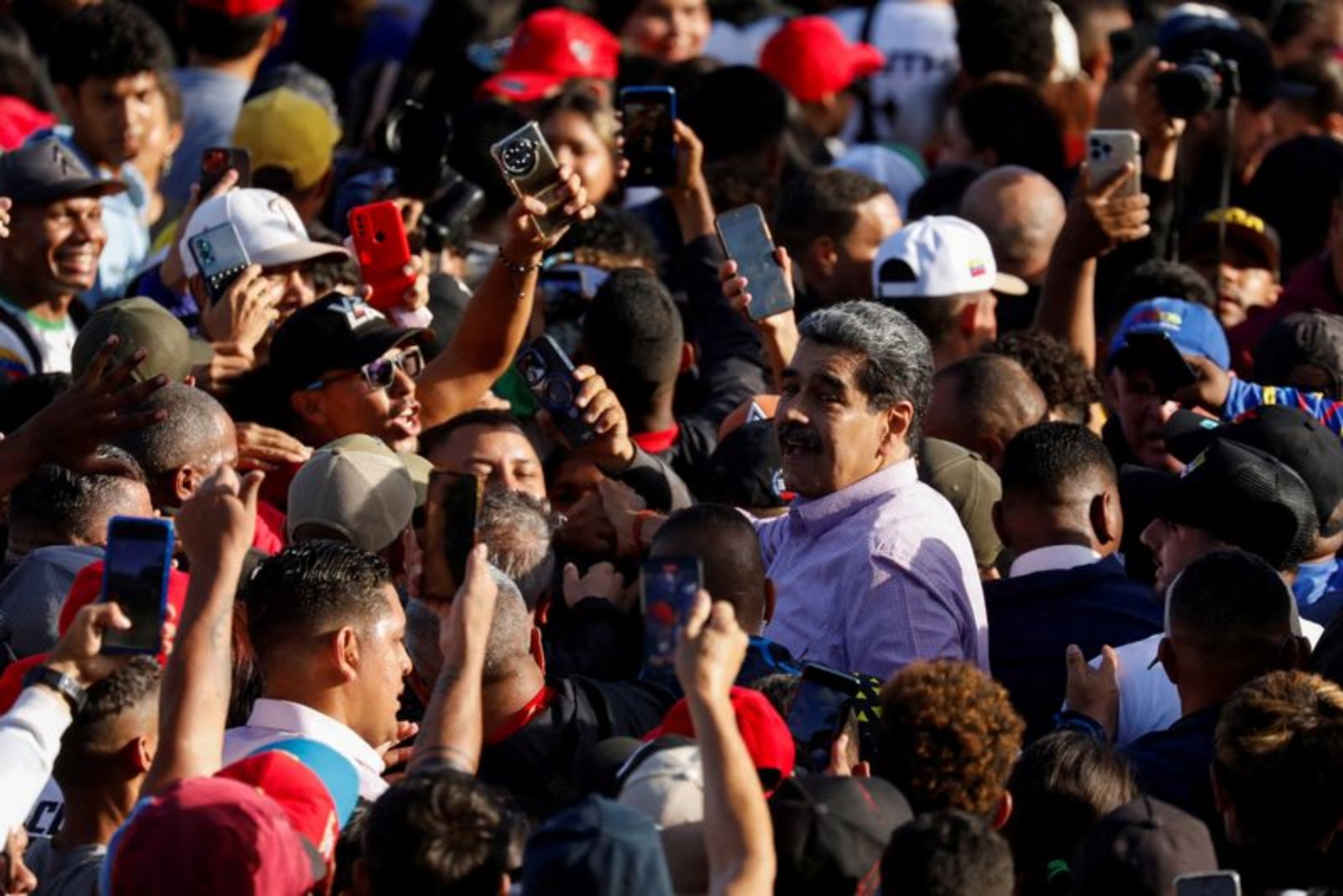
Several local leaders said branch participation and active support had slipped. Eight interviewees said they had observed declines in attendance at local party meetings and demonstrations; two estimated attendance drops as steep as 70% for marches and neighborhood assemblies. Sources also said that local leaders were urging members to report colleagues who appeared to be losing faith, a practice used to identify dissent within the party.
Patronage under strain
The party's patronage network - which historically traded material benefits and food parcels for a form of loyalty - appears to be coming under pressure. Five interviewees said that certain contributions and benefit distributions had halted since Maduro's capture. The interruptions reportedly include both direct cash bonuses and CLAP food parcels.
Interviewees in three states - Zulia, Aragua and Falcón - said members were abandoning the party because payments and parcel deliveries had stopped. One source in Zulia reported that 600 people in their district had not received the so-called "family bonus," a welfare payment of up to $65 intended to help with living costs. Three sources said CLAP food parcels had not been delivered in their areas, with some adding that problems with those deliveries predated the capture but have persisted since.
The complexity of Venezuela’s welfare scheme, with varied benefits disbursed at different times to different groups, meant interviewees could not give a full accounting of every payment. Some said certain bonuses remained being paid while other benefits had ceased. The interruption of support matters because government payments, delivered through multiple programs, can add up to more than $100 a month for some recipients. That is a significant supplement where the stated monthly minimum wage is less than $1 and poverty levels remain severe.
Distrust and leadership questions
Six interviewees described rising distrust among party loyalists and spreading suspicions about interim President Delcy Rodriguez. Many spoke of disillusionment with the party and questioned the dedication of the new leadership to Chavismo. A local party leader in Aragua said the party could not grow or win elections even "if we had Che Guevara or Gandhi as a candidate," encapsulating a sense of pessimism among some activists.
Rodriguez has repeatedly called for national unity and has spoken publicly of the people's resilience while pledging economic development. Despite denouncing Maduro's detention as a kidnapping, Rodriguez has also taken steps that observers described as accommodating U.S. demands - including moves to open the country to American oil companies and meetings with the director of the U.S. Central Intelligence Agency to discuss cooperation against drug trafficking.
Political positioning and internal rivalries
Strained grassroots support complicates Rodriguez's task of consolidating authority. She has been reported to be placing allies into positions of power to defend her position against Interior Minister Diosdado Cabello, who leads the PSUV and maintains close ties to the security services and the colectivos - the hardline motorcycle-riding enforcement groups aligned with the party. Cabello, in public comments, has stressed party unity and on Jan. 12 used a weekly press conference to say Rodriguez has "all the support of the United Socialist Party of Venezuela." Cabello was not available for direct comment on the concerns raised by rank-and-file members.
All of Venezuela's top officials remain long-time PSUV members. The party, formed in 2007 through a consolidation of political and social forces that gathered under Hugo Chavez's leadership, grew rapidly as Chavez invested oil revenues into social programs and, by 2009, claimed over 7 million members. Over time the party became a vehicle for centralizing presidential power while also being used to suppress dissent, especially after Chavez's death and Maduro's accession to the presidency in 2013. Today, PSUV lawmakers hold a supermajority in the national assembly and control all but one of the country's 24 governorships; the assembly is headed by Rodriguez's brother Jorge.
Security mobilization and colectivos
Several interviewees reported that colectivos were showing up less often at public events and had not been mobilized to drive public demonstrations of support for the government. Four interviewees said many colectivo members were failing to appear at marches. In some localities, former colectivo members have taken roles as motorbike taxi drivers and, despite threats from authorities to revoke their mototaxi permits, are not participating in mobilizations. One party member said some have fled to Colombia while others feign illness to avoid public appearances.
Colectivo members have been widely associated with violent repression in prior confrontations; interviewees described them as a coercive element that once helped ensure public demonstrations of party strength. The reduced presence of colectivos at events, alongside falling grassroots participation, was described by one analyst as indicating a fragmentation of the apparatus of repression and a demobilized party base - a combination that presents a significant challenge for governance.
Economic factors that could alter the outlook
Economic developments could still change the political picture. Venezuela has already received $500 million from crude sales, and any meaningful improvement in economic conditions could help restore funding flows to the party, restart bonus payments and deliver the membership perks that have historically shored up grassroots support. A senior White House official said in response to questions about the party's problems that "the country is stable, illegal migration has stopped, drug flows have halted, and the new oil deal will generate economic prosperity for both the Venezuelan and American people."
Inflation remains a major pressure on ordinary Venezuelans. Interviewees pointed to severe hardship, noting that inflation has been estimated by analysts to have topped 400% in 2025, and that government benefits are a crucial source of income where the minimum wage is less than $1 per month. The interruption of payments that for some recipients can total over $100 a month therefore represents a real and immediate decline in household income for millions.
Local enforcement and workplace pressure
In some municipalities, local authorities have used the threat of job loss to push participation in pro-government marches. In the municipality of Mara, a party member said about 70% of local party members and public employees ignored calls to take part in two recent pro-Maduro marches, and bosses responded by threatening firings. It was not possible to independently confirm the size of the marches or whether any terminations actually took place.
Those still committed to the party in some areas were described as "clapping like seals," yet even they were reported to be wavering because bonuses had not been paid. The combination of waning enthusiasm among older militants and interruptions to material support has left local branches struggling to mobilize.
Limits of available information
The interviews and neighborhood canvasses cited here describe falling participation and disrupted benefit flows in several states, but they do not provide a comprehensive, nationwide assessment. There are no recent public figures for PSUV membership. While reports came from four widely separated states, no definitive conclusion can be reached about conditions across all 24 states. Foreign media have limited permanent presence in the country, and Venezuelans frequently express reluctance to speak openly because of potential reprisals. The canvass findings and interview accounts were therefore constrained by these access and verification limits.
Responses and next steps
Neither the Venezuelan government nor the PSUV replied to requests for comment on concerns about declining grassroots support and the reported fraying of the party's patronage system. All media requests to government officials are handled centrally by the Communications Ministry, which did not respond to inquiries for this reporting.
For now, the PSUV faces a dilemma: the exit of President Maduro has not, according to interviewees, translated into improved popularity for the party. Observers cited the concurrent erosion of coercive capacity and demobilization of the grassroots as creating a difficult environment for governability. Still, the potential for renewed funding from oil sales means the party's local support could revive if economic benefits begin to flow again and payments to members and beneficiaries are restored.
Reporting for this article relied on interviews with current and former party members and local leaders across multiple Venezuelan states. All interviewees requested anonymity due to fear of reprisal. The information gathered reflects their accounts and the limitations imposed by the lack of comprehensive, verifiable nationwide data.