
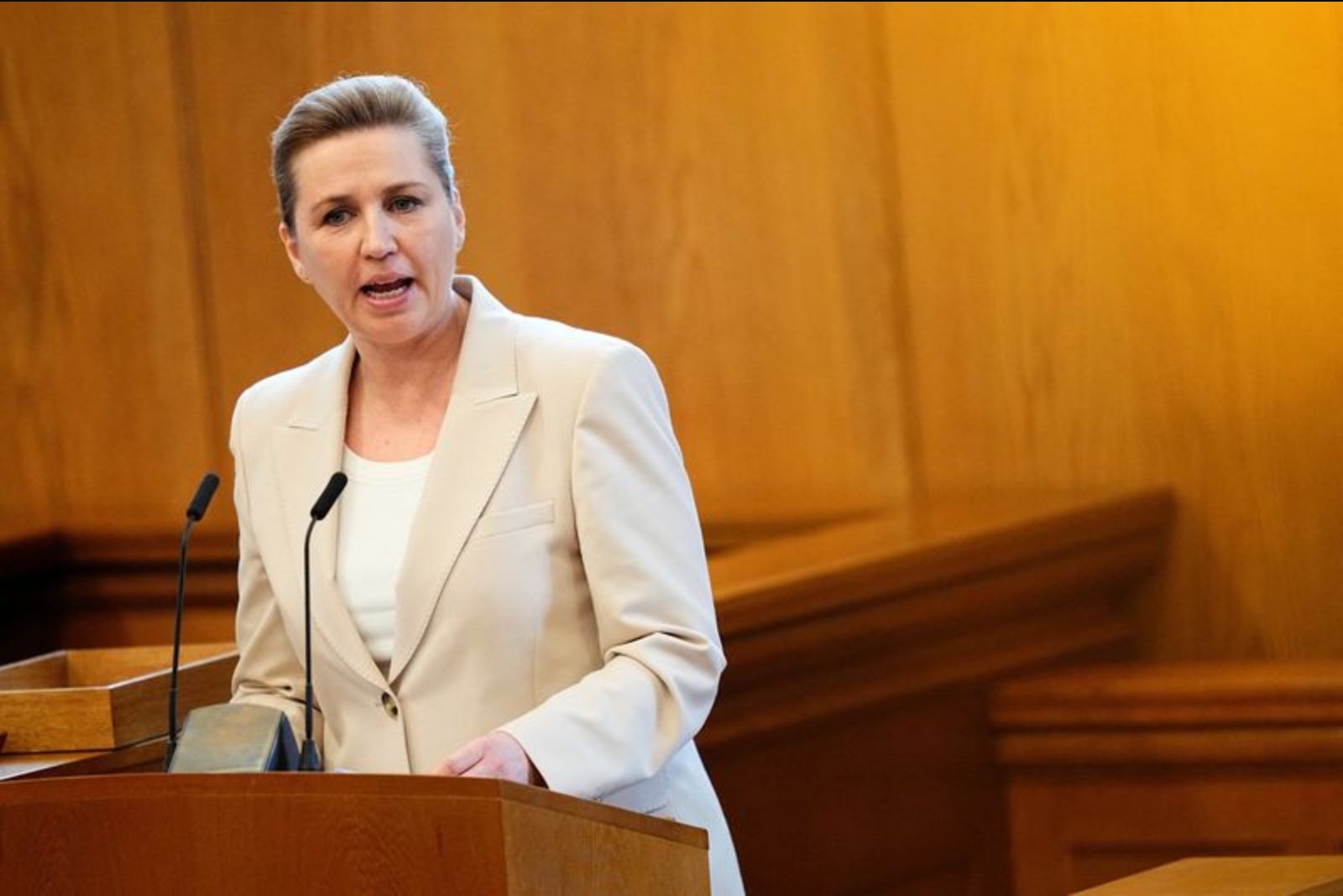
Prime Minister Mette Frederiksen announced on Thursday that Denmark will hold a parliamentary election on March 24, aiming to convert a recent surge in public support into a renewed mandate.
Frederiksen’s rise in the polls follows her firm reaction to renewed U.S. interest in Greenland and her efforts to coordinate European opposition to that initiative. Opinion polling indicates that her forthright stance on the Arctic island has improved her political standing at a moment when voters had grown frustrated with higher living costs and pressure on welfare services.
Addressing the public, Frederiksen framed the vote as a pivotal choice for both Denmark and Europe. "This will be a decisive election, because it will be in the next four years that we as Danes and as Europeans will really have to stand on our own feet," she said. "We must define our relationship with the United States, and we must rearm to ensure peace on our continent."
International leadership and domestic accountability
The Greenland dispute has amplified Frederiksen’s visibility beyond Denmark, adding to a reputation shaped by her early response to the COVID-19 pandemic and her role in marshaling European support for Ukraine. The upcoming vote will determine whether the electorate rewards those displays of leadership or responds to criticism that the government has not sufficiently addressed long-standing domestic challenges.
"The trust in Mette Frederiksen as a leader and her ability to navigate the Greenland and Ukraine crises will be central to the campaign," political commentator Joachim B. Olsen said. "Her weakness is that, having been prime minister for two terms, it becomes more difficult to talk about solutions to the problems. She wants to talk about inequality, but then voters will ask why she hasn’t addressed those problems until now."
The forthcoming election will also examine the resilience of an atypical cross-partisan government that has governed since 2022 as a crisis administration. That coalition includes Frederiksen’s Social Democrats, the centre-right Liberal Party led by Defence Minister Troels Lund Poulsen, and the Moderates, headed by Foreign Minister Lars Lokke Rasmussen, who has twice served as prime minister.
Opinion polls suggest the coalition could lose its majority as parties revert to more conventional left-right alignments. The Social Democrats experienced a stinging defeat in the 2025 municipal elections, surrendering the Copenhagen mayoralty for the first time in 87 years, and their support plunged to 17% in December polls before recovering to 22% following Frederiksen’s improved approval tied to the Greenland dispute. By comparison, the party secured 28% of the vote in the 2022 general election.
Domestic issues shaping voter priorities
Political scientist Rune Stubager said that voters are primarily worried about food prices, welfare provision, inequality and immigration. These concerns form the domestic backdrop against which Frederiksen is attempting to run, and they continue to shape campaign narratives across the political spectrum.
One contentious policy from the current government was the 2023 decision to abolish the Great Prayer Day public holiday in order to free funds for higher defence spending. The move proved unpopular even as there was broad public backing for increased military investment. The Green Left party, historically a Social Democrat ally but now in opposition, has promised to restore the holiday if it wins power; the Social Democrats have not dismissed the idea.
Immigration remains another prominent theme. Frederiksen’s Social Democrats plan to underscore strict immigration policies, a stance that contributed to their 2019 victory. In January, the government advanced a proposal to ease deportation rules for foreign nationals, while openly acknowledging that such changes could come into tension with European human rights frameworks.
The March 24 vote will therefore be a referendum of sorts on two fronts: whether Danish voters endorse Frederiksen’s enhanced international profile and defence-focused rhetoric, and whether they judge her government’s domestic record — on costs of living, welfare services and inequality — sufficient. The result will shape the country’s approach to defence spending, relations with the United States, and debates over immigration and public services for the next parliamentary term.