
World March 4, 2026

Defendant in U.S. Plot Case Says He Was Coerced by Iran’s Revolutionary Guards, Court Hears

Accused recruiter testifies he acted under pressure to protect family in Tehran as prosecutors dispute duress claim

By Derek Hwang
Defendant in U.S. Plot Case Says He Was Coerced by Iran’s Revolutionary Guards, Court Hears

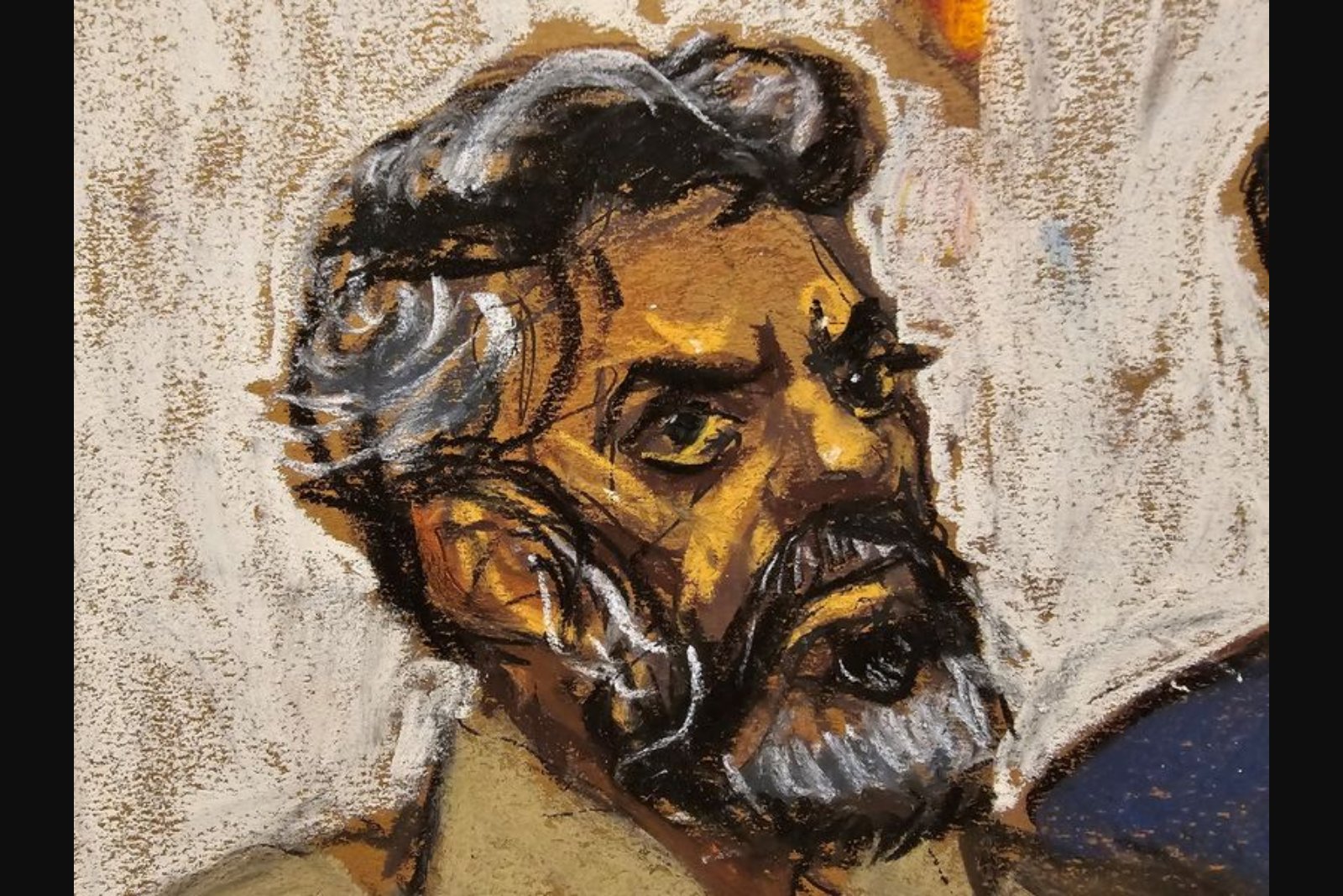
A Pakistani national on trial in the United States for allegedly plotting to kill former President Donald Trump told jurors he did not voluntarily collaborate with Iran’s Islamic Revolutionary Guard Corps and said he joined the operation to safeguard relatives in Tehran. Prosecutors have challenged his assertion of coercion and point to limited evidence supporting a claim of duress. The case includes allegations that the accused sought recruits within the U.S. to target multiple U.S. political figures.

Key Points

  • Defendant Asif Merchant told jurors he did not willingly collaborate with Iran’s Islamic Revolutionary Guard Corps and said he participated to protect family members in Tehran.
  • The Justice Department alleges Merchant sought to recruit people in the United States for a plot targeting Donald Trump and other U.S. politicians, purportedly in retaliation for the killing of IRGC commander Qassem Soleimani.
  • Prosecutors disputed the defendant’s duress claim, citing a 2024 court filing that described a lack of evidentiary support for coercion (sectors potentially relevant: national security and defense-related markets and geopolitical risk assessments).

A Pakistani man charged in a U.S. criminal case over an alleged plan to kill former President Donald Trump told jurors that he did not willingly conspire with Iran’s Islamic Revolutionary Guard Corps, according to media reports covering testimony.

The Justice Department has accused the defendant, identified as Asif Merchant, of attempting to recruit individuals inside the United States to take part in a plot aimed at Trump and other American political figures. Prosecutors say the alleged scheme was retaliation for Washington’s killing of the Guards Corps' top commander, Qassem Soleimani.

The Revolutionary Guards Corps, which plays a central role in Iran, combines military capabilities, economic power and an intelligence apparatus, according to characterizations in the case record.

During testimony this week, the defendant told the court he did not join the effort of his own free will and said he participated to protect his family living in Tehran. He was quoted as saying:

"I was not wanting to do this so willingly."

Prosecutors have pushed back on the defendant’s account, pointing to what they describe as a "lack of evidentiary support for a true duress or coercion" in a written filing to the judge dated from 2024. That letter was submitted to the court and cited by the prosecution in ongoing litigation.

In his testimony, the defendant said he had not been specifically ordered to kill a named individual, but that during discussions in Tehran his Iranian handler mentioned three people by name. In addition to Trump, those named were Joe Biden, who was president at the time of the alleged recruitment efforts, and Nikki Haley, who sought the Republican nomination for the 2024 presidential election but was not successful.

Attorneys for the defendant did not immediately provide a response to requests for comment. The White House likewise did not immediately offer comment on the court proceedings.

The trial began last week. Its opening came days before a separate series of U.S.-ordered strikes carried out with Israel that the reporting says killed Supreme Leader Ayatollah Ali Khamenei and other senior officials in Iran. President Trump referenced an alleged Iranian plot in comments to ABC News regarding that joint U.S.-Israeli operation, saying, "I got him before he got me." Tehran has denied accusations that it targeted Trump and other U.S. officials.

The proceedings continue amid contested factual claims about the extent of the defendant’s voluntariness, the scope of alleged recruitment activities inside the United States, and competing legal arguments over the presence or absence of coercion.

Risks

  • Credibility of the defendant’s duress claim remains contested - prosecutors cite limited evidence supporting coercion, creating uncertainty for legal outcomes (impacts legal and justice sectors).
  • The trial is unfolding alongside recent strikes that reporting says killed Iran’s Supreme Leader and senior officials, and Tehran’s denials of targeting U.S. officials add geopolitical uncertainty (impacts foreign policy and defense-related risk assessments).
  • Ongoing proceedings include unanswered requests for comment from the defendant’s lawyers and the White House, leaving aspects of public response and official positions uncertain (impacts political and communications sectors).

More from World

Pentagon Confirms Two More U.S. Army Reserve Fatalities in Kuwait Drone Strike Mar 4, 2026 Nepalans Vote in High-Stakes Election After Youth-Led Protests Topple Government Mar 4, 2026 Nepal Heads to National Vote After Youth Protests Toppled Government Mar 4, 2026 Ecuador Expels Cuban Ambassador and Embassy Staff, Orders Departure Within 48 Hours Mar 4, 2026 Timeline of the Nancy Guthrie Disappearance: Key Developments in Arizona Investigation Mar 4, 2026