
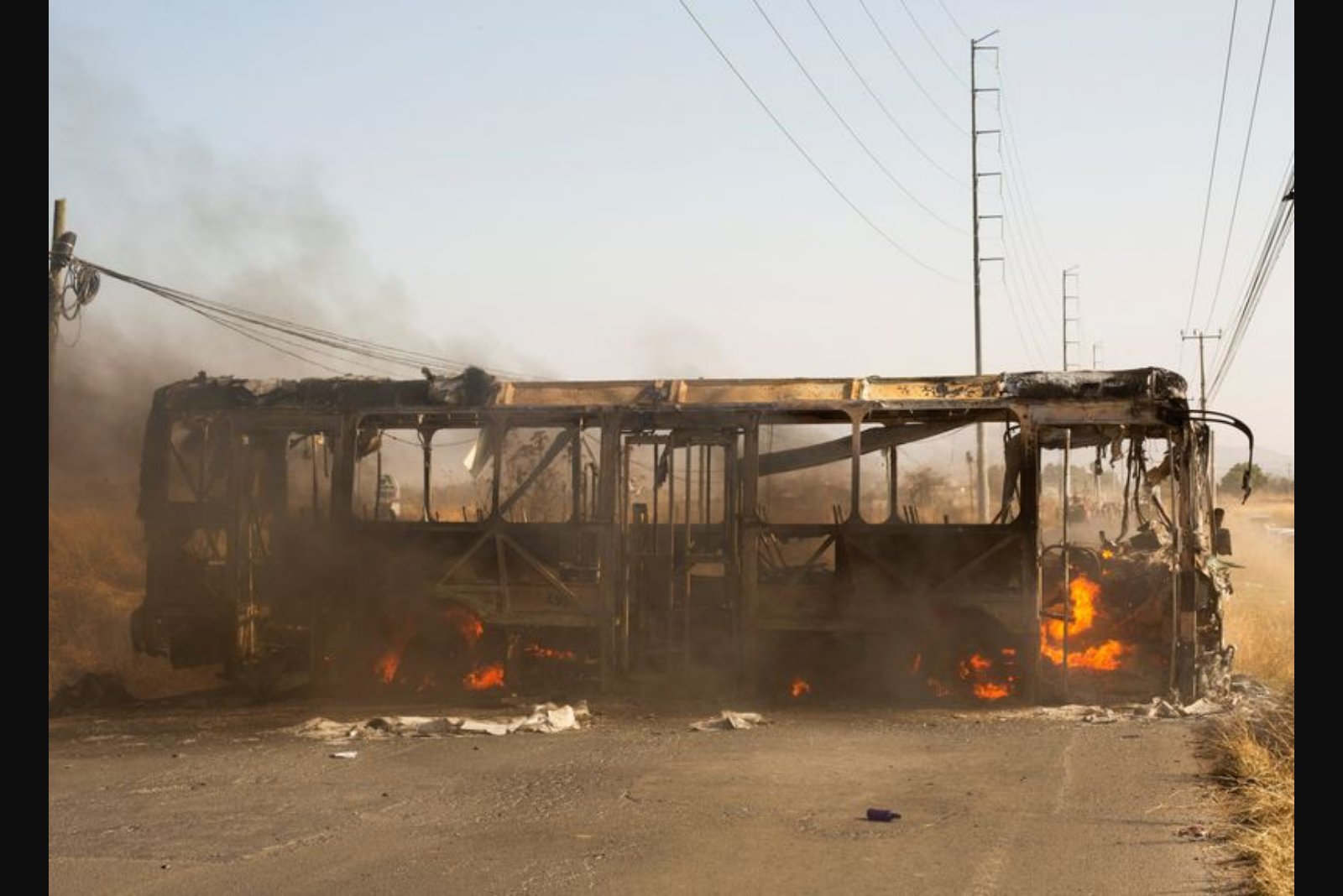
Mexican security forces have killed Nemesio Oseguera - widely known by his nom de guerre 'El Mencho' - during a military operation, according to official accounts. Oseguera, 60, was the clandestine leader of the Jalisco New Generation Cartel (CJNG), an organization that rose rapidly to rival established trafficking networks in Mexico.
Over a relatively short span, Oseguera directed the CJNG's transformation from a regional group into a criminal enterprise with broad reach. Authorities and analysts have held the cartel responsible for the smuggling of large quantities of narcotics into the United States, including the synthetic opioid fentanyl, which has been associated with hundreds of thousands of overdose deaths in recent years. Oseguera had eluded capture for years, despite a $15 million U.S. bounty for information leading to his arrest or capture.
A profile of violence and evasion
Oseguera's criminal career was marked by episodes of spectacular violence and dramatic escapes. As an ex-police officer who moved into organized crime, he rose through the ranks of the Milenio Cartel and later set out on his own after a failed bid to seize control. He declared war on his former allies in the Sinaloa Cartel and founded the CJNG in alliance with a local money-laundering group.
Unlike some cartel figures who sought public notoriety, Oseguera generally operated from the shadows. Yet he became notorious through leaked audio in which he threatened rivals and officials in profanity-laced recordings shared on social platforms. The CJNG deployed extreme brutality as a tool of intimidation. The group was known to use beheadings and other grisly methods against perceived enemies and to send explicit warnings to authorities.
Oseguera's organization also demonstrated the capacity to strike at security forces. In May 2015, as Mexican forces closed in, gunmen loyal to him shot down a military helicopter with a rocket-propelled grenade, allowing their leader time to escape. In another episode in 2015, the cartel is reported to have killed two dozen police officers in western Mexico over a six-week period as a message to authorities.
The CJNG was blamed for a 2020 assassination attempt on then Mexico City chief of police Omar Garcia Harfuch, an attack that killed two of Harfuch's bodyguards. Harfuch, who later became the country's security chief, helped oversee the operation that led to Oseguera's death.
Criminal diversification and political reach
Under Oseguera's leadership, the CJNG expanded beyond narcotics trafficking into multiple illicit enterprises. The cartel engaged in stolen fuel operations, forced labor and human trafficking, among other rackets. Analysts say the CJNG mixed the drug-smuggling tactics associated with the Sinaloa cartel with the ultra-violent approaches linked to the Zetas cartel, including paramilitary-style operations and diversification into extortion and kidnapping.
For years, Oseguera is reported to have paid off local police to operate with relative impunity in parts of Jalisco. He also sought political protection: experts describe the CJNG as a major purchaser of politicians and political campaigns, a strategy that bolstered the group's social base in affected communities.
Evidence of the cartel's local influence surfaced publicly during the coronavirus pandemic in 2020, when footage circulated of residents lining up for food packages distributed by men bearing CJNG insignia. Observers have noted that such actions helped the cartel cultivate support by providing economic relief where government assistance was limited.
Origins and trajectory
Oseguera was born in 1966 in a poor village in Michoacan, a rugged western state where opium poppy and marijuana cultivation have long competed with other local economies. As a child he worked in the fields. He later went to the United States, where prosecutors said he became involved in the heroin trade. After an arrest and a spell in a U.S. prison, he was deported to Mexico.
Back in Mexico, Oseguera briefly served in the police force before entering organized crime and rising to become a top enforcer. He worked as a sicario, or cartel assassin, before attempting to take control of his former group. Following that effort's failure, he founded the CJNG and set the cartel on a course of rapid growth and violent assertion of power.
Expert commentary
Security analysts have underscored both the strategic value and the elusiveness of Oseguera over the years. "Apart from the heads of the Sinaloa cartel, 'El Mencho' has been the biggest prize for many, many years," said Vanda Felbab-Brown, a senior fellow at the Brookings Institution. "And it’s really stunning, just like the heads of the Sinaloa cartel, how long he managed to evade U.S. and Mexican law enforcement gunning for him."
Edgardo Buscaglia, an organized crime expert at Columbia University, highlighted the cartel's political influence. "El Mencho’s Jalisco New Generation Cartel was one of the biggest buyers of politicians and political campaigns, which has given it an enormous social base," Buscaglia said. Pointing to the pandemic-era distributions of CJNG-stamped food packages, he added: "Compared to the Mexican government, he was the least bad option."
Oseguera's death removes a central figure from the Mexican criminal landscape, but the organization he built and the networks it fostered will shape security and political dynamics in affected regions for the foreseeable future. The CJNG's blend of narcotics trafficking, diversified criminal revenue streams and local-level outreach presents continuing challenges for Mexican authorities and for international efforts to stem the flow of illicit drugs abroad.