
World March 2, 2026

Cuba Detains 10 Panamanian Nationals Accused of Making 'Subversive' Signs

Havana says the visitors were brought from Panama and paid to create propaganda amid a worsening energy and economic crisis

By Marcus Reed
Cuba Detains 10 Panamanian Nationals Accused of Making 'Subversive' Signs

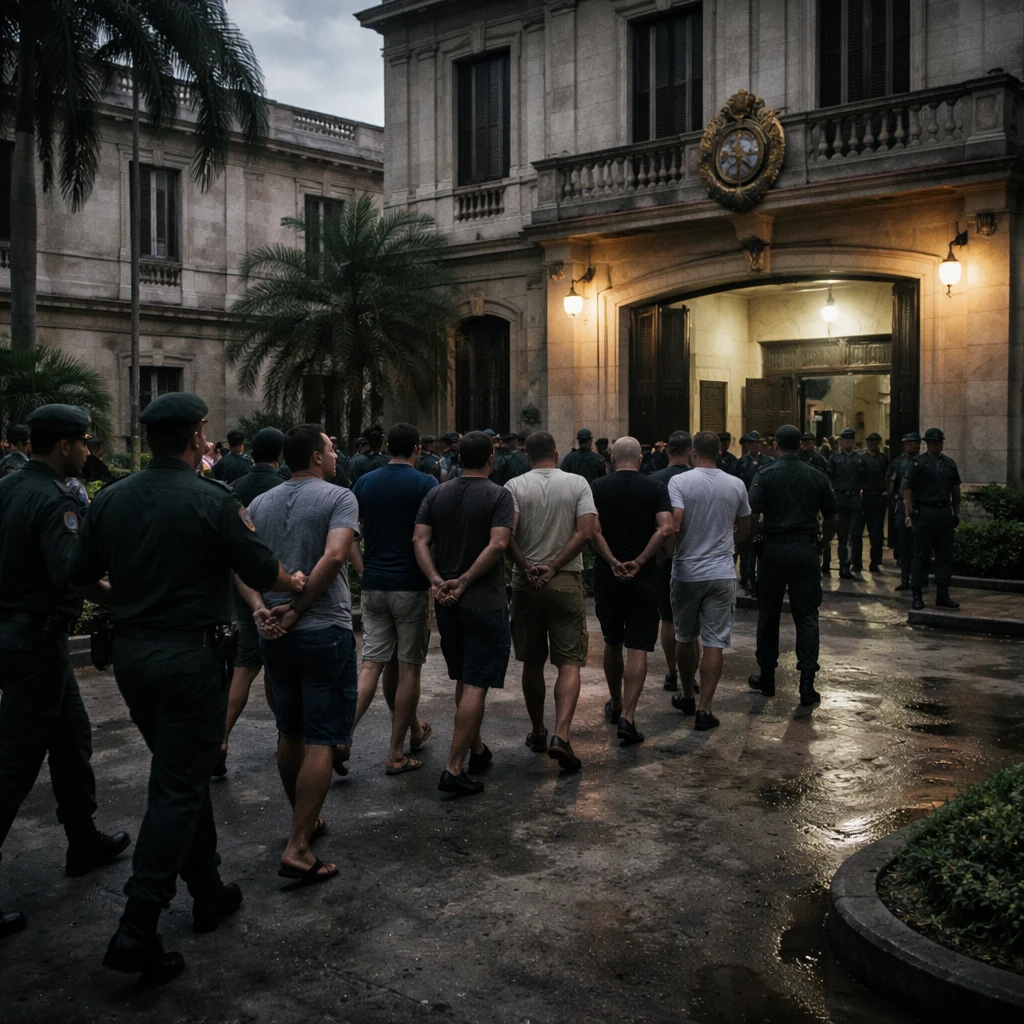
Cuban authorities say they arrested 10 Panamanian citizens for creating signs with what officials described as "subversive content." The Interior Ministry said the group was sent from Panama with a promise of payment, and that the detentions follow a separate attempted maritime incursion by armed Cuban exiles. Officials tied both incidents to the island's ongoing economic and energy difficulties, citing a U.S. virtual oil blockade that has worsened fuel shortages and blackouts.

Key Points

  • Cuban authorities arrested 10 Panamanian nationals for creating signs described as "subversive content" and said they were sent from Panama with promised payment.
  • The Interior Ministry invoked a law that punishes "inciting against social order, international solidarity, or the socialist state" with three to eight years in prison for relevant acts, banning creation, distribution or possession of such materials.
  • The detentions followed a separate maritime incident in which heavily armed Cuban exiles attempted to infiltrate by speedboat, leading to a shootout that killed four assailants and left six others wounded and in custody. Sectors impacted include energy and transportation, given reported fuel shortages and operational interruptions.

Cuba's Interior Ministry announced on Monday that 10 citizens of Panama were arrested on Saturday after being found to have created signs that authorities described as "subversive content." In a formal statement, the ministry said the group had been sent to Cuba from Panama by undisclosed patrons who promised payment for their actions.

The ministry charged the Panamanians with "acts of propaganda against the Cuban constitutional order," invoking a Cuban statute that criminalizes "inciting against social order, international solidarity, or the socialist state." The law cited carries a penalty ranging from three to eight years in prison and forbids distributing, creating or possessing material of that nature, whether written or oral.

According to the Interior Ministry's statement, the detained individuals provided statements indicating they had been "instructed to enter Cuba to create signs with subversive content." The ministry added that, once the objective was achieved, the individuals were to leave the country and would receive a payment upon their return to Panama estimated in their initial statements to be between $1,000 and $1,500 each.

The arrests came after Havana announced a separate incident last week in which heavily armed Cuban exiles attempted to enter the country by speedboat. Cuban forces engaged the assailants at sea in a shootout that, officials said, resulted in the deaths of four attackers and left six others wounded and in Cuban custody.

Both episodes occurred against the backdrop of economic strain and an energy crisis on the island. The Interior Ministry and other official commentary linked the events to the broader situation, noting that the United States has imposed what officials described as a virtual oil blockade on Cuba. Cuban authorities say that blockade has exacerbated fuel shortages and blackouts across the country.

The Panamanian embassy in Havana did not immediately respond to a request for comment, the Interior Ministry noted. The ministry's announcement reiterated the government's position on prohibitions against material it deems hostile to the constitutional order and cited the specific criminal provisions applied in this case.

Cuban exiles have long pointed to restrictions on expression as a factor in support for economic measures against the Cuban government. The Interior Ministry's account framed the arrests within that legal and political context but did not provide further public details about the identities of the detained individuals or the patrons who allegedly sent them.

Risks

  • Continued security incidents and government crackdowns could increase domestic instability and strain public services - this directly affects the energy and transportation sectors during fuel shortages and blackouts.
  • Diplomatic friction remains possible, as the Panamanian embassy had not immediately responded; uncertainty in bilateral responses could complicate consular and legal processes for detained foreign nationals, impacting regional relations and logistics coordination.
  • Limitations on expression cited by Cuban exiles are linked in official statements to economic sanctions, a dynamic that sustains uncertainty for economic recovery and energy supply resilience - the energy sector is particularly affected by the reported virtual oil blockade.

More from World

Jury Begins Deliberations in Murder Case Against Father in Georgia School Shooting Mar 2, 2026 Melania Trump Leads U.N. Security Council Session on Children and Education Amid Regional Strikes Mar 2, 2026 Investigators Pursue Multiple Leads After Deadly Austin Bar Shooting; Motive Remains Unclear Mar 2, 2026 Colombia Publishes Draft to Raise Tariffs on Ecuadorian Imports to 50% Mar 2, 2026 CDC Acting Director Urges Use of MMR Vaccine as U.S. Measles Cases Rise Mar 2, 2026