
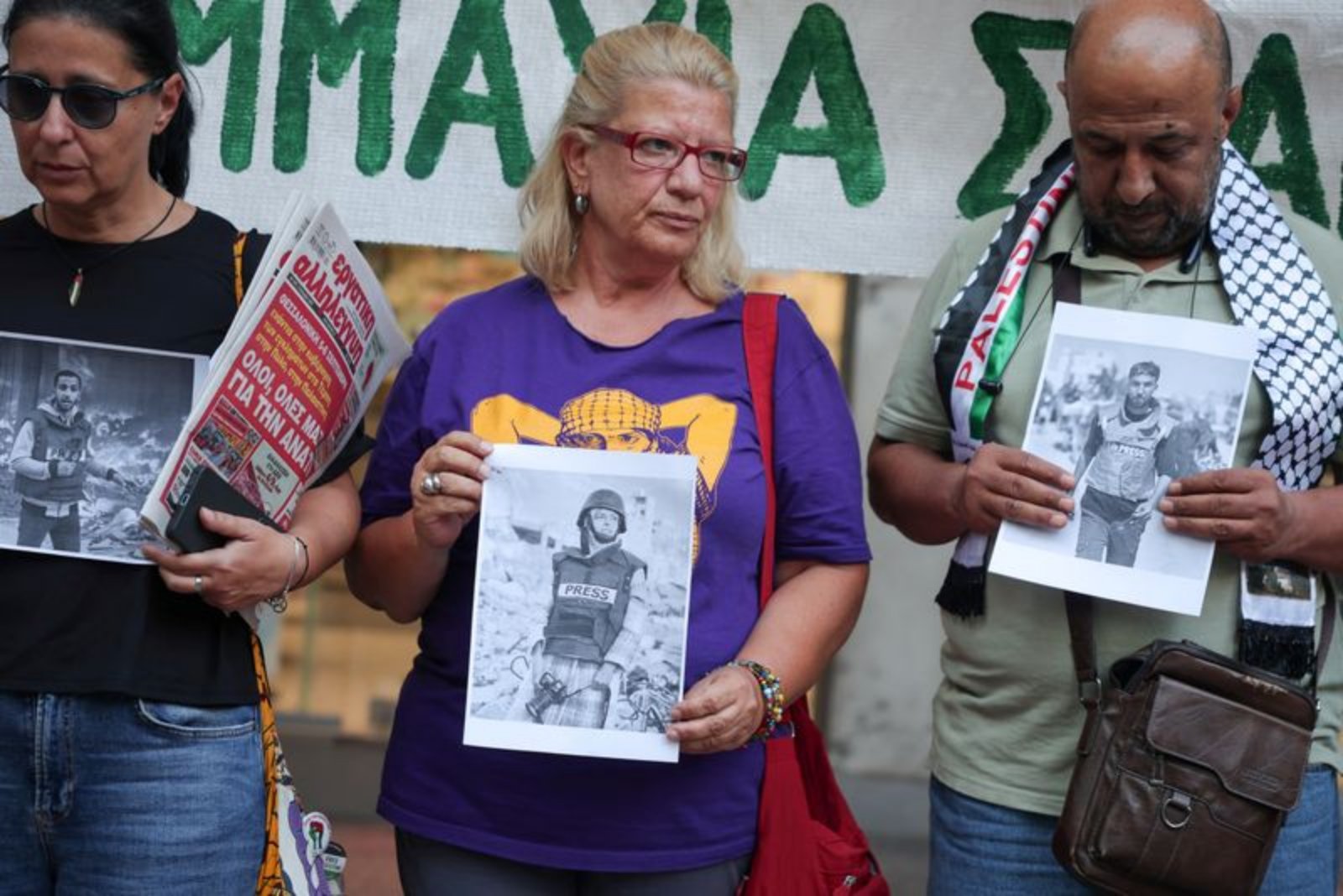
WASHINGTON, Feb 25 - The Committee to Protect Journalists (CPJ) said on Wednesday that 129 journalists and media workers were killed in the course of their duties around the world in 2025, marking a record high for the second year running. According to the CPJ's annual report, two-thirds of those fatalities were caused by Israeli fire.
The New York-based independent organisation, which documents attacks on the press, recorded that Israeli fire resulted in 86 deaths of journalists and media workers in 2025. The report noted that most of those killed were Palestinians working in Gaza, and that the tally included 31 workers who died in an attack on a Houthi media centre in Yemen - identified by the CPJ as the second deadliest single incident it has recorded.
Of the 47 deaths the CPJ classified as intentionally targeted killings - labelled "murder" in its accounting - Israel was responsible for 81 percent. The CPJ cautioned that its verified figures for Gaza were probably conservative because access restrictions impeded independent verification.
The Israeli military did not respond to a request for comment on the CPJ's findings. Previously, Israeli authorities have maintained that their forces target combatants and that operations in combat zones carry inherent risks to civilians and non-combatants. In September, Israel acknowledged an airstrike on the media centre in Yemen, calling it a propaganda arm of the Houthis. The CPJ report said that in several cases Israel has acknowledged targeting journalists in Gaza it said were linked to Hamas, but that it had not provided verifiable evidence to support those assertions.
"Deadly smears," the CPJ said, referring to allegations that slain reporters had ties to militants.
Because Israel does not permit foreign journalists to enter Gaza, the CPJ's report observed that all media workers killed there were Palestinian. The organisation also highlighted that its historical dataset - which extends back more than three decades - indicates the Israeli military has now committed more targeted killings of members of the press than any other government military on record.
The report found that at least 104 of the 129 journalists killed in 2025 died in connection with conflicts. Beyond Gaza and the Yemen incident, the deadliest countries for media workers included Sudan, with nine killed, and Mexico, with six fatalities. Four Ukrainian journalists were reported killed by Russian forces and three journalists died in the Philippines, the CPJ said.
Russia has denied deliberately targeting journalists and has accused Ukraine of targeting Russian reporters; Kyiv has denied those claims. The CPJ report did not receive an immediate response from Russia's embassy in Washington.
Among those slain was Hussam al-Masri, a Reuters journalist who was killed by Israeli fire while operating a live video feed at Gaza's Nasser Hospital in August. The attack also killed four other journalists. Israeli Prime Minister Benjamin Netanyahu expressed regret, calling the incident a "tragic mishap." The Israeli military had stated that it had targeted a Hamas camera, but a Reuters investigation later determined the device belonged to Reuters.
The CPJ's findings underline the concentrated risks faced by media workers in active conflict zones and raise questions about the ability to independently verify incidents where access is restricted. The organisation's annual accounting documents both battlefield-related casualties and those it assesses as intentional killings, providing a consolidated view of threats to press freedom and safety during 2025.
Context and takeaways
- The CPJ recorded 129 media workers killed while working in 2025, a new high, and attributed 86 of those deaths to Israeli fire.
- Most journalists killed in Gaza were Palestinian due to restrictions on foreign media access; the report says targeted killings by a single military are now higher than for any other government since the CPJ began collecting data more than three decades ago.
- The deadliest incidents included an attack on a Houthi media centre in Yemen that killed 31 workers, and the August strike at Gaza's Nasser Hospital that killed a Reuters journalist and four others.