
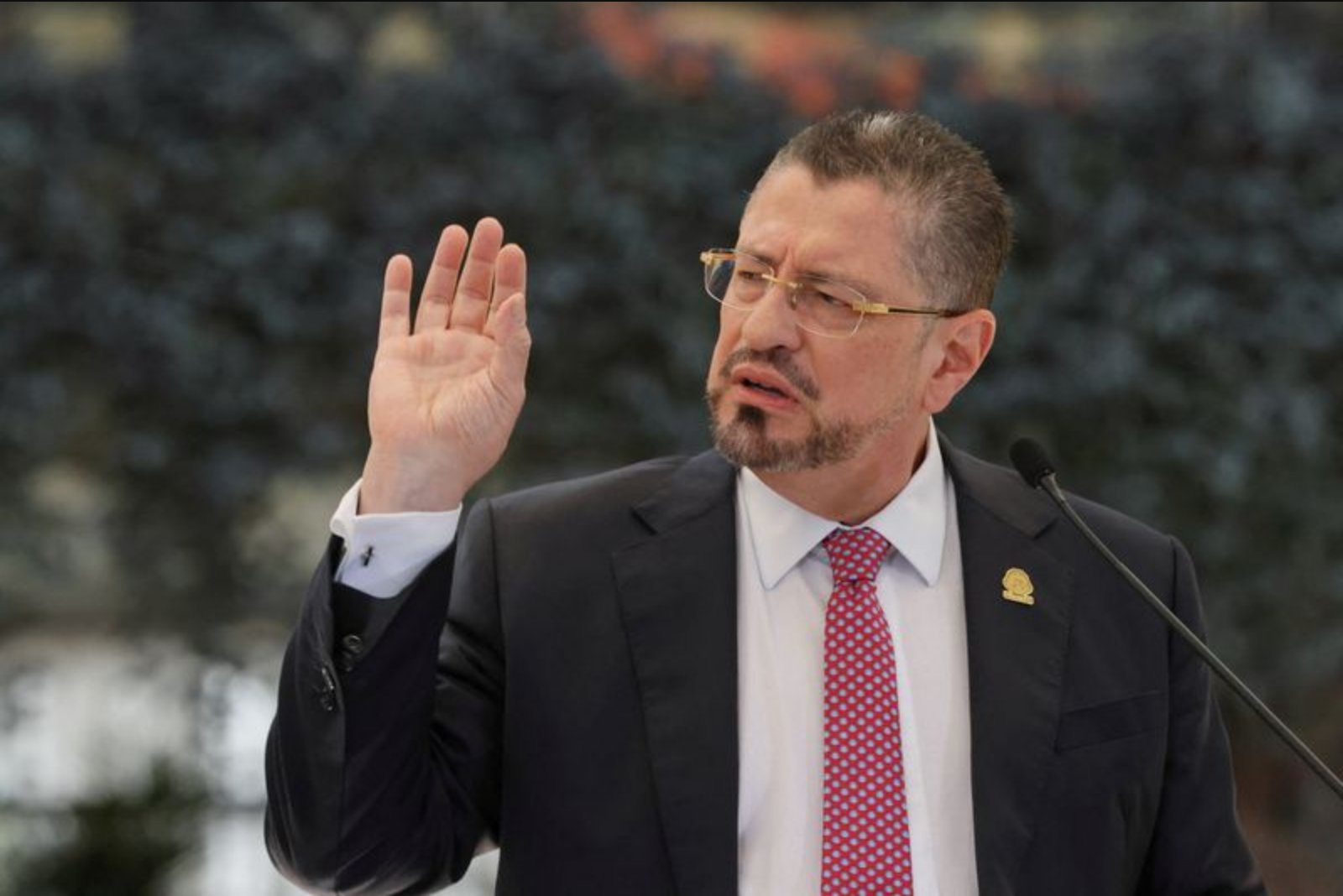
SAN JOSE - Costa Rica’s president, Rodrigo Chaves, said on Wednesday that his administration will not recognize the legitimacy of Cuba’s government and has instructed authorities to close the Cuban embassy in San Jose.
At an event that included the presence of the U.S. ambassador, Chaves issued a stern denunciation of Cuba’s ruling system. "Costa Rica does not recognize the legitimacy of Cuba’s Communist regime, given the mistreatment, repression, and undignified conditions endured by the inhabitants of that beautiful island," he said. He added, "We must cleanse the hemisphere of Communists."
The announcement was delivered amid a cluster of regional diplomatic changes. Earlier in the month Ecuador closed the Cuban embassy in its capital after declaring Cuban Ambassador Basilio Gutierrez and his diplomatic staff "persona non grata."
Chaves and Ecuador’s president were among several right-leaning Latin American leaders who attended an anti-crime summit hosted by the U.S. in Florida this month, identified at the time as "Shield of the Americas." The Costa Rican president’s remarks came in that same political context.
Statements from the United States referenced in the same timeframe included U.S. President Trump signaling he expected to have the "honor" of "taking Cuba in some form." Separately, U.S. administrative measures described as an oil blockade on the Caribbean island have been linked in reports to a cascade of service interruptions in Cuba.
Those shortages have produced widespread blackouts that have knocked out power across homes, hospitals and businesses, according to the accounts. Transportation services have also been affected, with specific mention of Havana’s trash collection system being battered by the shortages. Some residents have responded to the power disruptions by turning to solar panels for electricity.
The Costa Rican decision to withdraw diplomatic recognition and close the embassy formalizes a rupture in official ties and aligns Costa Rica with other governments that have taken similar steps in recent weeks. The immediate practical consequences for consular services, diplomatic staff and bilateral interactions were not detailed in the announcement.
Summary
Costa Rica announced it will no longer recognize the legitimacy of Cuba’s government and ordered the Cuban embassy in San Jose closed. The declaration, made at an event attended by the U.S. ambassador, accused Cuba’s ruling system of mistreatment and repression. The action follows Ecuador’s earlier expulsion of Cuba’s ambassador and comes amid U.S. measures that have been associated with widespread power outages and disruptions in Cuba.
Key points
- Costa Rica has declared it does not recognize the legitimacy of Cuba’s government and will close the Cuban embassy in San Jose - relevant to diplomacy and government relations.
- U.S. measures, including an oil blockade, have been reported alongside widespread blackouts that disrupted power to homes, hospitals and businesses in Cuba - relevant to energy and health sectors.
- Ecuador previously closed its Cuban embassy and declared Ambassador Basilio Gutierrez and his staff persona non grata; leaders from both countries attended the "Shield of the Americas" summit - relevant to regional political alignments and foreign policy.
Risks and uncertainties
- Continued or expanded power shortages in Cuba could prolong disruptions to households, hospitals and businesses, creating sustained impact on the energy and healthcare sectors.
- Interruptions to municipal services, such as waste collection in Havana, present ongoing public health and sanitation risks tied to transportation and municipal services.
- Regional diplomatic realignments, including embassy closures and declarations of diplomatic personnel as persona non grata, create uncertainty for bilateral relations and consular services between affected countries.