
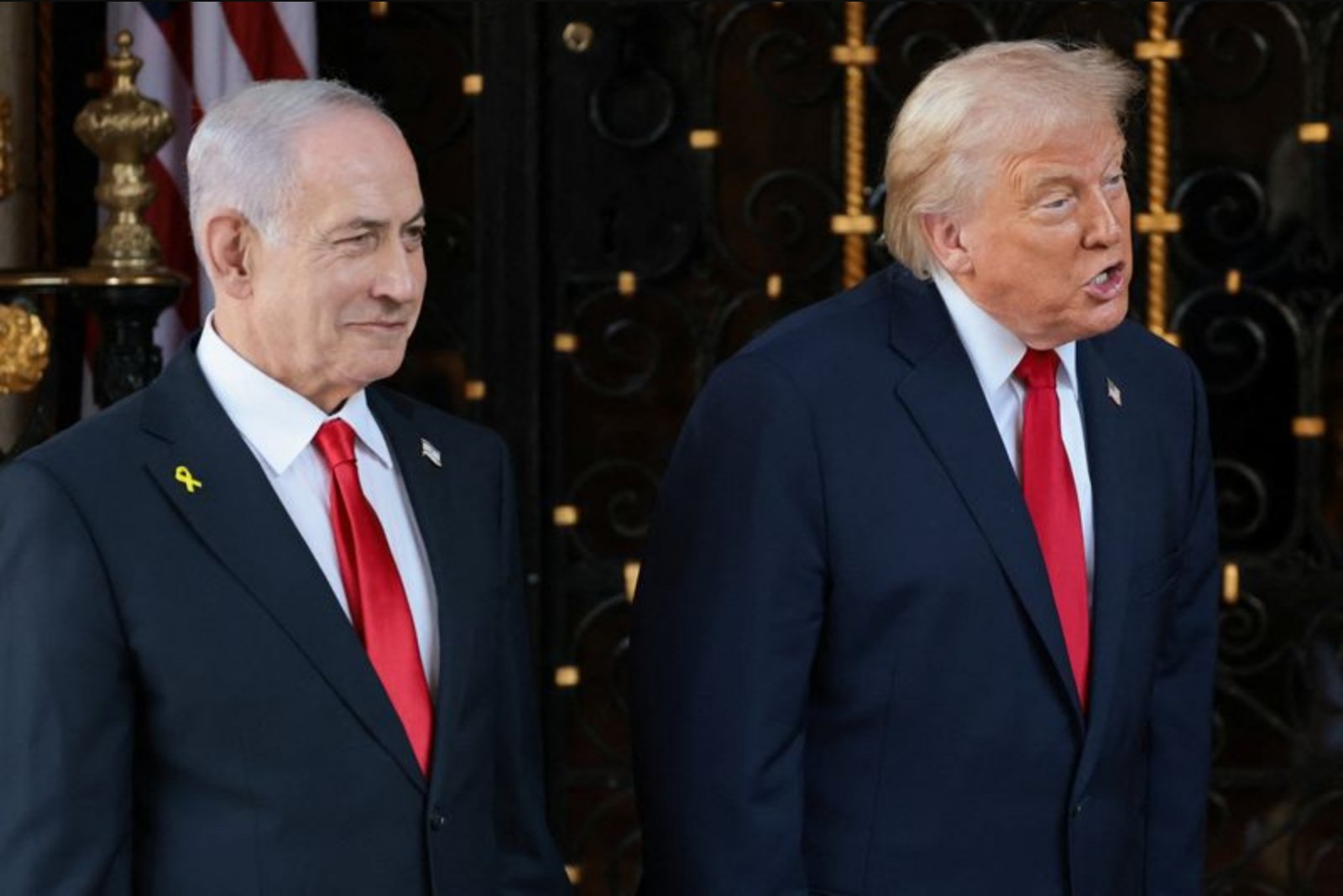
The conflict directed at Iran has already produced a clear distribution of political gains and losses, according to analysts monitoring the fallout. Observers point to a strengthened domestic position for Israeli Prime Minister Benjamin Netanyahu amid a campaign that has shifted Israeli focus away from Gaza and toward Iran. At the same time, they say U.S. President Donald Trump confronts escalating economic and geopolitical shocks for both global markets and the Gulf Arab states that have absorbed a disproportionate share of the risks.
Analysts describe the emerging picture in stark terms. "There is a clear winner and a clear loser," said Aaron David Miller, a former U.S. Middle East negotiator. "Netanyahu is by far the key winner. He has demonstrated Israel's military competence. The Gulf states are by far the biggest losers."
For Israel's leader, the war has reframed the political landscape in ways that play to his strengths, according to analysts. The campaign's focus on Iran concentrates national attention on security and deterrence - areas where Netanyahu's credentials on both defense and economic stewardship resonate. In Israel, the war is widely characterized not as a discretionary operation but as a necessary response, said Natan Sacks, a senior fellow at the Middle East Institute. "Even if regime change doesn't happen," Sacks said, "weakening Iran and the (militia) axis it leads is a huge goal for Netanyahu."
By contrast, analysts say the conflict has placed the U.S. president in a predicament with limited satisfactory paths forward. Officials and experts identify three unappealing options for Trump: extend the strikes and risk a prolonged campaign; declare victory and hope Tehran stands down; or significantly escalate the confrontation. None of these paths, they argue, constitutes a clear off-ramp.
"For Trump, there is no off-ramp that would allow him to declare victory and walk away," Miller said. Iran expert Karim Sadjadpour framed the contrast in expectations and reality: Trump reportedly sought an unconditional Iranian surrender and anticipated a pliant outcome, described metaphorically as an Iranian equivalent of Venezuela's Delcy Rodríguez. Instead, Sadjadpour said, the president has encountered an Iranian leadership he likened to "an Iranian Kim Jong-un," implying a resilient and defiant adversary.
Operationally, Israeli officials describe a division of labor in the aerial campaign. They say Israel has concentrated strikes on western and northern Iran, targeting ballistic missile and nuclear-related sites, while U.S. forces have focused on eastern and southern areas, including actions intended to degrade Iran's naval reach in and around the Strait of Hormuz. Israeli operations are reported to have included the killings of senior Iranian officials, with Ali Larijani killed on Tuesday and Intelligence Minister Esmail Khatib killed on Wednesday, according to officials.
Defence Minister Israel Katz is reported to have said that he and Prime Minister Netanyahu had authorised the military to strike any senior Iranian official located by forces, without requiring further political approval. Despite these reported gains, analysts caution that the attacks have not produced an endpoint for the war.
U.S. officials and intelligence assessments also cast doubt on a rapid resolution. U.S. intelligence chief Tulsi Gabbard told Congress that while Iran's government has been weakened by the conflict, it remains intact and that Tehran and its proxy networks retained the capacity to mount attacks against U.S. and allied interests across the region.
The unfolding conflict is producing acute tensions in the Gulf, where analysts say the economic and security exposure is greatest. As Iran directs missiles and drones at commercial hubs and as activity in the Strait of Hormuz is disrupted - the waterway through which roughly a fifth of the world's oil transits - Gulf Arab states confront the prospect that their economic and security future has been put at risk.
"The common threat they (Gulf Arab states) now perceive is nothing short of the future security and stability of the Gulf," Miller said. "The notion that the Gulf represents the future of the region is now at stake - and with it, the Gulf's vision for itself."
Analysts point to a divergence in how Israel and the United States perceive acceptable levels of instability in Iran. Israel may be willing to tolerate deeper disruption inside Iran because it calculates that the regional fallout will be more limited for Israel than for its neighbors. That calculus is said to be influenced by what some analysts describe as a weakening of Tehran's proxies, including Hamas and Hezbollah, over recent years.
Washington and its Gulf partners, on the other hand, are described as more sensitive to damage to energy infrastructure and disruptions to shipping that could spike oil prices and slow trade. Assaf Orion, a former head of strategy with the Israeli military, said that regional states are questioning whether Israel's aim could be to produce chaos inside Iran, and that Israel itself would be less affected by such instability than neighboring states or the United States.
Those different perceptions of risk - Israel viewing Iran primarily as an existential threat, and Washington prioritizing avoidance of a protracted conflict with heavy economic cost - create friction in allied approaches. The tension was illustrated by reporting on an attack on Iran's South Pars gasfield, the world's largest offshore natural gas deposit, which is shared with Qatar. That strike drew a sharp response from President Trump, who said on social media that the U.S. "knew nothing about this particular attack" and emphasised that Qatar was not involved.
The president's post underscored the balancing act between a close military partnership with Israel and strategic ties to oil-rich Gulf partners. Israeli officials say that Mr. Trump and Prime Minister Netanyahu have spoken by phone daily since the outbreak of hostilities. Trump denied prior knowledge of the South Pars attack, a statement that contrasts with earlier assertions from both him and Netanyahu that their militaries were operating in close coordination. Israeli media widely reported that the attack had been conducted with U.S. consent, though Israel has not publicly claimed responsibility. Iranian officials are said to be calibrating their own escalation to inflict costs, restore deterrence and seek sanctions relief, leaving the United States an exit only at a political or policy cost.
Inside Israel, public support for the campaign against Iran appears strong, but the political payoff for Mr. Netanyahu is not yet guaranteed. Polls conducted ahead of elections due later in the year indicate his right-wing coalition remains short of a parliamentary majority. Surveys show his camp around 50 seats in the 120-member Knesset, down from 68.
That gap between public backing for the military campaign and the electoral arithmetic is partly obscured by market indicators. Israel's stock market has risen and the shekel has strengthened since the campaign began, signals that can project confidence. But critics and some observers warn these financial indicators may mask deeper vulnerabilities tied to an unresolved war.
Aviv Bushinsky, a former adviser to Mr. Netanyahu, said the campaign will ultimately be judged in binary terms: either Iran's leadership falls, or it does not. "Anything short of that risks turning early military gains into a political liability for Netanyahu," Bushinsky said, noting Mr. Netanyahu's framing of the campaign as a search for "total victory." He warned that if Ali Khamenei's system survives, even in a weakened form, public narratives could swing from triumph to overreach and that unresolved threats from Hamas in Gaza and Hezbollah in Lebanon could re-emerge.
Market responses may be pricing resilience for now, but analysts caution they may underestimate the economic and strategic cost of a war that remains unfinished.
A promotional element included with the original reporting highlighted claims about AI-driven investment portfolios. It stated that, year to date, two out of three global portfolios were outperforming their benchmark indexes, that 88% of portfolios were in positive territory, and that a flagship technology-focused strategy had doubled the S&P 500 within 18 months, citing notable winners including Super Micro Computer and AppLovin. The details were presented as performance metrics tied to an AI-powered stock selection approach.