
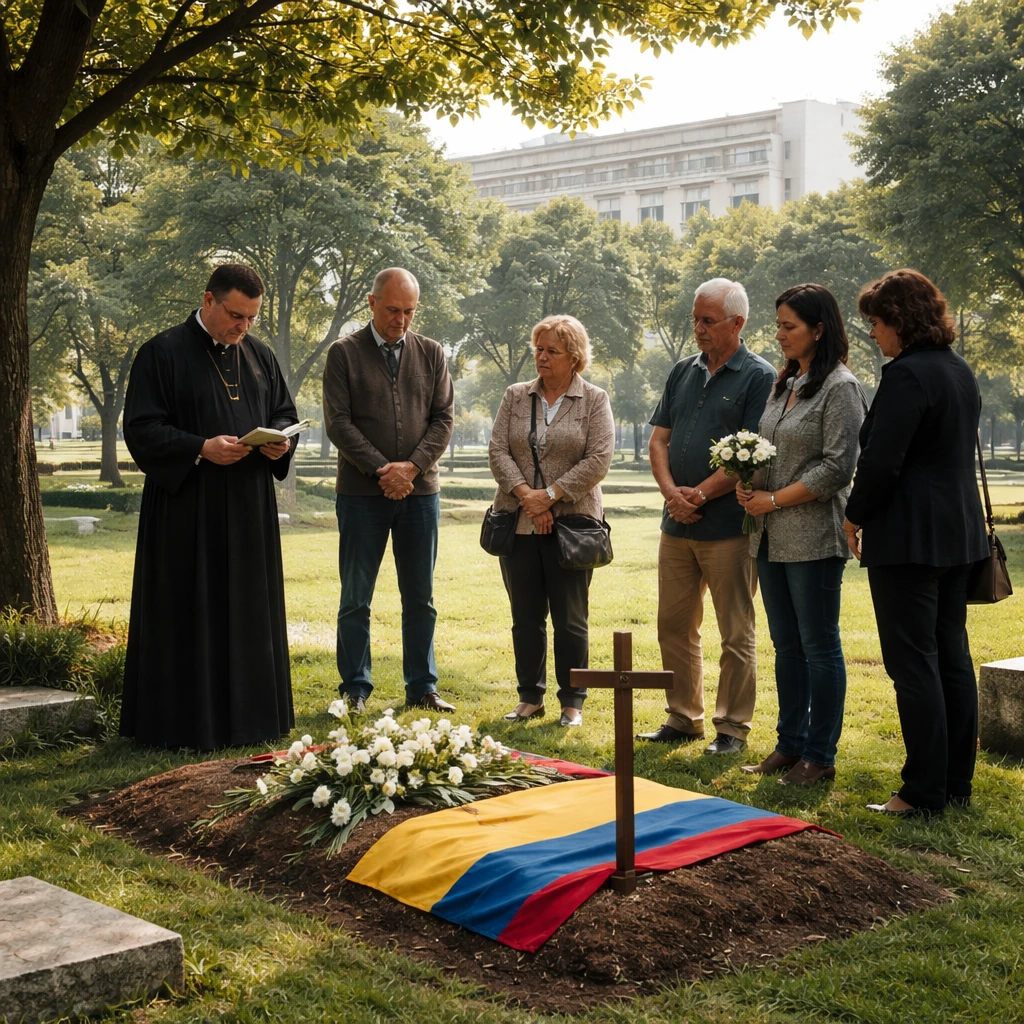
The Colombian body charged with locating and identifying the nation’s disappeared announced on Monday that it has identified the remains of Camilo Torres, a Catholic priest who joined the National Liberation Army (ELN) and was killed in combat in the 1960s.
The Search Unit for Disappeared People - known by its Spanish acronym UBPD - was established under the 2016 peace accord between the government and the Revolutionary Armed Forces of Colombia (FARC). Its mandate is to coordinate archival searches and forensic work to find people who vanished over the course of decades of conflict. The scope includes those forcibly disappeared by right-wing paramilitaries, insurgent groups and state security forces, as well as individuals forced into armed groups and soldiers listed as missing in action.
UBPD Director Luz Janeth Forero said investigators relied on a mix of public and classified documentation, as well as records from the military justice system, to determine where the military had interred Torres after his death. Bones recovered in 2024 from the military section of a cemetery in Bucaramanga were tested and compared against a DNA sample taken from the exhumed remains of Torres’ father, Calisto, from a cemetery in Bogotá.
"After 60 years of disappearance, the search unit found, identified and completed a dignified handover of Father Camilo Torres," Forero told journalists.
Camilo Torres came from a well-connected family in Bogotá and was an adherent of liberation theology, a movement that combined Catholic faith with advocacy for social justice and anti-imperialist positions. He joined the ELN approximately four months before being killed in February 1966 during a skirmish with the army in eastern Santander province.
The ELN, which formed in 1964, remains active today and has faced its own accusations of forced disappearances. The group has engaged in intermittent peace talks with successive Colombian administrations and stated in December that it was prepared to resume negotiations.
The UBPD began operations in 2017. Since then, the unit has located nearly 5,000 sets of remains and has been able to identify and hand over roughly 700 of those to surviving relatives. In addition to posthumous identifications, the unit has located 500 people who were previously reported as disappeared and found alive.
On Sunday - the 60th anniversary of Torres’ death - the identified remains were handed over to Javier Giraldo, a Catholic priest noted for his advocacy on behalf of conflict victims. Giraldo paid tribute to Torres’ mother, Isabel Restrepo, noting her efforts to locate her son while she was still living. He said Torres will be interred at Bogotá’s National University, where he had studied and served as a chaplain.
Giraldo also observed that while the Catholic Church historically rejected Torres’ decision to join the ELN, there is growing willingness within some Church circles to engage in a more nuanced conversation about his roles as a chaplain, activist and social justice thinker.
The identification of Torres’ remains reflects the UBPD’s broader archival and forensic approach - combining documentary research with DNA science - to respond to a long list of unresolved disappearances. The case underscores the unit’s work to provide answers to families decades after loved ones vanished amid Colombia’s protracted internal conflict.