
World March 18, 2026

Colombian Defense Minister Says Joint Inquiry Underway After Deadly Explosions Near Ecuador Border

Bogotá and Quito assess whether cross-border actions breached sovereignty after January blasts at cocaine labs left multiple dead

By Maya Rios
Colombian Defense Minister Says Joint Inquiry Underway After Deadly Explosions Near Ecuador Border

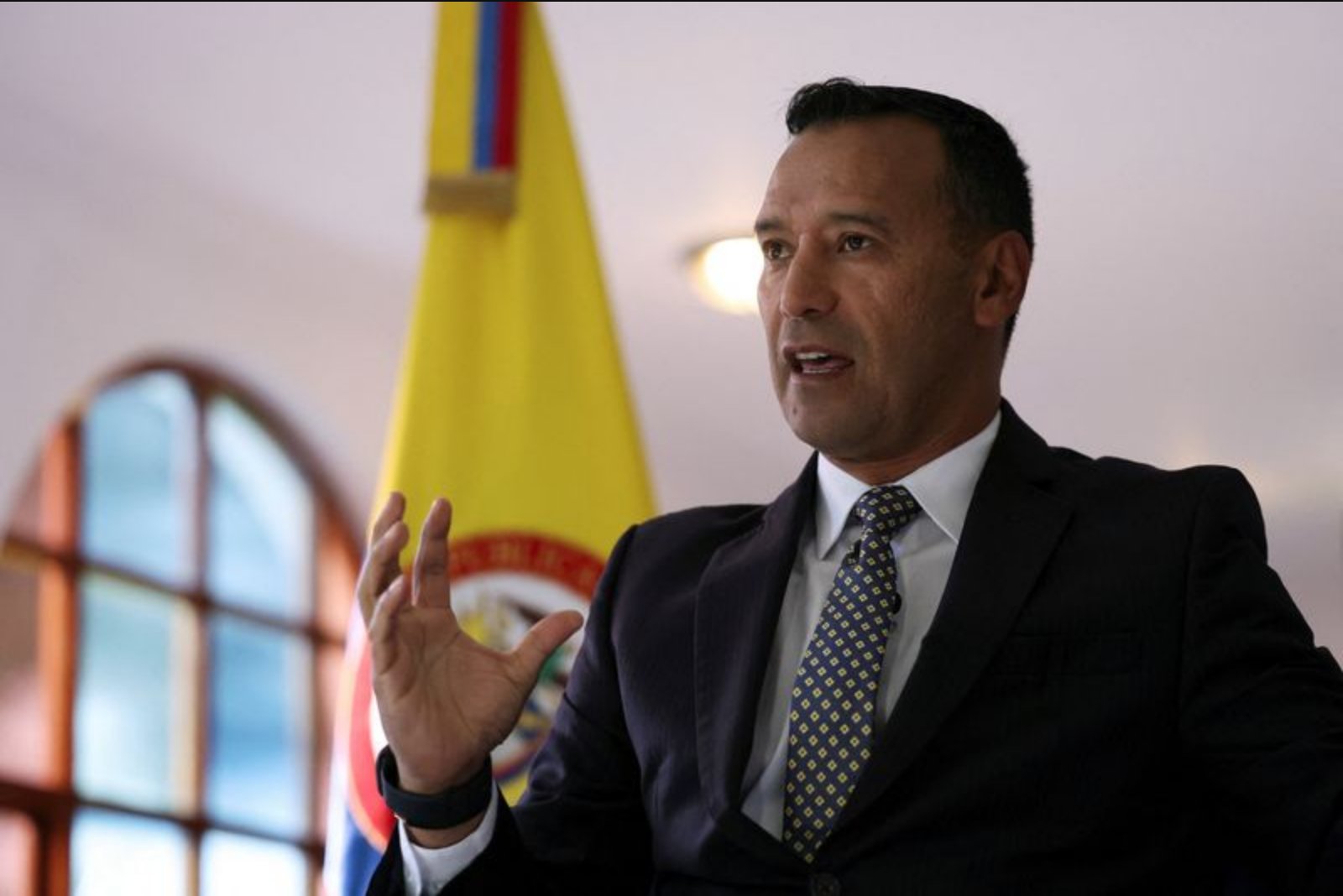
Colombia's Defense Minister Pedro Sanchez said authorities from both countries are examining whether sovereignty was violated following explosions at cocaine-processing sites near the Ecuador border that killed 14 people in January. The statement came after President Gustavo Petro suggested Ecuadorian actions had caused 27 deaths, an assertion denied by Ecuador's president, who said his forces struck traffickers on Ecuadoran soil.

Key Points

  • Colombian Defense Minister Pedro Sanchez said explosions at cocaine labs near the Ecuador border killed 14 people in January and that Colombian and Ecuadorean authorities are jointly examining potential sovereignty violations.
  • President Gustavo Petro accused Ecuador of actions resulting in 27 deaths, describing recovered bodies as "charred," but provided no additional evidence; Ecuador's president Daniel Noboa denied the allegation and said operations struck traffickers within Ecuador.
  • Ecuador launched two weeks of major security operations in four Pacific coast provinces; the border region is a known hub for drug trafficking with shipments then smuggled north by sea - sectors impacted include national security, defense, and maritime logistics.

Colombian Defense Minister Pedro Sanchez said on Wednesday that explosions at cocaine laboratories near the Ecuador border in January resulted in 14 fatalities, and that Colombian and Ecuadorean officials are jointly investigating whether any violation of sovereignty occurred.

Sanchez addressed the issue after Colombian President Gustavo Petro publicly accused Ecuador of actions that, he said, produced more than two dozen deaths in the border area. Petro earlier suggested that Ecuador had bombed Colombian territory and said 27 bodies were discovered, describing them as "charred". He did not present additional evidence or further information to support that claim.

Sanchez said a bomb recovered in Colombian territory appeared likely to belong to Ecuador's armed forces, and confirmed an ongoing collaborative review with Ecuadorean authorities into the events and circumstances surrounding the explosions.

Providing more detail on the casualties, Sanchez told journalists that 12 people in the border province of Nariño were killed on January 22. He added that two more people died under similar conditions at a second site on January 24. "The information we have at this moment is that those people died after being burned alive. The site where they died was a cocaine laboratory, and the causes and who was behind it are under investigation. Two other people died under similar conditions at another site on January 24," he said.

Ecuadorean President Daniel Noboa rejected Petro's accusations. Noboa said Ecuador's forces had targeted drug traffickers inside Ecuador and that the locations struck were hideouts used by narco-terrorism groups, which he described as mostly of Colombian origin. Ecuador's defense ministry did not immediately respond to a request for comment on Wednesday.

The developments follow an announcement by Ecuador of a two-week, large-scale security operation across four provinces on or near its Pacific coast, launched on Sunday to counter mounting gang violence. Quito has conducted repeated operations along its border with Colombia, a region the officials described as a significant transit area for drugs that are subsequently smuggled northward to the United States by sea.


This situation remains under investigation by authorities from both countries, with key questions focused on the provenance of the explosive device found in Colombia, the precise circumstances of the fatalities in January, and whether any cross-border actions constituted a breach of sovereignty.

Risks

  • Uncertainty over who carried out the strikes and the causes of the January deaths - this raises risks for bilateral relations and could affect defense and security coordination between Colombia and Ecuador.
  • Potential escalation of accusations and counter-claims between the two governments while investigations continue - this creates uncertainty for regional security operations and for communities along the border.
  • Ongoing gang violence and continued trafficking through the border corridor pose persistent operational risks for law enforcement and for maritime logistics involved in downstream smuggling routes to the United States.

More from World

Israel Expands Ground Presence in Southern Lebanon as Homes Are Searched Mar 18, 2026 Death Toll Rises Across Middle East as U.S. and Israel Strike Iran and Iran Retaliates Mar 18, 2026 Death of Larijani Narrows Tehran's Strategic Options and Complicates Wartime Governance Mar 18, 2026 U.S. Vice President Vance Expected to Visit Hungary in Show of Support for Orban Ahead of Tight Vote Mar 18, 2026 UK Says National Security Adviser Did Not Join Final U.S.-Iran Negotiations Mar 18, 2026