
Scientists warn that many plants that define familiar landscapes could face severe reductions in suitable habitat by the end of this century as climate change reshapes the combinations of temperature, moisture, soils and other local conditions they require.
Researchers modeled future geographic ranges for a broad sample of vascular plants - those species with tissues that transport water and nutrients and that represent almost all of the world’s plants. The study examined more than 67,000 species, roughly 18% of known vascular plants globally, and evaluated how greenhouse gas emissions scenarios for 2081-2100 would alter where species can survive.
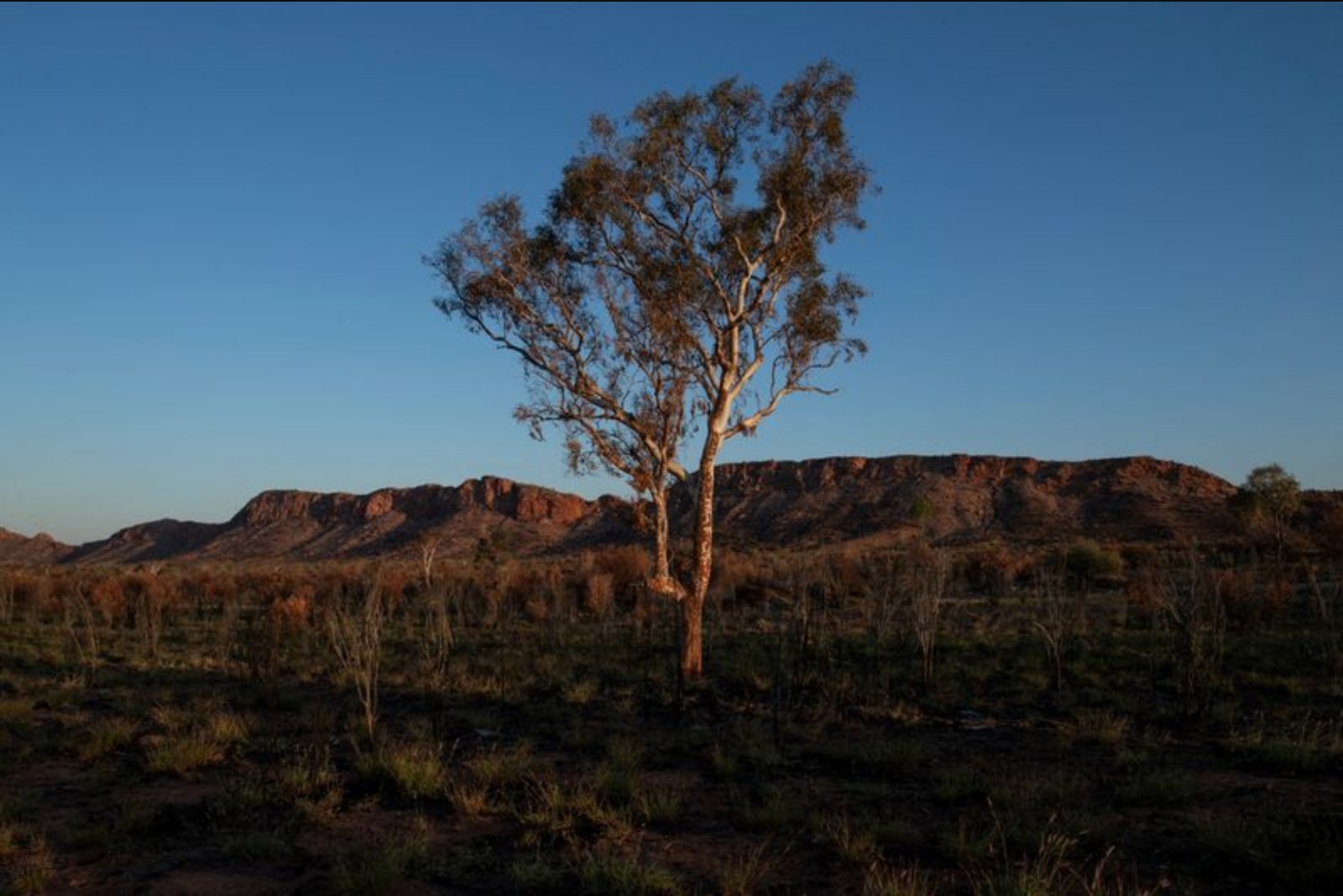
The analysis produced stark results: an estimated 7% to 16% of the studied species could lose more than 90% of their current range, a level of contraction that places them at high risk of extinction. Specific examples cited by the authors include the Catalina ironwood, also called island ironwood, a rare tree endemic to California; bluish spike-moss, a species from a plant lineage that dates back more than 400 million years; and about one third of Eucalyptus species, a group that is emblematic of Australian flora.
The study’s authors said the assessment was based on millions of plant-location records and on modeling climate futures for the 2081-2100 period. They emphasized that a species’ habitat is not merely a point on a map but the full set of environmental conditions it needs - temperature, precipitation, soil characteristics, land use and landscape features such as shade.
"One way to picture this is to imagine plants trying to follow a moving 'climate envelope.' As temperatures warm, many species can shift northward or uphill to stay cool enough. But temperature is only part of the story," Junna Wang, a Yale University postdoctoral researcher, and Xiaoli Dong, a professor of environmental science and policy at the University of California, Davis, said in joint comments.
Wang and Dong helped lead the study, which was published in the journal Science. Their work indicates that in many regions climate change will compress the particular combinations of conditions plants require, leaving fewer areas where all those conditions persist together.
The study also examined dispersal - how plants move across the landscape via seeds or spores carried by wind, water, animals or gravity. The researchers compared two scenarios: one that used realistic, generational movement rates and another that assumed plants could reach any newly suitable habitat immediately. Extinction risk was similar under both scenarios.
"If slow movement were the main problem, then allowing unlimited dispersal should dramatically reduce extinction risk. But that is not what we found," Wang and Dong said.
That finding carries important implications for conservation strategies. The authors noted that if dispersal limitation alone were driving losses, actions such as assisted migration - physically moving species to new areas - could substantially reduce extinction risk. But if the primary issue is an overall reduction in the amount of suitable habitat, simply moving species may not be sufficient.
The projected impacts are uneven across the globe. Cold-adapted species in the Arctic may suffer habitat loss as extremely cold climates contract. Dry areas, including parts of the western United States and regions with Mediterranean-type climates, face heightened risk from stronger drought, reduced soil moisture and increased wildfire frequency. In southern and eastern coastal Australia, coastlines may prevent species from shifting poleward in response to warming.
At the same time, the modeling suggests local plant diversity could increase over about 28% of Earth’s land surface as species shift into newly suitable zones. In some tropical and subtropical areas, increased rainfall rather than temperature change could open conditions for additional species. The researchers described the global outcome as a reshuffling: many species may disappear from some parts of their historical ranges while others establish in new places.
That reshuffling could create "novel communities" - mixes of plant species that have not historically coexisted. The study’s authors said they do not know how interactions within these new assemblages will unfold.
Plants form the foundation of most terrestrial ecosystems. They store carbon, stabilize soils, support wildlife and supply food, timber, medicines and other materials. Changes in plant distributions and diversity therefore can ripple through ecosystems and human economies.
"If climate change reduces vegetation cover, ecosystems may absorb less carbon dioxide from the atmosphere, which can further intensify warming. That creates a feedback loop in which climate change harms plants, and reduced plant cover/productivity in turn worsens climate change," Wang and Dong said. "Ultimately, protecting plant diversity is not only about conserving nature for its own sake - it is also about maintaining the ecological systems that support human societies."
The authors’ findings underscore limits to some conservation responses and point to broad uncertainty about how ecosystems and the services they provide will change as species ranges contract, expand or reorganize. Where habitats shrink overall, relocating species will not restore the full suite of conditions they require. Where novel communities emerge, outcomes for competition, cooperation and ecosystem function remain unclear.
Given plants’ central role in carbon storage, soil stability and provisioning of materials and medicines, shifts in plant diversity driven by climate change could have cascading environmental and economic consequences. The study’s results highlight both the scale of the potential loss and the complexity of managing plant diversity under changing climate conditions.
Summary: A global modeling study of over 67,000 vascular plant species finds that climate change could eliminate more than 90% of suitable habitat for 7% to 16% of those species by 2081-2100. The study, published in Science and led in part by Junna Wang and Xiaoli Dong, indicates that climate-driven reductions in the availability of suitable habitat - not only limits on dispersal - are a major driver of extinction risk, with regional patterns of loss and gain creating a global reshuffling of plant communities.