
Scientists who modeled future habitat suitability across tens of thousands of plants report that climate change is likely to redraw where many species can survive, and in some cases eliminate almost all suitable habitat by the end of this century. The study examined more than 67,000 species of vascular plants - about 18% of the world's known vascular flora - and projects sizable range contractions for a substantial share of them.
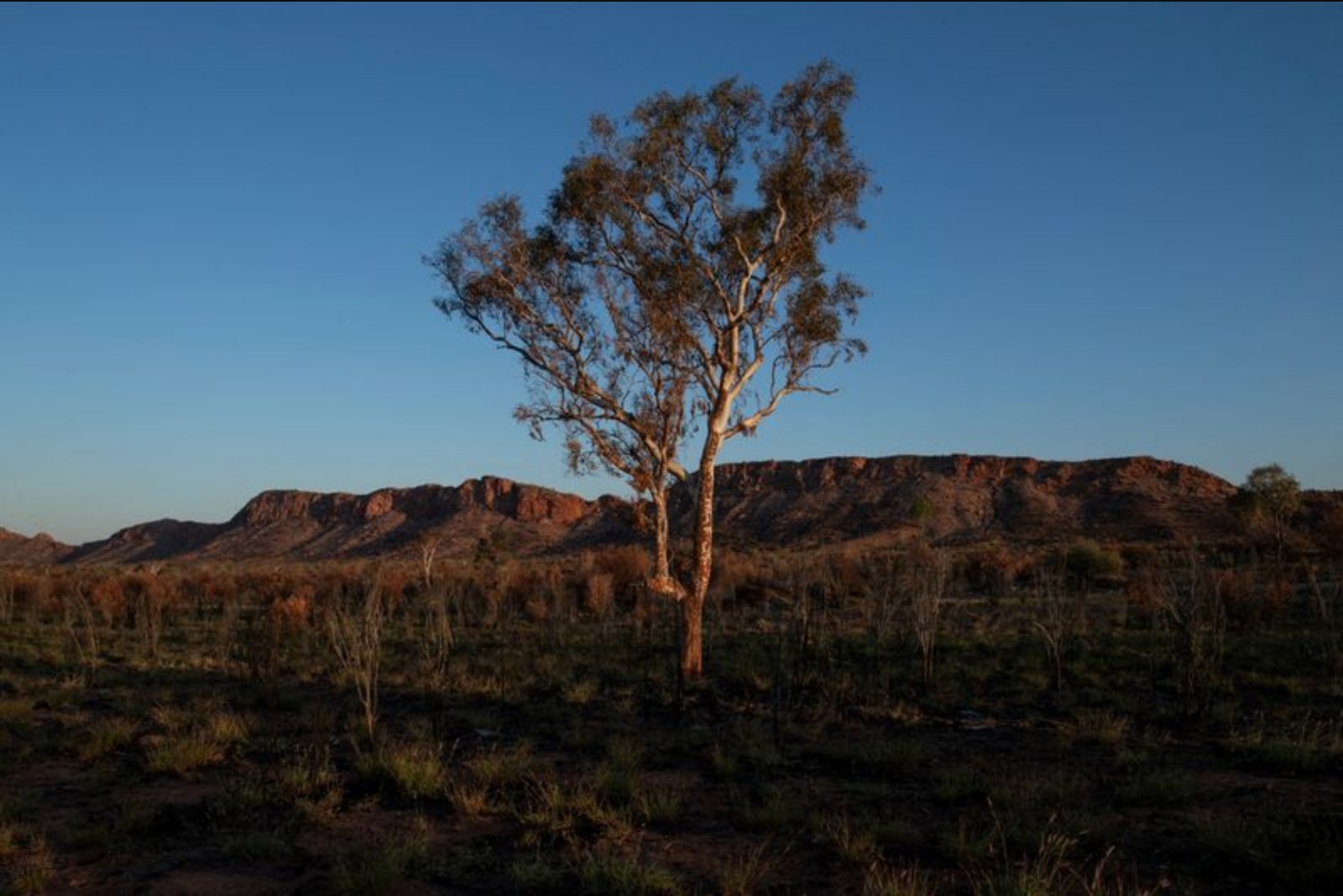
Using millions of occurrence records together with greenhouse gas emissions scenarios for 2081-2100, the researchers estimated that between 7% and 16% of the species studied could lose more than 90% of their present-day range, putting them at elevated risk of extinction. Examples highlighted by the authors include Catalina ironwood, also known as island ironwood - a rare tree endemic to California - the bluish spike-moss, a member of a lineage stretching back more than 400 million years, and roughly one third of Eucalyptus species, a group central to many Australian landscapes.
The analysis treats habitat as a complex set of conditions rather than as a simple geographic footprint. Habitat suitability in the study encompasses temperature and rainfall regimes, soils, land use and landscape features such as shade - all the elements a plant needs to survive and reproduce. When those combinations change or vanish, a species' climate envelope - the full set of environmental conditions it requires - can move, shrink or disappear.
"One way to picture this is to imagine plants trying to follow a moving 'climate envelope.' As temperatures warm, many species can shift northward or uphill to stay cool enough. But temperature is only part of the story," said Junna Wang, a Yale University postdoctoral researcher, and Xiaoli Dong, a professor of environmental science and policy at the University of California, Davis, in joint comments. Wang and Dong helped lead the study published in the journal Science.
In many regions, the research indicates, climate change is reducing the number of places where all required conditions still occur together. That leaves fewer patches of suitable habitat - and in some cases none at all - even if temperature alone would suggest potential new ranges further north or at higher elevation.
Plants disperse across landscapes by seeds or spores, moved by wind, water, animals or gravity, often over multiple generations. To assess whether limited dispersal alone explains extinction risk, the researchers compared scenarios with biologically realistic movement against a hypothetical scenario in which species could reach any newly suitable area without constraint. The projected extinction rates were similar between the two approaches.
"If slow movement were the main problem, then allowing unlimited dispersal should dramatically reduce extinction risk. But that is not what we found," Wang and Dong said. This result complicates conservation thinking: if dispersal limits were the primary barrier, interventions such as assisted migration - physically relocating species to new suitable areas - could be an effective remedy. But if climate change is reducing the amount of suitable habitat overall, moving species may not be sufficient to prevent loss.
The study finds substantial regional variation in outcomes. Cold-adapted plants in polar regions face habitat loss as extreme cold climates contract. Drylands, including parts of the western United States and Mediterranean-climate areas, are exposed to heightened risk from stronger droughts, lower soil moisture and more frequent wildfires. In parts of southern and eastern coastal Australia, geographic constraints such as coastlines may limit poleward shifts that plants would otherwise need to track cooler conditions.
Not all changes are projected to be losses at local scales. The models suggest that local plant diversity could rise across roughly 28% of Earth's land surface as species move into newly suitable areas. Some tropical and subtropical regions may become suitable for additional species where changes in rainfall - rather than temperature alone - create favorable conditions. Even so, the authors caution that local increases in species richness do not imply that plants are doing better globally.
The reshuffling of species could create so-called "novel communities": combinations of plants that have not historically coexisted but will encounter one another under new climatic regimes. The researchers note that how these novel interactions will unfold remains unknown.
Plants form the foundation of most terrestrial ecosystems. They sequester carbon, stabilize soils, support wildlife and supply humans with food, timber, medicines and other materials. Changes in plant diversity and distribution therefore have the potential to trigger cascading effects on natural systems and on human societies that depend on those systems.
"If climate change reduces vegetation cover, ecosystems may absorb less carbon dioxide from the atmosphere, which can further intensify warming. That creates a feedback loop in which climate change harms plants, and reduced plant cover/productivity in turn worsens climate change," Wang and Dong said. They added that protecting plant diversity is not only about conserving nature for its own sake but also about maintaining the ecological systems that support human societies.
Study methodology and scope
The study's scope - more than 67,000 vascular plant species and millions of location records - provides a broad view of potential future outcomes under emissions scenarios for the late 21st century. By integrating multiple environmental variables beyond temperature, the analysis emphasizes that habitat suitability depends on a suite of interacting factors, and that loss of suitable combinations can occur even where temperature alone might appear to permit range shifts.
Implications for conservation
Because the study finds similar extinction rates under both limited and unlimited dispersal scenarios, conservation strategies focused solely on facilitating movement may be insufficient in many cases. Protecting and managing the remaining suitable habitats and addressing the underlying drivers of climate change emerge as necessary complements to targeted species interventions.
Overall, the findings underscore the vulnerability of a substantial fraction of the world's vascular plants to climate-driven habitat loss, with implications for ecosystems and sectors that rely on plant services.