
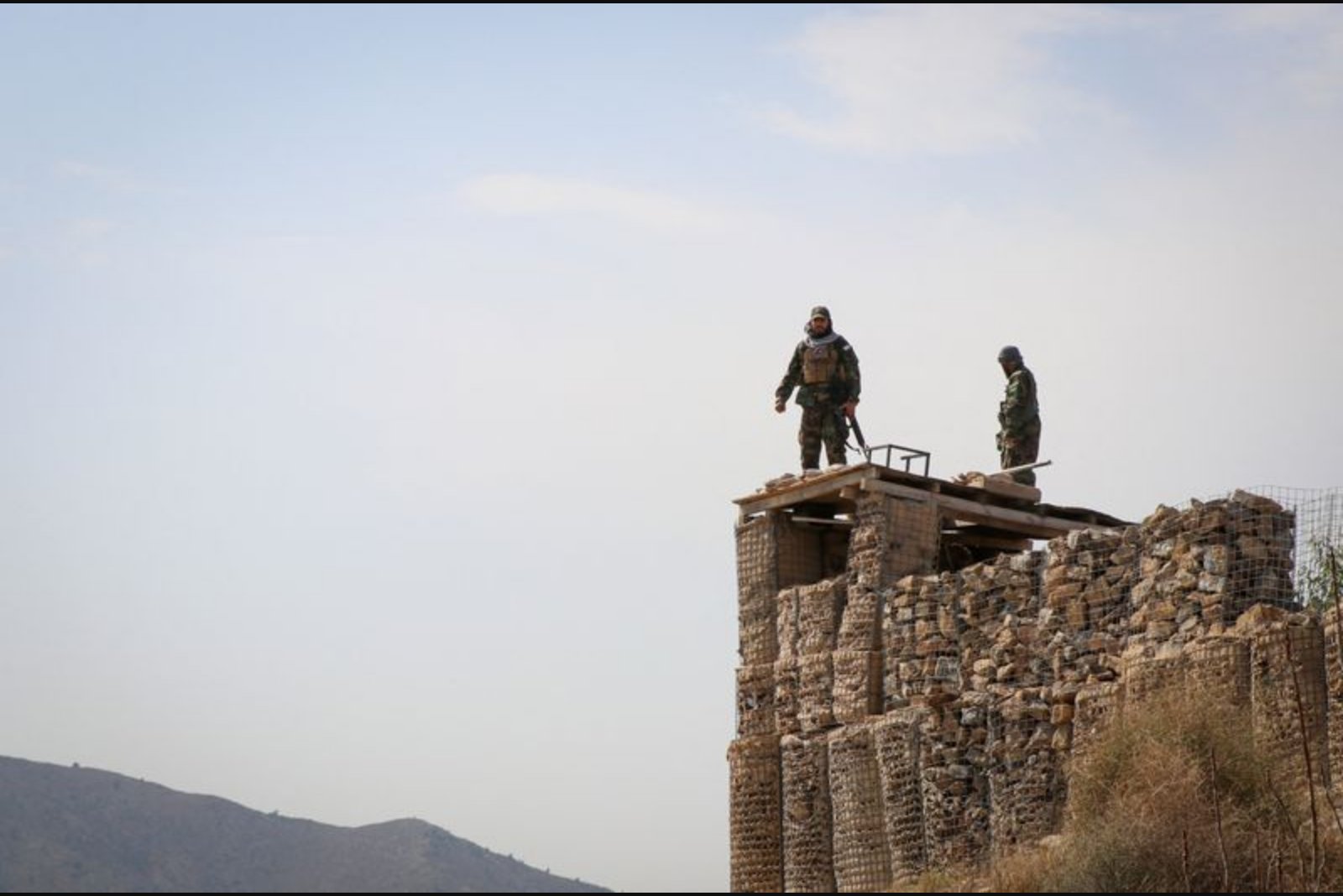
Kabul, March 1 - Explosions and gunfire shattered parts of Kabul before dawn on Sunday as Afghan authorities said they had carried out air defence attacks against Pakistani aircraft over the capital. The incidents added to a week of cross-border strikes and retaliatory operations between Afghanistan and Pakistan, heightening concerns about an extended conflict along their 2,600-km (1,615-mile) frontier.
Residents reported blasts before sunrise, followed by bursts of gunfire, and a witness described the scene as chaotic. It was not immediately clear what targets were hit or whether there were casualties.
The self-styled Taliban administration said Afghan forces had engaged Pakistani jets above Kabul. Taliban spokesperson Zabihullah Mujahid said:
"Air defence attacks were carried out in Kabul against Pakistani aircraft. Kabul residents should not be concerned,"
Pakistan’s prime minister’s office, its information ministry and the military did not respond to requests for comment on the reported strikes.
The violence follows a series of Pakistani air strikes inside Afghanistan earlier in the week that Islamabad said were aimed at militant infrastructure. Afghan officials characterized those strikes as violations of Afghanistan's sovereignty and announced retaliatory operations along the shared border.
Pakistan has accused Afghanistan of harbouring militants from Tehreek-e-Taliban Pakistan (TTP), whom Islamabad says are conducting an insurgency inside Pakistan. Afghanistan has denied those accusations, stating it does not permit Afghan soil to be used against other countries and describing Pakistan’s security challenges as an internal matter.
Pakistani security officials have described an ongoing operation called "Ghazab Lil Haq", meaning "Wrath for the Truth", and said their forces had attacked and destroyed Afghan posts and camps. Both Kabul and Islamabad have released conflicting casualty figures and accounts of losses inflicted on the other side. These claims could not be independently verified.
Iran, which shares borders with Afghanistan and Pakistan, had offered to help facilitate dialogue between the neighbours before itself coming under attack on Saturday from Israel and the U.S. bent on diminishing Iran's military capability. The regional tensions have drawn international calls for restraint.
Several countries and international bodies have urged de-escalation and offered to assist in mediating a ceasefire. Qatar and Saudi Arabia have publicly called for restraint and said they could help mediate. Saudi Arabia, Russia, China, the European Union and the United Nations have all urged the parties to avoid further escalation and to pursue talks. The United States said it supports Pakistan’s right to defend itself.
Pakistan Defence Minister Khawaja Muhammad Asif characterized the clashes as "open war". Afghanistan’s Interior Minister Sirajuddin Haqqani warned the confrontation would be "very costly" and said that fighting was limited to front-line forces, adding that Afghanistan had not yet mobilized its full military strength.
Which stock should you buy in your very next trade? AI computing powers are changing the stock market. Investing.com's ProPicks AI includes dozens of winning stock portfolios chosen by our advanced AI. Year to date, 2 out of 3 global portfolios are beating their benchmark indexes, with 88% in the green. Our flagship Tech Titans strategy doubled the S&P 500 within 18 months, including notable winners like Super Micro Computer (+185%) and AppLovin (+157%). Which stock will be the next to soar? Pick Stocks with AI.
Diplomatic engagement has intensified as neighbours and global actors press both sides to halt hostilities. Whether mediation efforts will succeed remains uncertain as each government frames the other's actions as provocations and justifications for military responses. For now, the conflict has reopened questions about stability along a long and porous border and the potential for wider regional spillovers.