
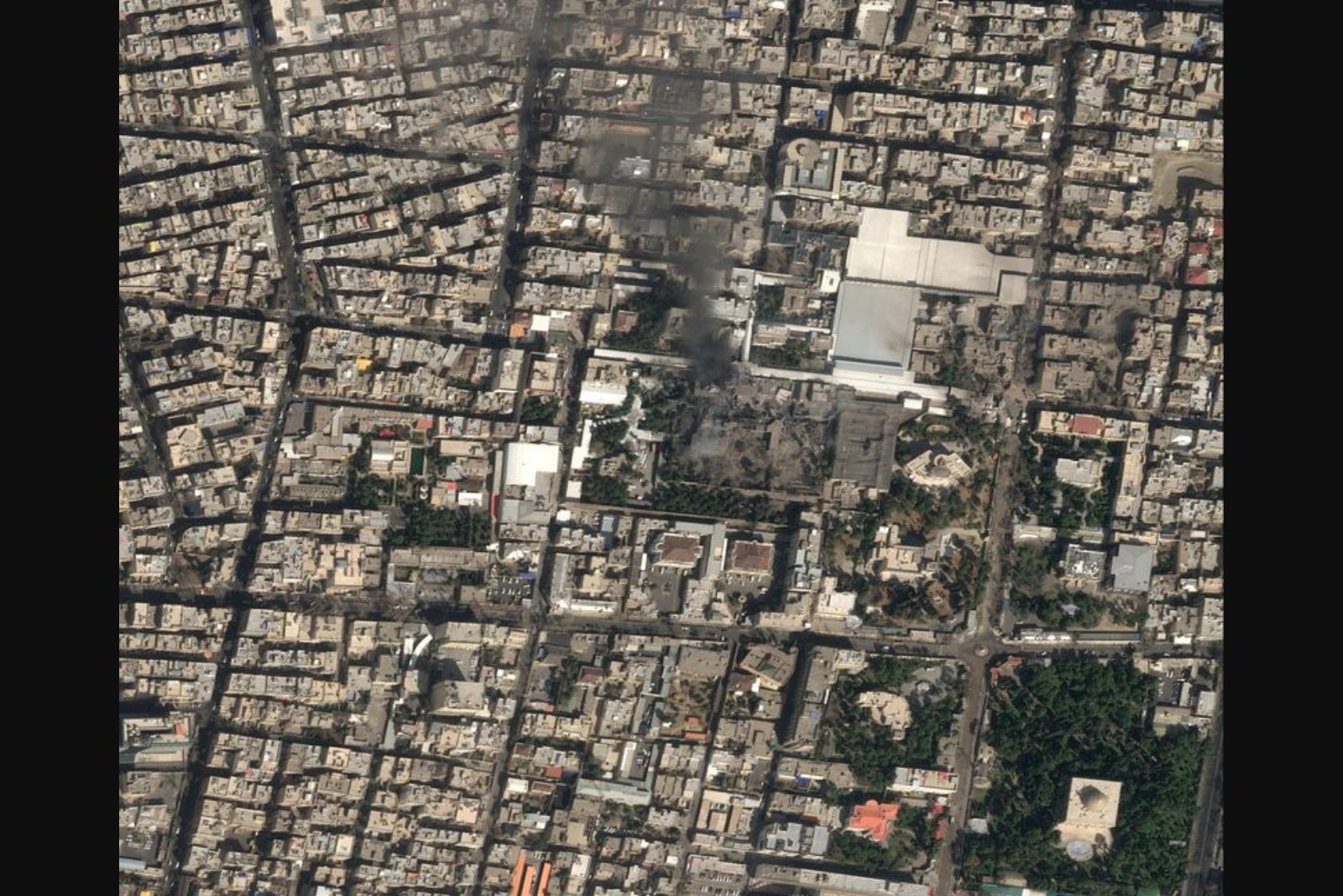
In the days leading up to U.S. and Israeli strikes on Iran, analysts at the Central Intelligence Agency prepared assessments that concluded a direct attack that killed Iran's Supreme Leader, Ayatollah Ali Khamenei, would be unlikely to produce a moderate successor, according to two people briefed on the intelligence.
Those assessments - produced over the prior two weeks - evaluated a range of scenarios that could follow a U.S. military operation, including how far an attack might go toward triggering regime change in the Islamic Republic, which has become an explicit policy objective within parts of Washington.
Officials involved in preparing the reports judged that leadership of the country would likely shift toward hardline elements associated with the Islamic Revolutionary Guard Corps, the elite force charged with defending the clerical regime. The sources said the reports did not assert any single outcome with certainty, reflecting the inherent uncertainty of projecting political dynamics in a crisis.
Two sources who spoke on condition of anonymity to discuss classified assessments described the intelligence work. The Central Intelligence Agency declined to comment on the reporting.
President Donald Trump has publicly indicated for weeks that he favors seeing a change in Iran's government, though he has not provided detailed public guidance about potential successors or Washington's preferred post-regime leadership. In an early morning video address on Saturday, he labeled Tehran a "terrorist regime" and urged the Iranian people to seize control of their government, saying that U.S. military strikes would help create the conditions for an uprising.
The joint U.S. and Israeli strikes follow weeks of internal debate within the U.S. government about whether to carry out an attack in response to unrest in Iran that began with deadly protests in December. In parallel with that deliberation, U.S. officials had pursued talks intended to reach a nuclear agreement with Tehran as a means to avoid military action.
According to two people familiar with briefings given to lawmakers, Secretary of State Marco Rubio informed senior congressional members known as the Gang of Eight that an operation was likely to move forward, while also noting the president retained the option to change course - particularly if nuclear negotiations yielded an accord. The diplomatic talks in Geneva did not result in an agreement.
Those same sources said Rubio notified the Gang of Eight on Friday night that the operation to attack Iran was likely to begin in the coming hours, but that President Trump could still call it off. The sources emphasized the fluidity of decision-making at the highest levels in the hours before the strikes.
The intelligence documents and the briefings to lawmakers underscore the complexity faced by U.S. policymakers weighing the likely political consequences of kinetic action against Iranian targets. They also reflect the effort to reconcile competing goals - pursuing diplomatic channels while preparing for military options - and the recognition that violent disruption does not necessarily translate into the political outcomes some in Washington seek.
Methodology note: This article is based on information provided by two sources briefed on the intelligence and two sources familiar with congressional briefings. Where quoted or attributed, wording reflects those sources' descriptions of the assessments and notifications. The intelligence agency declined to comment.