
World March 16, 2026

China and U.S. in Contact Over Planned Trump Visit; Beijing Signals Rubio Sanctions May Not Bar Entry

Chinese foreign ministry says state-level diplomacy is essential as both capitals discuss the summit and clarify sanctions on Marco Rubio

By Avery Klein
China and U.S. in Contact Over Planned Trump Visit; Beijing Signals Rubio Sanctions May Not Bar Entry

China says it is communicating with the United States about President Donald Trump’s planned trip to Beijing after Trump warned he might postpone the visit pending clarity on China’s position over security in the Strait of Hormuz. Beijing also indicated that sanctions placed on U.S. Secretary of State Marco Rubio in 2020 were aimed at his past statements and actions and would not necessarily prevent him from entering China. Officials from both countries are meeting in Paris this week to discuss potential areas of cooperation that could be taken up at the summit.

Key Points

  • China and the United States are in communication about President Trump’s planned visit to Beijing; both sides continue diplomatic discussions.
  • Beijing has signalled that sanctions imposed on Marco Rubio in 2020 were directed at his past statements and may not prevent his travel to China.
  • U.S.-China officials are meeting in Paris this week to discuss potential cooperation in agriculture, critical minerals and managed trade, topics that could be raised at the summit.

Chinese officials said they are in dialogue with U.S. counterparts about President Donald Trump’s planned visit to China, responding to comments from Trump that he may delay the trip while pressing Beijing for its stance on security in the Strait of Hormuz.

In remarks published by the Financial Times, Trump argued that countries benefiting from shipping through the Strait should contribute to securing passage. "I think China should help too because China gets 90% of its oil from the Straits," he told the newspaper, and added that he would prefer to know Beijing’s position prior to the planned visit. "We may delay," he said, referring to the trip.

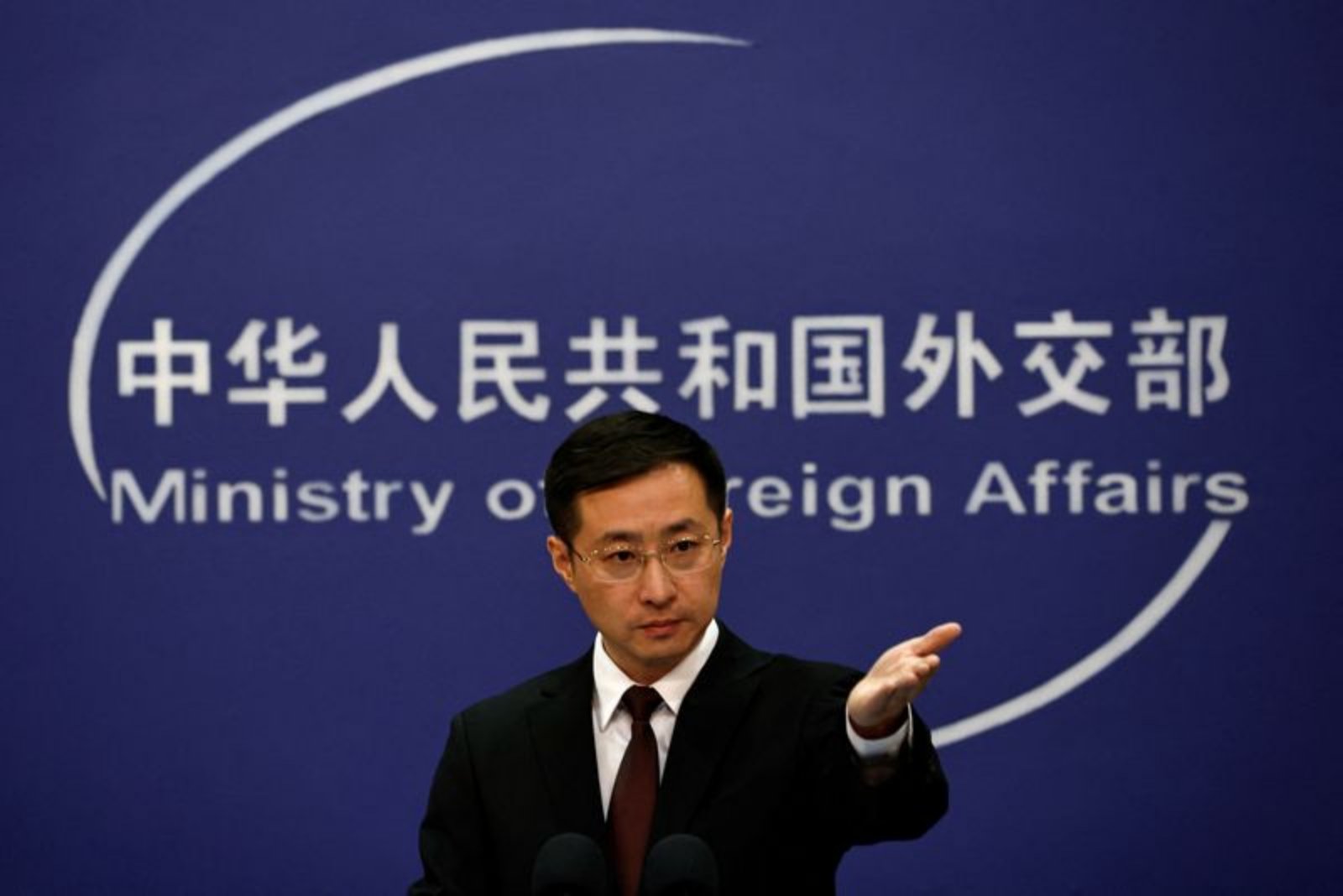
The White House had previously announced that Trump would travel to China from March 31 to April 2 for a summit with Chinese President Xi Jinping. When asked about Trump’s comments during a routine press briefing, Lin Jian, a spokesperson for China’s foreign ministry, emphasized the unique role of high-level diplomacy. "Head of state diplomacy plays an irreplaceable role in providing strategic guidance to China-U.S. relations," Lin said, and noted that both sides are in communication about the visit.

Beijing also addressed the status of sanctions on Marco Rubio, who is expected to accompany Trump on the trip. Rubio was sanctioned by China in 2020 over comments he made about Hong Kong and Xinjiang when he was a U.S. senator. Asked whether those sanctions would affect Rubio’s ability to travel to China, Lin said the measures were targeted at "Mr. Rubio’s words and deeds concerning China during his tenure in the United States Senate." The comment indicated that Beijing would allow Rubio to enter despite the prior sanctions.

Separately, Chinese and U.S. officials are meeting in Paris this week. According to Chinese statements, talks in Paris include potential areas of agreement such as agriculture, critical minerals and managed trade. These are items that could be raised by Trump and Xi during their summit in Beijing should the visit proceed as scheduled.

The situation remains fluid: the U.S. president publicly linked the timing of the state visit to clarity on China’s position regarding security in a key oil shipping lane, while Chinese officials reiterated the importance of state-level diplomacy and confirmed ongoing communication. Meanwhile, preparatory meetings in Paris are exploring specific economic and trade topics that could inform discussions at the leaders’ summit.

Risks

  • The visit could be postponed - President Trump linked timing of the trip to clarity on China’s position regarding security in the Strait of Hormuz, creating uncertainty for diplomatic scheduling and related market expectations (impacting energy and trade sectors).
  • Ambiguity around the scope and enforcement of sanctions on Marco Rubio - although Beijing indicated the measures were targeted at his past words and actions, questions remain about how sanctions are applied in practice (affecting diplomatic protocol and personnel movement).
  • Outcomes of the Paris meetings are uncertain - talks on agriculture, critical minerals and managed trade may or may not produce agreements to be taken up at the summit, leaving potential commercial and supply-chain questions unresolved (relevant to agriculture, critical minerals, and trade-exposed industries).

More from World

U.S. 'Pro-Family' Group Linked to Senegal Campaign for Harsher Anti-LGBT Law Mar 16, 2026 Fifth Iran Women’s Footballer Withdraws Asylum Claim, Set to Rejoin Team in Malaysia Mar 16, 2026 Israel and Lebanon Prepare for Talks Aimed at Ceasefire and Hezbollah Disarmament Mar 15, 2026 Afghan ex-military interpreter dies within a day of ICE detention in Texas Mar 15, 2026 Tehran Calls for Fundamental Review of Gulf Ties as War Escalates; Denies Role in Attacks on Saudi Oil Mar 15, 2026