
Key finding: Michigan’s rate of toddlers completing a seven-shot childhood immunization series fell nearly three percentage points to 66.5% between January 2025 and January this year, according to an analysis of state data. Public health authorities and community leaders interviewed across the state attribute the decline to a combination of the federal Health Secretary’s anti-vaccine messaging and immigration enforcement that reduced clinic attendance among Latino families.
The numbers
The series completion rate for the set of seven routine childhood vaccinations - including the combined measles, mumps and rubella (MMR) vaccine, pertussis (whooping cough) protection and hepatitis B - fell to 66.5% in the latest 12-month window. That drop of nearly three percentage points from January 2025 to January this year represents a decline about 13 times larger than the average annual change seen over the previous 18 years in Michigan. Only the declines during the COVID-19 pandemic year of 2020 and the 2008 financial crisis were steeper.
State health figures translate that percentage decline into roughly 4,500 additional toddlers who are now more vulnerable to serious infectious disease. Health officials caution these unvaccinated children also increase risk for infants too young to be vaccinated and for immunocompromised adults.
Who is most affected
Among children for whom race and ethnicity were identified in the records, the most pronounced falls were observed among white toddlers, Michigan’s largest demographic group, and among Hispanic toddlers. The data show the statewide vaccination rate for the seven-shot series among white toddlers fell four points to 67.5% between January 2025 and January this year. For Hispanic toddlers, the rate declined 4.6 points to 69.8% over the same period.
Public health experts and community advocates interviewed in various parts of the state outlined different primary drivers for those declines. For many white families, interviewees attributed changes in behavior to the elevated anti-vaccine messaging coming from the federal Health Secretary. Among Latino families, sources linked reduced vaccine uptake to heightened immigration enforcement that kept people away from public clinics.
Policy and messaging shifts at the federal level
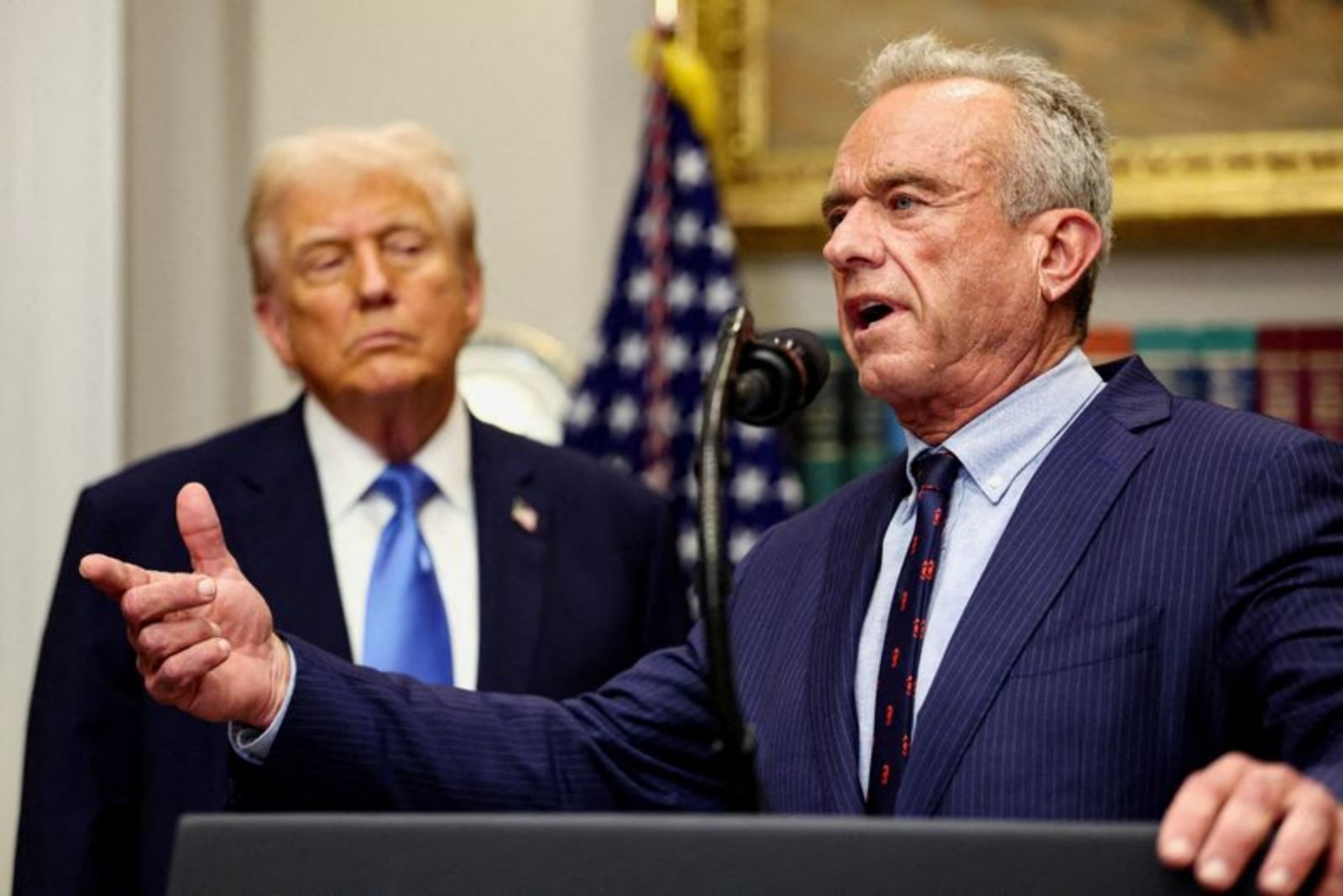
Robert F. Kennedy Jr. has long promoted the view that routine childhood vaccinations are associated with rising rates of autism and chronic disease. Since assuming the role of Health Secretary, he has amplified that messaging from a position of national authority. Officials and parents interviewed said that material which had previously circulated primarily in fringe online communities is now reaching broader audiences through federal channels.
Observers describe not only a change in tone but substantive changes in the federal vaccination advisory process. The national advisory board that previously made recommendations on childhood immunizations was disbanded and its membership was replaced with individuals who share the Health Secretary’s perspectives. That newly constituted board recently recommended reducing the number of routinely recommended childhood shots, a move that federal judges subsequently blocked. The court action came after medical associations argued that the change would erode trust in vaccines and lower immunization rates.
Federal Health and Human Services officials have disputed that the Health Secretary is driving declines. A department spokesman attributed the drop in Michigan in part to the state’s own aggressive pandemic-era responses - including school closures and mask mandates - which the spokesman said eroded public confidence in public health guidance. He added that restoring trust, and avoiding repetition of pandemic-era missteps, is how vaccination uptake will improve over time.
Voices from Michigan
Michigan’s chief medical executive described the 2025 trend as distinct from earlier fluctuations because vaccination rates had been stabilizing after the pandemic. What has changed, she said, is the national rhetoric and policy choices that have sown doubt and confusion among families.
“Michigan is not failing,” the state official wrote in correspondence with local health partners. “I think we are being failed by some of the rhetoric that is being put out at the national level.”
In western Michigan, a longtime vaccine skeptic said the Health Secretary’s communications have made it easier for people to question routine prevention efforts. She voiced concurrence with a broader view that infectious disease prevention receives disproportionate attention and resources compared with chronic conditions like diabetes and obesity.
Parents who previously postponed or altered the vaccine schedule said the federal policy shifts provided reassurance. One father in Lansing described how guidance from the Health Secretary made his decision to delay certain doses and omit a birth dose of hepatitis B feel validated. He said the changes felt “normalized.”
Local public health response and challenges
Michigan county health officials said they are seeing direct effects from the shift in federal messaging. Statewide data for 2025 showed a decline of nearly three percentage points in the share of toddlers receiving their first MMR dose, a vaccine frequently targeted by anti-vaccine rhetoric.
At the county level, immunization supervisors train nurses to address parental hesitancy and to manage requests for exemptions from vaccine mandates. In a populous suburban county north of Detroit, the toddler series completion rate dropped 2.9 percentage points from January 2025 to January this year. Nurses reported that beyond traditional safety concerns, families increasingly cite specific lines of attack promoted by the Health Secretary - for example, suggestions that vaccine clinical trials are not structured to detect adverse side effects adequately.
Immigration enforcement and clinic attendance
Public health advocates working with Latino communities described an additional obstacle to maintaining vaccination coverage. After a partial recovery following the pandemic, vaccination visits among Latino families fell again as ramped-up immigration enforcement led some families to limit movements outside the home, including trips to medical clinics.
A Latino advocacy organization that partners with a county health department to run periodic vaccination clinics reported a sharp decline in turnout as deportation activity increased. Staff recounted a day when the county clinic, located beside the local jail and sheriff’s offices, saw no patients show up, where previously a dozen or more visitors might arrive for inoculations.
Local leaders warned that historically high vaccination rates represent one of the greatest public health achievements, and that slipping coverage constitutes a reversal of that progress.
Outbreaks and public health consequences
The United States was declared to have eliminated measles in 2000 thanks to high vaccination coverage at that time. In the latest period, however, rising vaccine hesitancy nationwide has coincided with resurging measles activity and other outbreaks. During the current presidential term, the country has experienced a resurgence of measles, including significant outbreaks first in Texas and more recently in South Carolina. At least two children died and dozens required hospitalization during those outbreaks; most of the affected children were unvaccinated.
In Michigan, cases of whooping cough surged in 2024 and remained at elevated levels in 2025. Public health officials emphasize that increased numbers of unvaccinated toddlers heighten the likelihood of more frequent and severe outbreaks of vaccine-preventable diseases.
Local immunization supervisors said that even when the health impact of a single missed vaccine dose appears small, each unvaccinated child adds marginal risk to community protection and to those medically unable to receive vaccines.
Legal and institutional friction
The changes to federal advisory processes and the reduction in recommended routine shots prompted legal challenges. A federal judge temporarily blocked the federal adjustments after major medical associations argued the policy moves lacked a sound evidentiary basis and would undermine public trust. The ruling underscored the contentious environment around vaccination policy at a time when state-level immunization data are showing rapid deterioration.
What this means for public health infrastructure
Public health officials in Michigan describe a confluence of drivers that have pushed down vaccination rates in a single year: amplified federal skepticism about vaccines, shifts in advisory structures and immigrant communities’ fears about enforcement. The combination has translated into lower uptake across multiple demographic groups and into fewer routine clinic visits in areas serving immigrant populations.
State and local health workers are attempting to address parents’ questions and rebuild trust through training and outreach programs, but officials warn it will take sustained effort to reverse the recent declines.
Reporting for this analysis incorporated interviews with more than two dozen public health officials, parents, researchers and community advocates across Michigan, and used state immunization records to assess changes in toddler vaccination rates over the most recent 12-month period.