
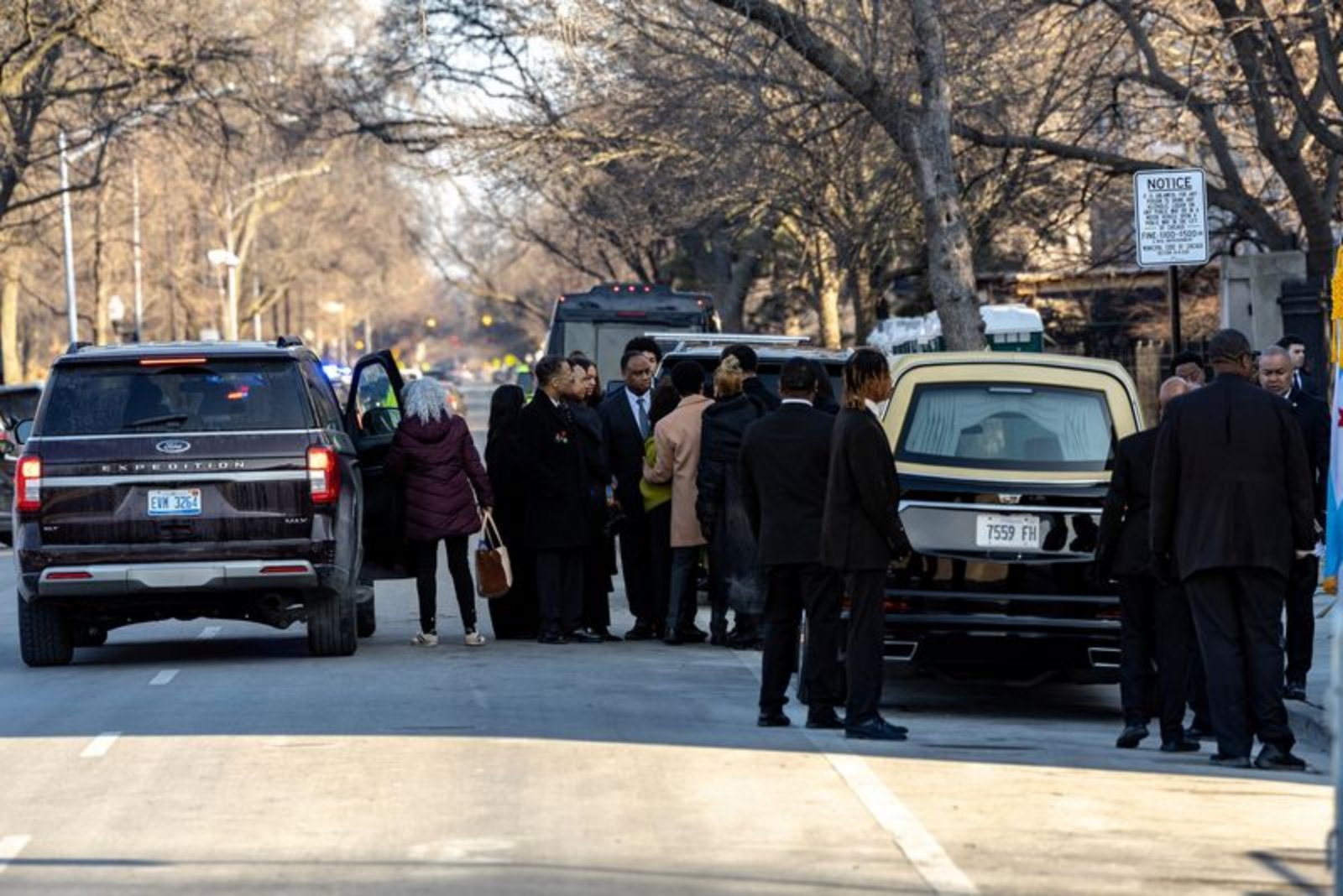
Memorial observances for Jesse Jackson opened in Chicago this week, bringing elected officials, activists and residents together to commemorate the life and work of the civil rights leader. Those attending the public viewing formed a line that extended nearly two blocks, contained by barricades as people waited for the opportunity to see Jackson lying in repose inside the Rainbow PUSH Coalition headquarters.
A large screen outside the building showed images of Jackson spanning his youth to the peak of his public life. The Rainbow PUSH Coalition, the organization Jackson founded in 1996, served as the focal point for the gatherings and the visuals that marked the memorial.
Vendors positioned on a nearby corner offered memorabilia, including t-shirts, buttons and other items bearing the phrase "Keep Hope Alive" - a slogan closely associated with Jackson's activism and a refrain that continues to resonate with grassroots organizers working on issues of equality and justice.
Among those who traveled to pay respects was Theo Scott, 82, who was visiting a sick relative in the area and paused to honor Jackson before returning to North Carolina. "He was outstanding and his resilience is one of the things that stands out to me," she said.
Inside the memorial space, members of the Jackson family and longtime friend Al Sharpton stood by a glass-encased casket, greeting mourners as they filed past to offer condolences and pay tribute.
"It’s been beautiful to see the outpouring of love," Yusef Jackson, an attorney and the youngest son of Jesse Jackson, told Reuters. "We’re dealing with a level of personal grief and loss that is a big gap in our household. He was our father, he was our minister and he was also our leader."
Voices at the Service
Voices from across generations emphasized the need to continue the work Jackson championed. Former U.S. Representative Bobby Rush, seated among attendees, said: "It’s up to the younger generation to keep pushing this battle forward."
Jazmine Valadez, 32, characterized Jackson’s life as a demonstration that sustained activism can produce change. "He showed us we can do amazing things, care for one another, and build those coalitions," she said.
Charles Jenkins, 50, who viewed Jackson as a mentor, recalled the leader's persistent focus on teaching and advocacy. Jenkins said that even as Jackson's health declined he continued to push for economic justice and community support. He described a goal Jackson maintained while ill: mobilizing 2,000 churches to distribute holiday food. "Reverend Jackson led with love at the core, which is to have the highest form of concern for another by demonstration," Jenkins said, noting a visit he made after Jackson was hospitalized in November.
Jackson's Public Record
Jackson, who died last week at the age of 84, was widely known for his advocacy on voting rights and desegregation. He rose to national prominence as a young organizer with the Southern Christian Leadership Conference and was a close ally of the Reverend Martin Luther King Jr., accompanying King to Memphis in 1968 to support striking African-American sanitation workers before King was assassinated.
Born in Greenville, South Carolina, Jackson became one of the most prominent Black political figures of the late 20th century. His advocacy included calls for sanctions against apartheid in South Africa, negotiating the release of American hostages overseas, and pressing for corporate accountability and the development of minority-owned businesses in the United States.
Jackson also built a political movement focused on economic fairness and multi-racial, cross-class alliances. His two bids for the presidency helped mobilize millions of voters under the banner of the "Rainbow Coalition," urging the Democratic Party to address concerns affecting working-class Americans, farmers and communities of color.
Context and Continuing Events
The gatherings in Chicago also come at a moment some advocates describe as fraught for cultural and civic institutions. The article referenced actions by the Trump administration aimed at removing what the president calls "anti-American" ideology from certain U.S. institutions, including museums and monuments, and cited examples such as the dismantling of slavery exhibits and the restoration of Confederate statues. Civil rights advocates worry such moves could roll back gains made over decades, a concern voiced by attendees and faith leaders at the memorial.
"His fingerprint changed the world," Charlie Dates, senior pastor of Progressive Baptist Church of Chicago, said of Jackson, adding that he felt a renewed sense of duty in the wake of Jackson's death. "I’m feeling a sense of responsibility. So much despair and anxiety is rampant, but we cannot fear, we have to work towards better."
Planned tributes include a musical event titled "The People’s Celebration," featuring gospel choirs, scheduled for next week at the House of Hope, a Baptist church. A private homegoing celebration of life is set for March 7 at the Rainbow PUSH Coalition headquarters.
Observations
The public memorial in Chicago drew a cross-section of attendees - from elderly visitors who had followed Jackson's career for decades to younger activists who view his work as a blueprint for ongoing organizing. The display of photographs, the sale of "Keep Hope Alive" merchandise and the presence of political and religious leaders reflected both a personal and public reckoning with Jackson's legacy.
Inside the memorial space, family members' interactions with mourners and the visible attendance of long-time allies underscored the personal grief experienced by Jackson's household alongside the broader communal tribute.
As memorial events proceed in Chicago, organizers have scheduled both public and private moments of remembrance, and planned tributes aim to highlight the combination of spiritual, musical and political expressions that marked Jackson's life in public service.