
World March 20, 2026

Chad to Send 800 Police and Gendarmes to Haiti, Officials Say

N'Djamena announces planned deployment to U.N.-backed Gang Suppression Force; timing, training and deployment sources remain contested

By Leila Farooq
Chad to Send 800 Police and Gendarmes to Haiti, Officials Say

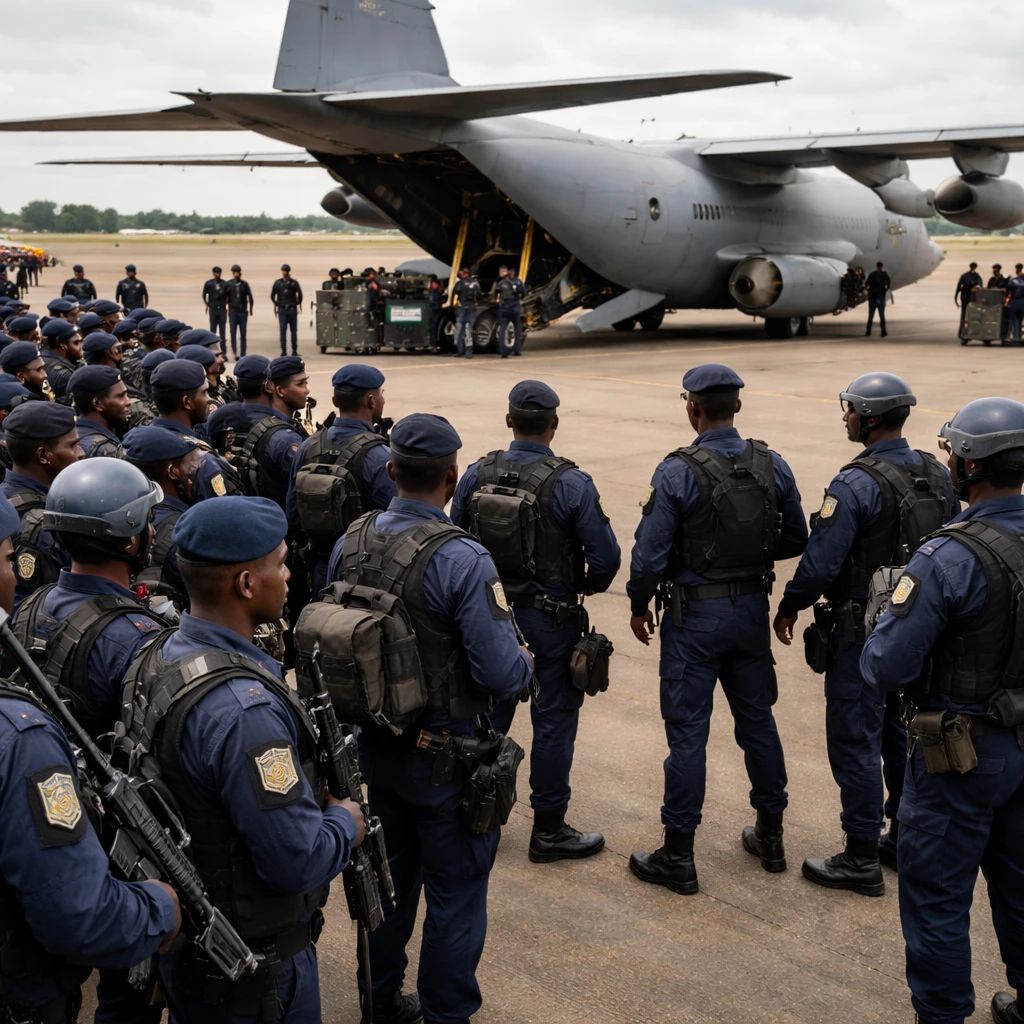
Chad plans to dispatch 800 police officers and gendarmes to Haiti this year to join an international Gang Suppression Force aimed at assisting Haitian police against heavily armed gangs. A senior Chadian police official, speaking on condition of anonymity, said the contingent is expected to arrive by June after training from "European and American partners." Statements from regional and U.S. officials reflect differing accounts of where that training is occurring, and the multinational force itself has yet to reach full strength following its approval last year.

Key Points

  • Chad has pledged to send 800 police officers and gendarmes to Haiti this year to join the U.N.-backed Gang Suppression Force; the contingent is expected to arrive by June after receiving training from "European and American partners."
  • The Gang Suppression Force aims to reach a full capacity of 5,500 by October, according to the Dominican Republic foreign minister; current deployments remain largely Kenyan police with smaller contributions from Central American and Caribbean countries.
  • Conflicting accounts exist about where Chadian forces are being trained - the Dominican Republic minister said training is in the United States, while a U.S. State Department spokesperson denied that Chadian troops are training there.

N'DJAMENA - Chad has announced plans to deploy 800 police officers and gendarmes to Haiti during the current year to participate in the U.N.-backed Gang Suppression Force, a senior Chadian police official told Reuters. The official, who asked to remain anonymous because he was not authorised to speak publicly, said the Chadian personnel are expected to be in Haiti by June.

According to the anonymous official, the contingent will travel to Haiti after receiving training from "European and American partners". The precise locations and timelines for that training were not specified by the official in the interview.

Dominican Republic Foreign Minister Roberto Alvarez said this week that the Gang Suppression Force, which has U.N. backing, is expected to reach its full designated capacity of 5,500 personnel by October. Alvarez also indicated that Kenyan police, who deployed to Haiti under an earlier model of the multinational security effort, should withdraw on a gradual basis as the new force takes shape.

Alvarez told reporters after a meeting with U.S. officials that the Chadian forces were being trained in the United States. That account was directly contradicted by a U.S. State Department spokesperson, who thanked Chad for its pledged contribution but stated, "Chadian troops are not training in the United States."

The Gang Suppression Force was introduced as a larger successor to the Kenyan-led Multinational Security Support (MSS) mission. Since the Gang Suppression Force was approved last September, however, no significant new deployments have arrived to bolster the mission's ranks.

At present, the force on the ground is composed predominantly of Kenyan police, accompanied by smaller contingents from a handful of countries in Central America and the Caribbean. In October 2023, Chad informed the United Nations that it was willing to contribute troops and police to the MSS, though at that time it did not provide specific numbers or a deployment timeline. The U.N. also received pledges then from Benin and Bangladesh; none of those pledged forces have deployed to date.


Context limitations: The Chadian official did not provide additional operational details, and there are conflicting public statements about the location of training for the pledged forces.

Risks

  • Uncertainty over training locations and timelines - differing public statements from regional and U.S. officials create ambiguity about where Chadian personnel are being prepared, which could affect deployment schedules. (Impacted sectors: security, defence logistics)
  • Delayed or insufficient deployments - the Gang Suppression Force has seen little new deployment since its approval last September, and pledged contributions from countries including Benin, Bangladesh and Chad have not yet fully materialized, posing risks to force readiness. (Impacted sectors: international security operations, aid coordination)
  • Transition risks for existing forces - the planned gradual withdrawal of Kenyan police as the new, larger force forms may create gaps in operational continuity if replacements do not arrive as expected. (Impacted sectors: regional security, public safety)

More from World

Security Preparations Lag as World Cup Nears Amid Threat Warnings and Stalled Funding Mar 20, 2026 Greenland Candidates Seek Leverage From Danish Vote After U.S. Interest Sparks Focus Mar 20, 2026 Israel Opens New Round of Strikes on Iran as Hostilities Spread and Energy Markets Reel Mar 19, 2026 Colombian Spanish-Language Reporter Detained by ICE in Nashville Released on Bond Mar 19, 2026 Prime Minister Heckled During Eid Visit to Sydney Mosque Over Gaza Stance Mar 19, 2026