
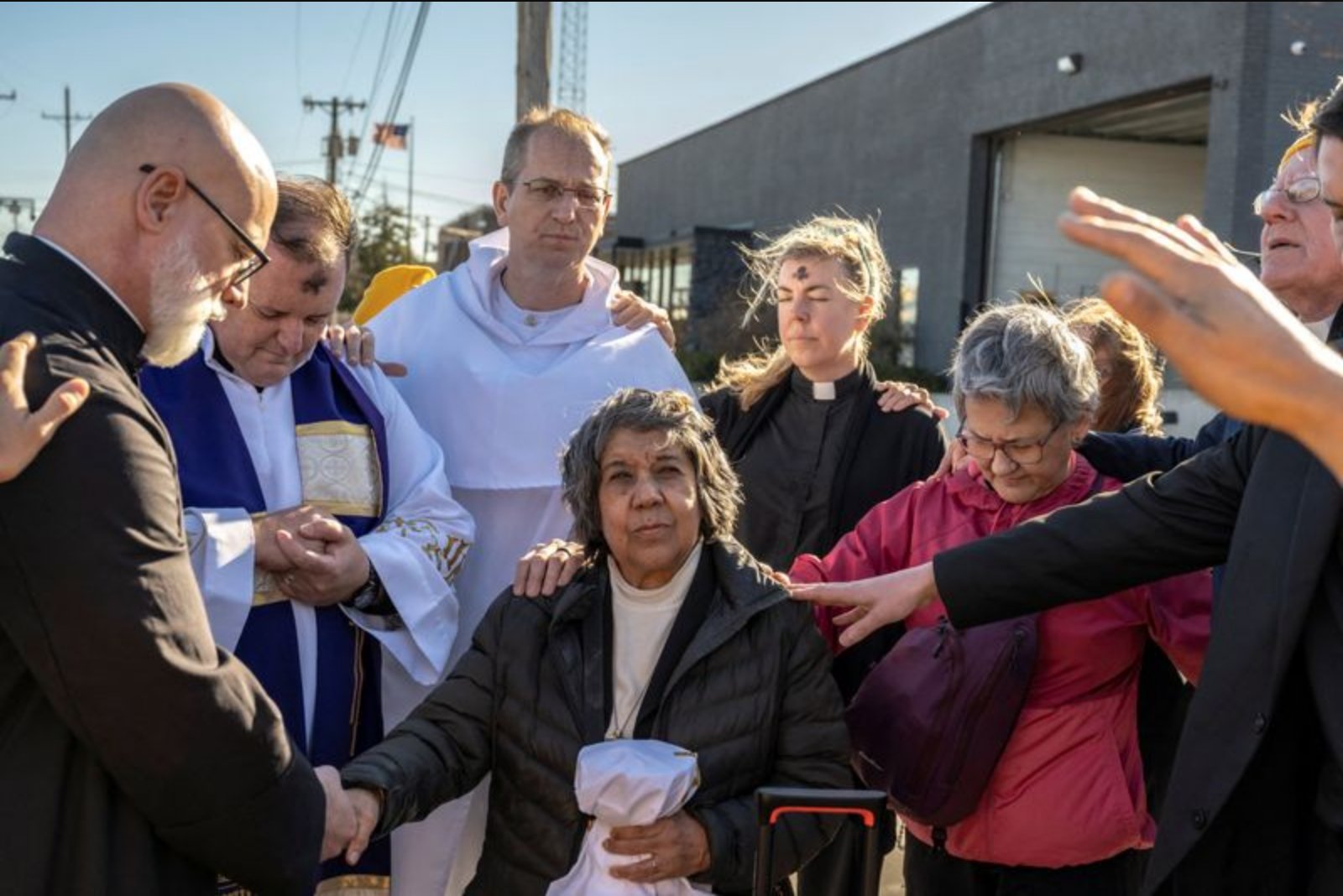
BROADVIEW, Illinois, Feb 19 - Two Catholic priests and a nun, accompanied by law enforcement, crossed past barbed wire and concrete perimeters to reach detainees inside a Chicago-area immigration facility on Ash Wednesday, marking the first entry by clergy since the coronavirus pandemic halted such visits in 2020. The visit followed a judicial ruling that ordered faith leaders be permitted inside the Broadview processing center to minister to people held there.
Father Paul Keller, one of the priests who entered the facility, described the moment as emotionally charged. With his hands marked by the ashes used in the Ash Wednesday ritual, Keller said he encountered detainees with shocked, tear-stained faces and called the occasion bittersweet after a protracted court battle to secure access.
The Coalition for Spiritual and Public Leadership said clergy had not been allowed into Broadview since 2020. Keller framed the dispute in simple pastoral terms, telling Reuters that the matter involved "what should be a very non-controversial issue, which is praying with people who are detained and providing them some comfort." He added, "It's unfortunate that it's happening because of a lawsuit."
Last fall, the Department of Homeland Security conducted a multi-week enforcement operation that officials called the "Midway Blitz." During that campaign, armed and masked federal agents spread across Chicago and surrounding suburbs to detain individuals the administration alleged posed threats to public safety. Plaintiffs in later litigation said agents used tear gas in residential areas, arrested protesters, deployed Tasers during violent detentions, pointed guns at residents and shot two people, one of them fatally.
The government said more than 4,200 people were detained during the operation. According to allegations in a lawsuit, many of those people were routed to the Broadview facility for processing, where some were held in crowded conditions, at times sleeping on floors while facilities overflowed, including reports of overflowing toilets.
In the months after the enforcement actions, protests repeatedly gathered near the Broadview center. Demonstrators chanted and confronted immigration agents while agents responded with pepper balls and tear gas grenades, plaintiffs said. By contrast, the scene on Ash Wednesday was described as calm, punctuated by the sounds of prayer: rosaries recited and hymns sung by the faithful.
Ash Wednesday marks the start of Lent in the Catholic calendar; congregants receive ashes smeared in the shape of a cross on their foreheads as a sign of repentance. The clergy who entered Broadview carried out those rites, as well as administering communion to detainees.
Chicago Archbishop Blase Cupich, who grew up near the city, used an impassioned homily at a nearby church to emphasize the humanity of migrants and those detained. "God does not need papers to know where you are or who you are," Cupich said, adding, "When you cry in secret, he sees you. When you work hard for your children while no one is watching, he sees you. He sees you when you sacrifice your own comfort to send money back home."
Following the clergy's visit to Broadview, thousands of people gathered for Mass. Attendees carried rosaries, candles and signs in support of immigrants. The service followed the usual structure of a Catholic Mass - Bible readings, communal singing and incense - but included specific prayers and blessings for immigrant families and for individuals who had been detained. The congregation also offered petitions for the souls of Silverio Villegas Rodriguez, Renee Good and Alex Pretti, three people who were killed by federal immigration agents in recent months.
Kamila Chavez, a Loyola University student in attendance, said the Mass and the clergy's visit signaled to detained immigrants that "they're not alone and that we haven't forgotten about them."
Access to Broadview represented a legal and symbolic victory for residents and faith leaders who have described deep trauma from earlier enforcement operations at the facility. Reverend David Black, a Presbyterian pastor in Chicago who said he was pepper-sprayed and struck in the head by a pepper ball fired by federal agents at Broadview last October, said the restored access was significant.
On Feb. 13, a judge determined that barring religious leaders from entering the facility placed a burden on their right to exercise religion, clearing the way for the clergy to perform Ash Wednesday rites inside the detention center. Reflecting on the religious meaning of the day, Reverend Black said, "Ash Wednesday is a day that we remember that we are dust and that we will return to dust. It's a day that Christians remember that the empires of this world rise out of ashes and fall back into ashes."
The events at Broadview unfolded against a backdrop of contested enforcement tactics, legal challenges and community protest. The ruling allowing clergy access addressed a specific legal claim about religious practice while leaving broader questions about those enforcement operations and the conditions inside processing centers subject to litigation and public debate.
For now, the presence of priests, a nun and the gathered faithful on Ash Wednesday brought a ritual and a measure of pastoral contact to detainees at Broadview that supporters had sought for years.