
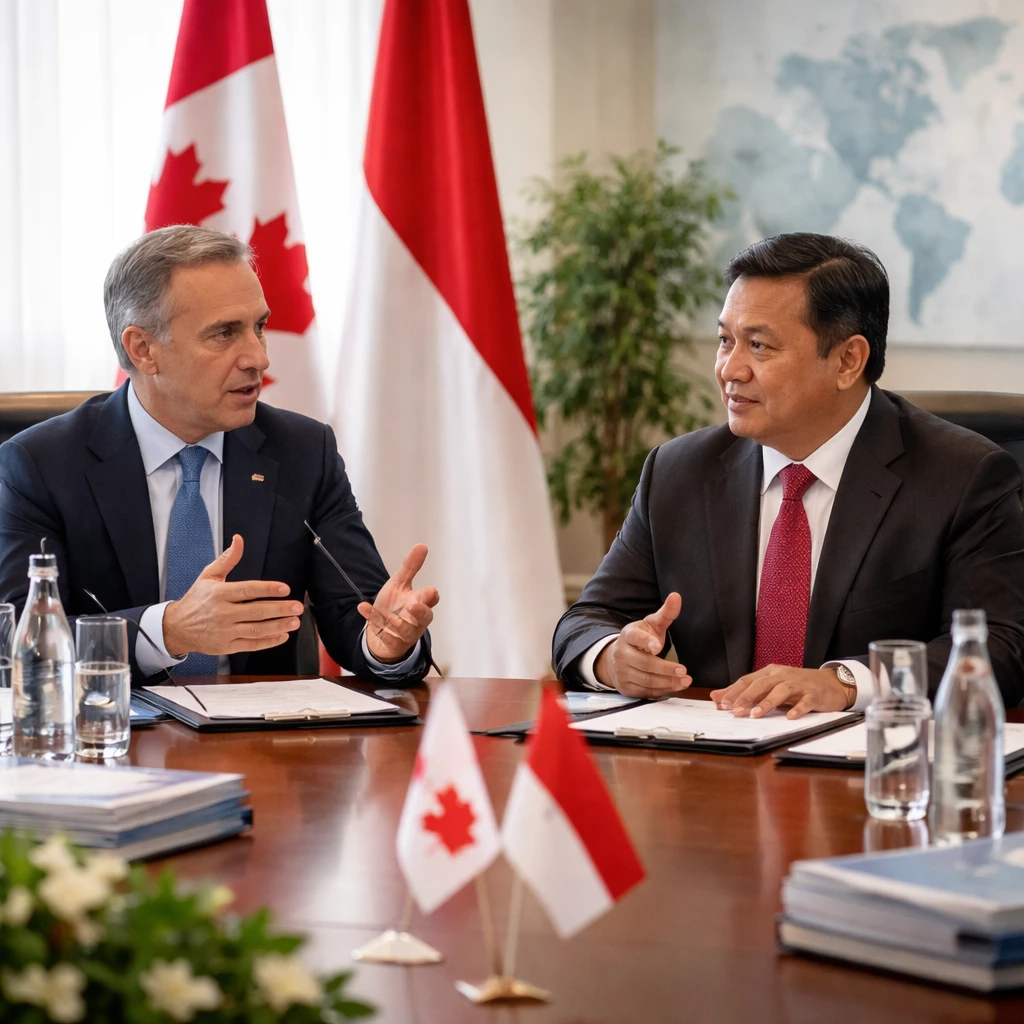
Canadian Prime Minister Mark Carney and Indonesian President Prabowo Subianto held a conversation on Saturday focused on the ripple effects of the Middle East conflict for energy markets and the broader global economy. During their discussion the leaders also pinpointed opportunities to deepen bilateral trade and investment links between Canada and Indonesia.
A central element of the exchange was the Canada-Indonesia Comprehensive Economic Partnership Agreement, or CEPA, which was signed in September. The accord represents Canada’s first-ever bilateral trade agreement with a member of the Association of Southeast Asian Nations - ASEAN - and is awaiting anticipated ratification. Officials said the pact is intended to reduce trade frictions and create a more transparent and predictable environment for trade and investment between the two countries.
The CEPA is described as opening commercial opportunities across a range of sectors explicitly identified by both parties. These include clean technology, agri-food, infrastructure, critical minerals, and financial services. Once the agreement is fully implemented, more than 95% of current Canadian exports to Indonesia will face tariffs that are either reduced or eliminated. That change is expected to improve the competitiveness of Canadian commodities and goods sent to Indonesia, with specific examples cited such as wheat, potash, wood, and soybeans.
Prime Minister Carney also emphasized efforts to accelerate negotiations aimed at concluding a Canada-ASEAN free trade agreement by 2026, and welcomed Indonesia’s continued backing of that objective. Both leaders agreed to maintain close contact as they progress on these trade and economic priorities.
From the perspective of sectors and markets, the conversation linked short-term geopolitical pressures on energy markets to longer-term trade policy shifts that would affect exporters and industries engaged in clean technology, agri-food, infrastructure development, critical minerals and financial services. The CEPA and the prospective Canada-ASEAN negotiations were presented as policy levers intended to lower costs and increase predictability for businesses operating across these areas.
Summary: The leaders discussed Middle East-related impacts on energy and the global economy, and targeted ways to expand trade and investment ties centered on the CEPA and broader Canada-ASEAN negotiations.
Key Points:
- The CEPA, signed in September, is Canada's first bilateral trade agreement with an ASEAN country and awaits anticipated ratification.
- More than 95% of current Canadian exports to Indonesia would see tariffs reduced or removed once the CEPA is fully implemented, affecting commodities such as wheat, potash, wood, and soybeans.
- Negotiations toward a Canada-ASEAN free trade agreement are being pushed to conclude by 2026, with Indonesia's support highlighted.
Risks and Uncertainties:
- The CEPA is described as anticipated to be ratified - its final ratification remains pending.
- The timeline to conclude a Canada-ASEAN free trade agreement by 2026 is an explicit target and therefore not guaranteed.
- Ongoing Middle East tensions continue to affect energy markets and the global economy, representing an external source of market volatility.