
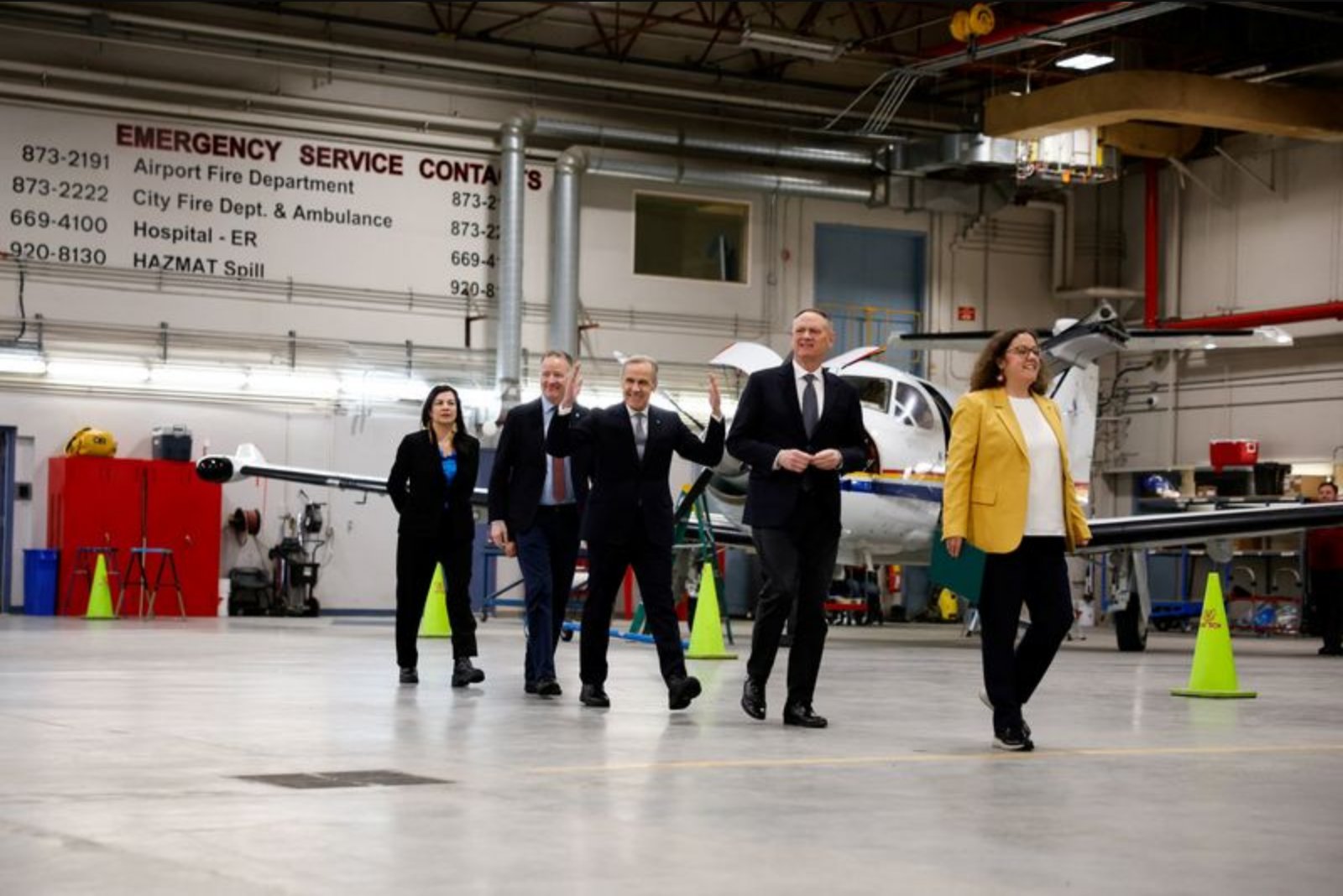
Prime Minister Mark Carney on Thursday introduced a C$35 billion initiative aimed at strengthening Canada’s defensive posture across the vast Arctic region, a move framed as part of an effort to reduce Ottawa’s historical reliance on the United States for northern monitoring and security.
Speaking in Yellowknife, the capital of the Northwest Territories and home to Canada’s Arctic military command, Carney said the country would take a more self-reliant approach to its northern defense. "We will no longer depend on any one nation, and instead build a stronger, more independent country. With this new plan, Canada is taking full responsibility for defending our Arctic sovereignty," he said.
Canada’s Arctic covers 4.4 million square kilometres (1.7 million square miles) of land and sea - an area larger than India - and is almost completely uninhabited. For decades, Ottawa has leaned on U.S. assistance to help monitor and patrol the region. Recent tensions in bilateral ties, linked to President Donald Trump’s imposition of tariffs and public comments about annexing Canada, have prompted a reassessment in Ottawa.
Carney framed the plan as a response to shifting global dynamics and environmental change. He said in January that "the United States and other major nations were eroding the traditional rules-based order that had long benefited Canada." On Thursday he added, "The assumptions that shaped decades of Canadian defense and security are being upended," and warned that "Climate change is causing our Arctic region to warm nearly three times faster than the global average, a shift that great powers are actively looking to exploit."
Details of the new proposal include a C$32 billion commitment to expand military airfields in the region and to construct four operational support hubs. The plan would also upgrade two commercial airports and expedite development of two proposed roads connecting the Arctic to Canada’s southern regions. How much of the headline C$35 billion represents newly allocated funds was not immediately clear.
Existing infrastructure in the North remains limited: Canada currently operates four basic Arctic airfields capable of handling six fighters each, and maintains roughly 2,000 soldiers dispersed across the region. Ottawa previously announced an effort to modernize its defenses and the joint North American Aerospace Defense Command in 2022, committing C$38.6 billion to that aim.
Beyond security planning, the Arctic’s resources are part of the strategic calculus. Canada’s Arctic territory accounts for approximately 25% of the global Arctic. The region contains deposits of rare minerals, but very little infrastructure and extreme cold raise the complexity and cost of any mining activity.
President Trump has expressed interest in Arctic opportunities, including mineral potential, and has publicly discussed Greenland while asserting the United States needs access to Arctic locations to guard against perceived Russian and Chinese interests. Those comments, along with broader trade measures such as tariffs, have contributed to strained U.S.-Canada relations that Ottawa says factor into its defense planning.
Carney is scheduled to travel later on Thursday to northern Norway to observe biennial NATO drills. The plan also signals Ottawa’s intention to meet alliance spending targets sooner than previously planned, with a pledge to reach NATO’s 2% military spending benchmark five years earlier than earlier commitments.
Currency notation in government reporting notes $1 = 1.3620 Canadian dollars.