
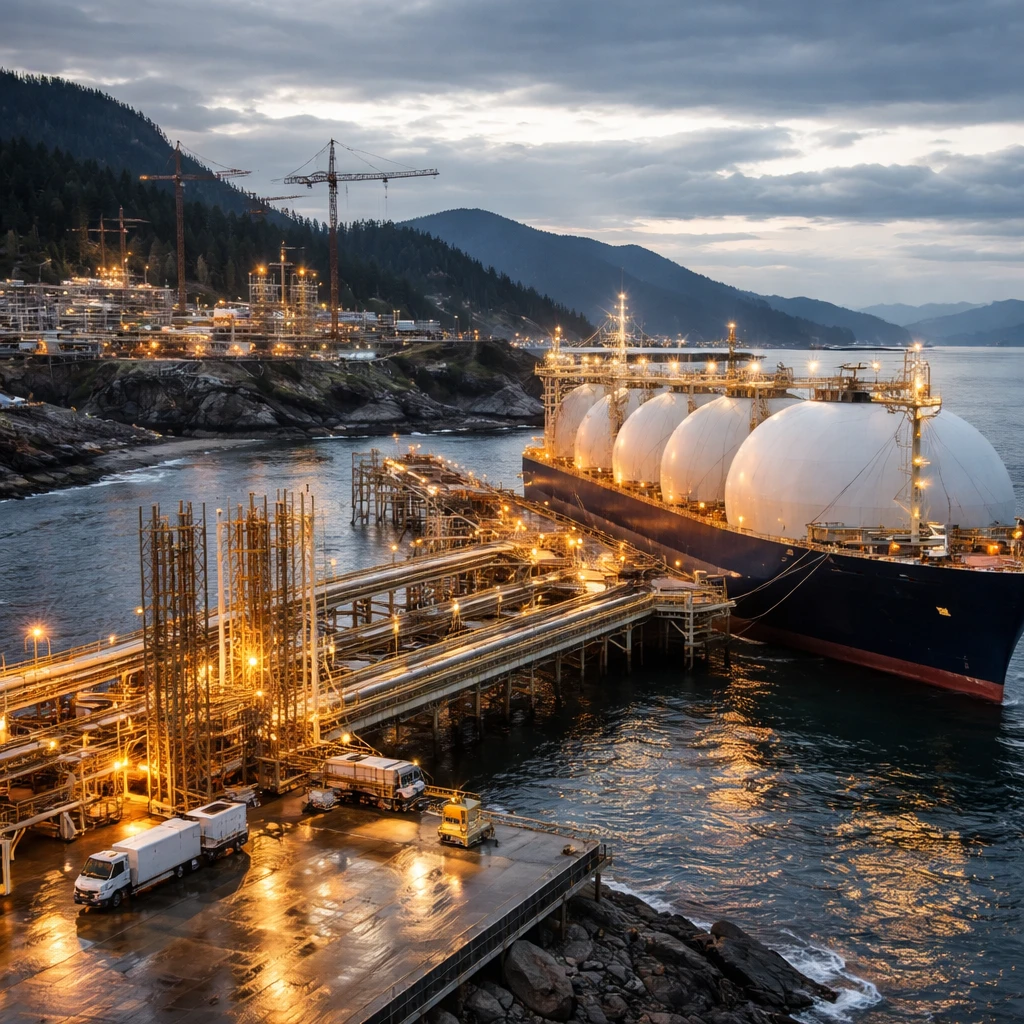
Canada and Germany's state-owned energy company SEFE announced on Wednesday that they have reached an agreement that Canada described as its first LNG supply deal with a European buyer. The understanding is non-binding and lays out SEFE's intent to acquire 1 million metric tons of liquefied natural gas each year from Ksi Lisims, a proposed export terminal planned for British Columbia's Pacific coast.
The accord is conditional on completing a sales and purchase agreement, meaning the purchase remains subject to a later, definitive contract. Canadian officials framed the agreement as part of Ottawa's efforts to expand energy exports, while German officials view the move as a step toward securing alternative gas sources following the loss of Russian pipeline supplies and renewed disruptions tied to the war in Iran.
SEFE is not new to international LNG arrangements. The company already has supply agreements in place with a range of suppliers, including U.S.-based Venture Global, Argentina's Southern Energy S.A., and Turkey's state energy company BOTAS. The new intent letter with Canada is presented as another piece of SEFE's strategy to broaden Germany's energy supply base.
Canada, ranked as the world's fifth-largest natural gas producer, has been pursuing growth in energy exports to shield its economy from external trade pressures. Canadian officials have emphasized export expansion as a response to the potential economic risks posed by the trade policies of U.S. President Trump.
In a related diplomatic push, Prime Minister Mark Carney traveled to Germany in August 2025 to promote Canada as a reliable supplier of energy to European markets. The trip is cited by Canadian authorities as part of their effort to deepen energy ties with Europe.
While the announced agreement signals initial alignment between Canada and SEFE, its non-binding nature and the requirement for a completed sales and purchase agreement mean the transaction is not yet finalized. The deal sits at the intersection of commercial negotiation and geopolitical strategy, reflecting both market interest in new LNG export capacity from British Columbia and Europe's search for diversified gas sources.