
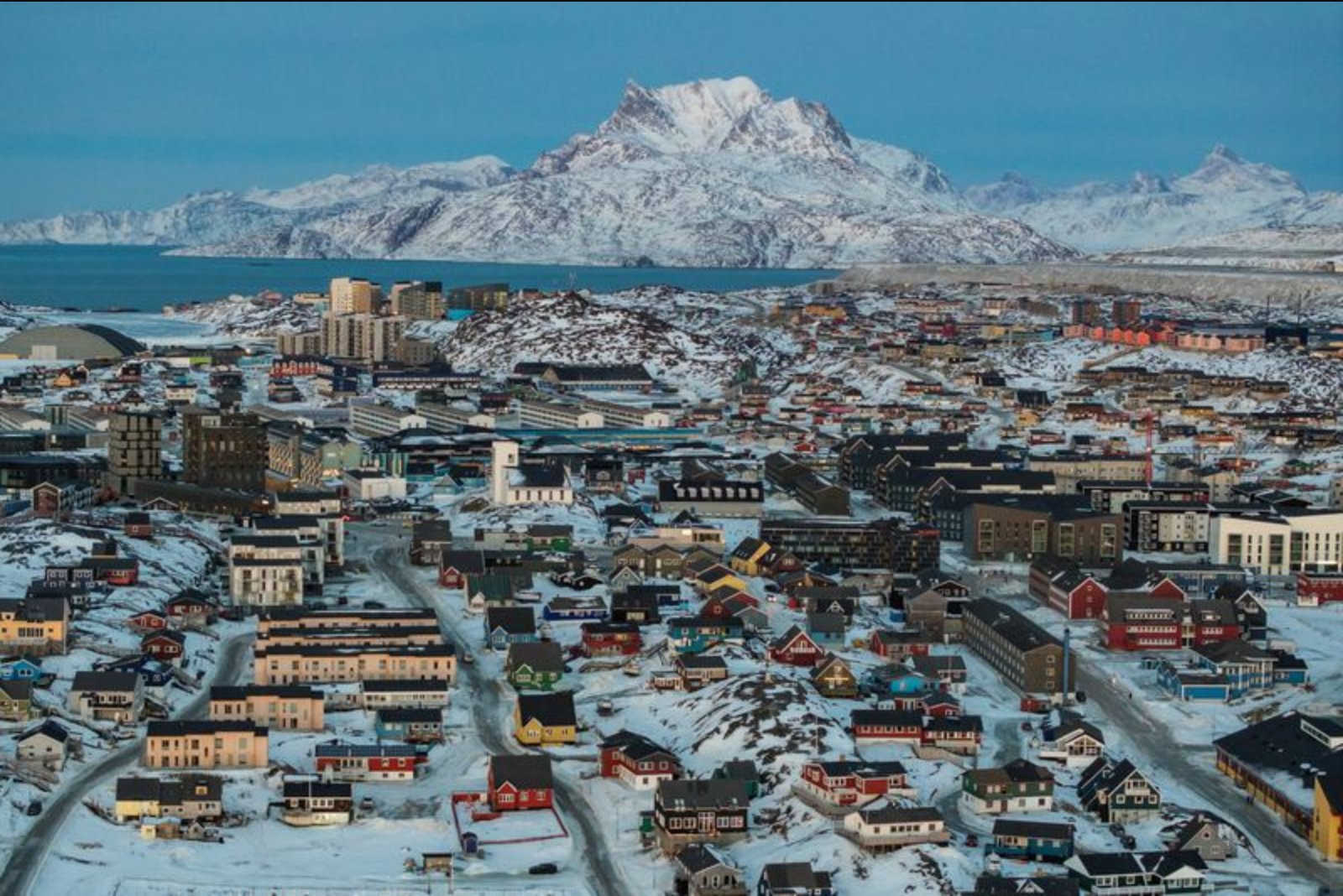
Canada and France are taking steps to increase their diplomatic presence in Greenland's capital, Nuuk, an expansion that Reuters says comes as geopolitical tensions in the Arctic have intensified following renewed U.S. interest in the island. The moves are being presented by Ottawa and Paris as commitments to strengthen relationships and cooperation with Greenland, the semi-autonomous territory within the Kingdom of Denmark.
Officials from Canada are scheduled to be in Nuuk on Friday for the inauguration of the Canadian consulate. Canadian Foreign Minister Anita Anand and Governor General Mary Simon will attend the opening, while Anand is set to meet Denmark's Foreign Minister Lars Lokke Rasmussen and Greenland's Foreign Minister Vivian Motzfeldt to discuss closer collaboration on Arctic security.
Canada first announced plans in December to establish consulates in both Greenland and Anchorage, Alaska, as part of a broader effort to reinforce its Arctic presence. The government also has signaled intentions to increase its military and security footprint in the region - a point tied in media accounts to a pledge by Prime Minister Mark Carney to boost Canada's military and security presence in the Arctic.
France has also committed to a diplomatic upgrade in Greenland. Paris will become the first European Union country to open a consulate general on the island, and France's foreign minister is due to visit in the coming weeks. The French Foreign Ministry stated, "France reiterates its commitment to respecting the territorial integrity of the Kingdom of Denmark." President Emmanuel Macron announced plans for the consulate during a visit to Greenland last year, framing the move as a sign of solidarity after the United States restated interest in acquiring Greenland.
The U.S. interest has been a focal point for the region. President Donald Trump’s renewed push to acquire Greenland - where the United States already maintains its own consulate - has alarmed some European allies and prompted debate about sovereignty and security across the Arctic. That context has been cited by Canada and France in explaining their decisions to enhance diplomatic ties with Nuuk.
France reports that it has just nine citizens residing on the island. Jean-Noel Poirier, named as France’s new consul general after postings in Vietnam and Libya, said his initial priorities in Greenland will be to listen to local needs and to emphasize scientific and cultural initiatives. Speaking to reporters, he noted, "I am not afraid of the cold, the 20-hour nights. I was in Libya last year and we had some close calls. We were hit by mortar shells, but here I won’t need a bulletproof vest or a helmet like in Tripoli so there’s no problem."
For now, the diplomatic activity reflects an elevated international focus on Greenland driven by strategic considerations. The openings and visits are planned against a backdrop of heightened attention to Arctic security and sovereignty prompted by recent statements from the United States and subsequent reactions from European and North American partners.
Key points
- Canada and France are expanding diplomatic representation in Nuuk with new consulates, signaling deeper Arctic engagement.
- Canadian officials, including Foreign Minister Anita Anand and Governor General Mary Simon, will attend a consulate opening on Friday and hold meetings on Arctic security.
- France will be the first EU country to establish a consulate general in Greenland; Paris emphasizes respect for Denmark's territorial integrity and plans to focus on scientific and cultural ties.
Risks and uncertainties
- Heightened geopolitical tensions: Renewed U.S. interest in acquiring Greenland has contributed to concern among European allies and spurred debate on Arctic sovereignty and security - a development with implications for defense and government spending in the region.
- Diplomatic timing and coordination: While Canada is opening a consulate on Friday, France's diplomatic engagement includes an upcoming visit by its foreign minister and the establishment of a consulate general; the sequencing and exact timelines introduce uncertainty for regional planning and partnerships.
Note: The reporting is based on official announcements and statements from Canada and France and on comments by named officials in Nuuk.