
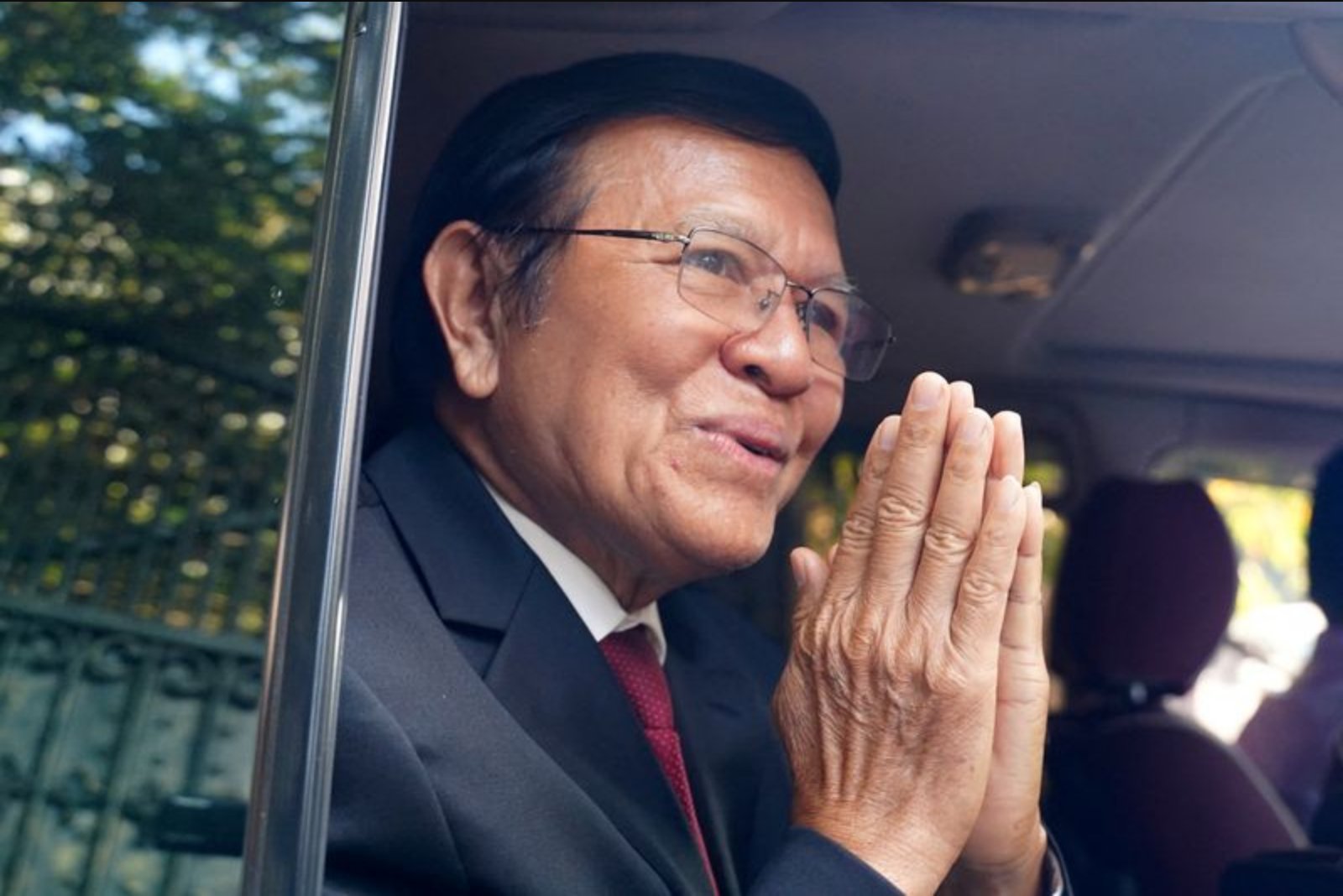
PHNOM PENH - Cambodia’s king has granted a pardon to former opposition leader Kem Sokha for a treason conviction, according to a royal decree made public on Monday. The move follows a recent legal setback for Kem Sokha, who lost an appeal that sought to overturn his conviction.
Kem Sokha, 72, a co-founder of the now-defunct Cambodia National Rescue Party (CNRP), has been confined to house arrest since a court found him guilty of treason in March 2023. Prosecutors accused him of conspiring with a foreign power to remove then-premier Hun Sen from office.
Last month a Phnom Penh court upheld the 27-year prison sentence handed down to Kem Sokha and affirmed a prohibition on leaving the country for five years following the completion of that sentence. The royal decree that announced the pardon clarified that it applied only to the original sentence.
A lawyer for Kem Sokha did not immediately respond to phone calls seeking comment on the royal pardon.
Reaction from opposition and exile groups framed the pardon as limited relief. The Khmer Movement for Democracy, an organisation led by exiled politician Mu Sochua, released a statement characterising the royal action as an effort to whitewash the government’s wider campaign against political opponents. The group said, "The decision to mitigate only the prison sentence while maintaining the ban on political activity and restricting freedom of travel abroad is merely shifting the form of detention from house arrest to political confinement," signalling that legal constraints on Kem Sokha’s civic participation remain intact.
The case of Kem Sokha was one of the most visible elements of a broader crackdown on opponents of the long-dominant Cambodian People’s Party. The United States had previously criticised the conviction, saying it was based on "fabricated conspiracy theories." Many opposition figures fled the country after a 2017 Supreme Court ruling that dissolved the CNRP, leaving Kem Sokha among a small number of opposition actors still in Cambodia.
On the official side, Cambodia’s government, now led by Hun Manet, has rejected accusations that it targets political rivals, portraying those convicted as law-breakers. Hun Sen, the influential former prime minister who now serves as senate president, signed the decree on behalf of King Norodom Sihamoni. The king is currently undergoing treatment for prostate cancer, according to the published account accompanying the decree.
While the pardon removes the original prison sentence, the persistence of political bans and travel restrictions leaves uncertainty about Kem Sokha’s future role in public life. Observers and interested parties remain limited by the public record, which sets out the legal adjustments but does not indicate whether his house arrest status will change in practice or how enforcement of the remaining restrictions will be applied.
As the situation evolves, stakeholders both inside and outside Cambodia will watch how the legal and political landscape adjusts to the royal decree and whether the limited mitigation of the sentence translates into changes to Kem Sokha’s day-to-day liberty and ability to engage in political activity.