
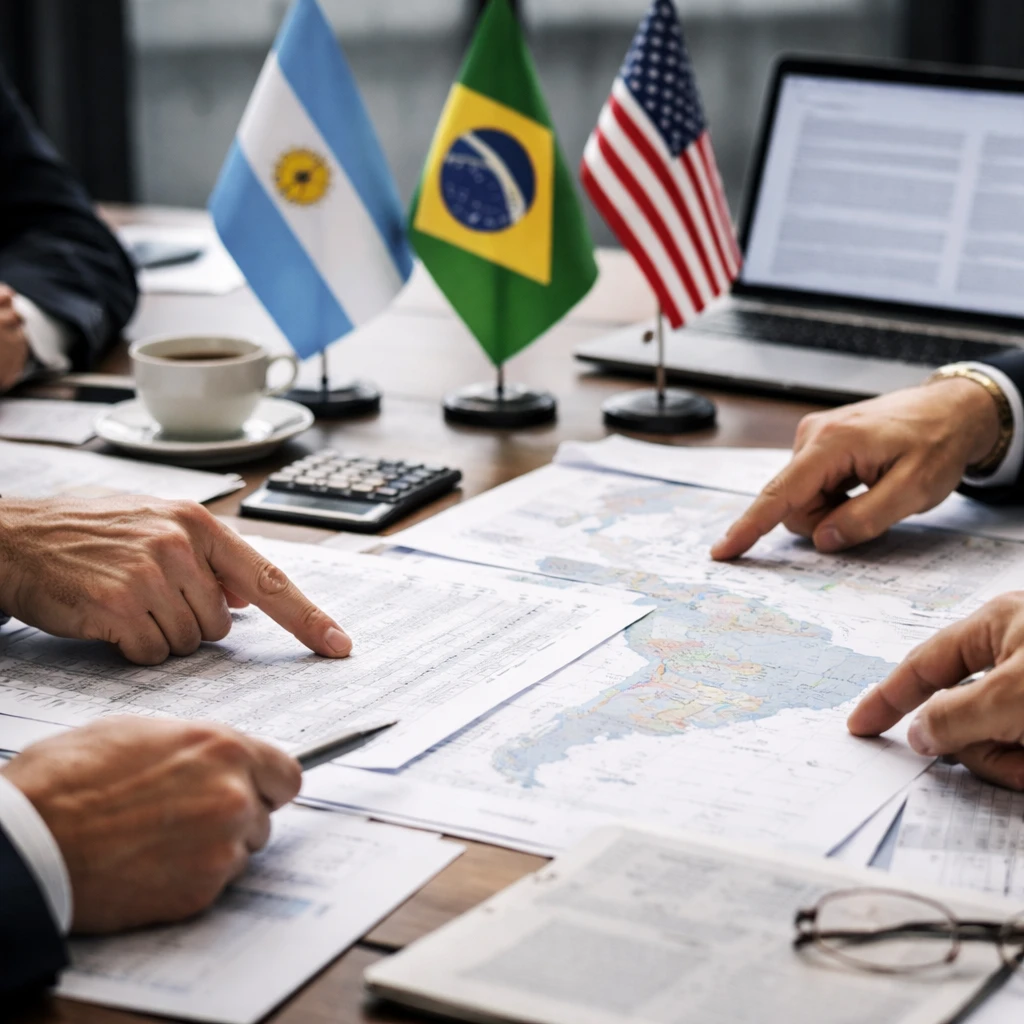
Brazil has opened a formal examination of the trade package announced last week between the United States and Argentina, with officials and three sources with direct knowledge of the matter saying diplomats in Brasilia and Montevideo are combing through the text released by Washington on Friday to assess its scope.
At an initial reading, those sources said, the agreement appears to go beyond the limits Mercosur sets for bilateral deals negotiated by its members. Mercosur imposes constraints on how far an individual member can pursue separate pacts with third countries to preserve the negotiating leverage of the bloc as a whole.
Last year, in the context of heightened global trade tensions under U.S. President Donald Trump, Argentina successfully sought and received a temporary widening of exemptions to Mercosur's common external tariff. Under that arrangement, Brazil and Argentina each received lists of 150 exceptions, while Uruguay and Paraguay were allocated larger quotas.
An Argentine official told reporters that "the tariff reductions announced for U.S. products fall within the list of 150 exceptions that Argentina is entitled to." Brazilian officials, however, told sources that the recent U.S.-Argentina announcement appears to cover closer to 200 tariff items. "We are looking very closely into it so we can be fair," one of those sources said.
In addition to tariff-line concerns, a separate source warned the bilateral pact could run afoul of Mercosur's non-tariff rules, including rules of origin for goods, provisions for services and technical barriers to trade. That source also noted that Argentine President Javier Milei's unilateral initiation of talks with Washington could complicate efforts to bring the deal within last year's exceptions.
At a Friday press conference, when asked whether Mercosur might impede the deal, Argentine Foreign Minister Pablo Quirno said the trade bloc "does not stop members from such agreements." He added that President Milei could implement parts of the pact by decree, although the overall trade and investment accord would require congressional approval.
Several governments declined to comment publicly on the review. Brazil and Uruguay did not provide statements when contacted. Paraguay and Argentina's foreign ministries did not immediately respond to requests for comment, and the U.S. State Department did not immediately reply to a request for comment.
Historical strains within Mercosur
Mercosur, established 35 years ago, has repeatedly faced tensions as members chart their own external trade paths. While no member has previously finalized a so-called side deal extending beyond bloc rules, past episodes have highlighted the challenge of reconciling national trade ambitions with collective commitments.
For example, Uruguay nearly concluded a free trade agreement with the United States in 2006 but ultimately pulled back amid concerns it could be expelled from Mercosur. Montevideo's pursuit of a separate free trade agreement with China has also generated friction with Argentina, Brazil and Paraguay.
In 2019, under then-Brazilian President Jair Bolsonaro, Finance Minister Paulo Guedes threatened a withdrawal from the bloc, arguing it constrained Brazil's trade objectives. Neither Bolsonaro nor his leftist successor Luiz Inacio Lula da Silva has taken formal steps to exit Mercosur.
Potential procedural steps and timing
A Brazilian official noted that "there are rules that have to be followed." The same official added: "If this really happens, we will have to call the Mercosur Council and decide what the bloc will do." The council would be the forum for deliberation if the Brazilian review concludes that the U.S.-Argentina pact exceeds the permitted scope.
The bloc’s next summit is scheduled for late June in Asuncion, when Paraguay will hand Mercosur’s rotating presidency to Uruguay. One source in Brasilia said any formal response would need to be decided at the highest levels of Brazil's government, and that the matter has not yet been presented to President Lula.
What remains uncertain
At this stage, officials are still parsing the agreement's text to determine how many tariff lines and which non-tariff provisions are implicated. Differences in initial public statements - Argentina asserting the pact fits within its 150-item exemption and Brazilian scrutiny suggesting closer to 200 items - underscore the points of contention that could shape the bloc’s next steps.
Whether Mercosur will block implementation, seek a negotiated adjustment, or pursue another response depends on legal interpretations of the exceptions and on discussions among member states at the Mercosur Council and at the summit later this year.