
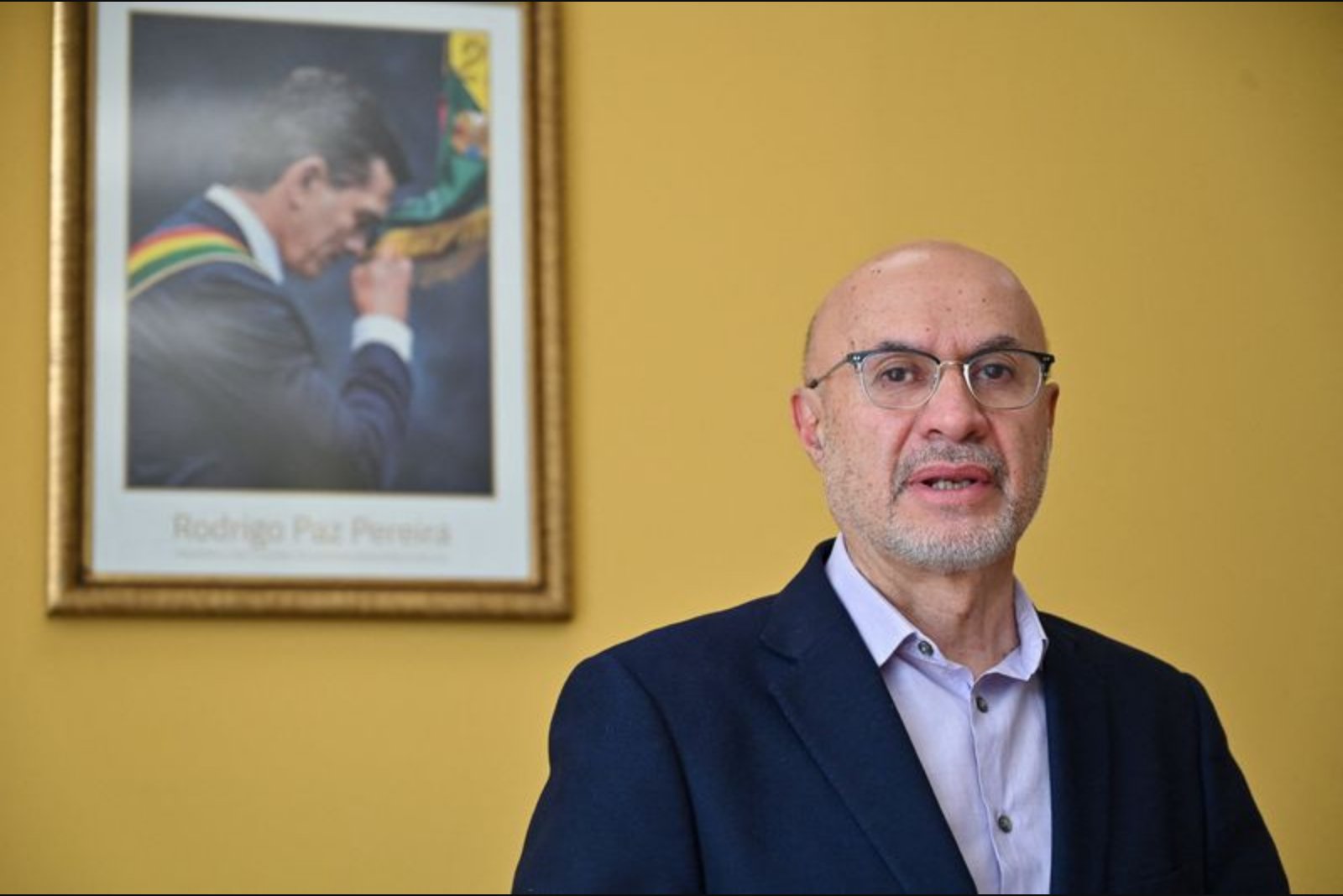
A senior cabinet minister in Bolivia on Thursday ruled out any possibility that President Rodrigo Paz will resign, calling demands for his departure "anti-democratic" and stressing the administration's commitment to preserving elected authority despite a month of disruptive protests.
The unrest, driven by labor unions and factions loyal to former President Evo Morales, has involved strikes and highway blockades that organizers say aim to force the conservative government to reverse austerity policies and ease the rising cost of living. The demonstrations have constricted supply chains and caused major streets to be impassable in several urban centers.
In an interview, the Bolivian Minister of the Presidency, Jose Luis Lupo, rejected fears the turmoil could lead to a coup and pointed to President Paz's electoral mandate as evidence of democratic legitimacy. Lupo noted that Paz secured 55% of the vote in the 2025 election and compared an estimate of roughly 30,000 active protesters with the roughly 3.5 million votes the ruling party received in last year’s vote.
Government officials say the unrest began with a workers' strike in May and escalated into highway blockades that have cut main access routes to the neighboring cities of La Paz and El Alto, metropolitan areas that together are home to about 2 million people. The blockades have impeded deliveries of essential goods, including fuel, food and medicine.
While Lupo emphasized that the administration is prioritizing dialogue with demonstrators, he also signaled the government would consider other options to ensure the flow of essential supplies. "The state of emergency or requests for international support are completely legal and legitimate and will be evaluated according to the opportunity and need," he said.
The minister said international lenders, including the International Monetary Fund, the Inter-American Development Bank and the CAF development bank, had expressed understanding and support for how the government is responding to the disruption. "They understand and are sensitive to this type of situation," Lupo said, adding that damage to Bolivia's international image and tourism was a particular concern as the country seeks to present itself to the world.
President Paz took office in November and pledged to open Bolivia to foreign private investment in areas including mining, hydrocarbons, lithium and energy. Those policy priorities are cited by the government as part of its economic agenda.
The centrist government faces pressure from protesters who maintain that stability will not be restored unless the president leaves office. Lupo, whose responsibilities include coordinating between the presidency and various ministries, characterized calls for resignation as inconsistent with democratic norms and reiterated a preference for negotiated outcomes while keeping legal measures on the table to protect access to vital goods and services.
Contextual notes
- The protests began with a workers' strike in May and escalated into blockades affecting access to La Paz and El Alto.
- Government officials estimate active protesters at about 30,000 compared with roughly 3.5 million votes for the ruling party in the previous election.
- Authorities are weighing a state of emergency that could involve deploying troops, while also pursuing dialogue.