
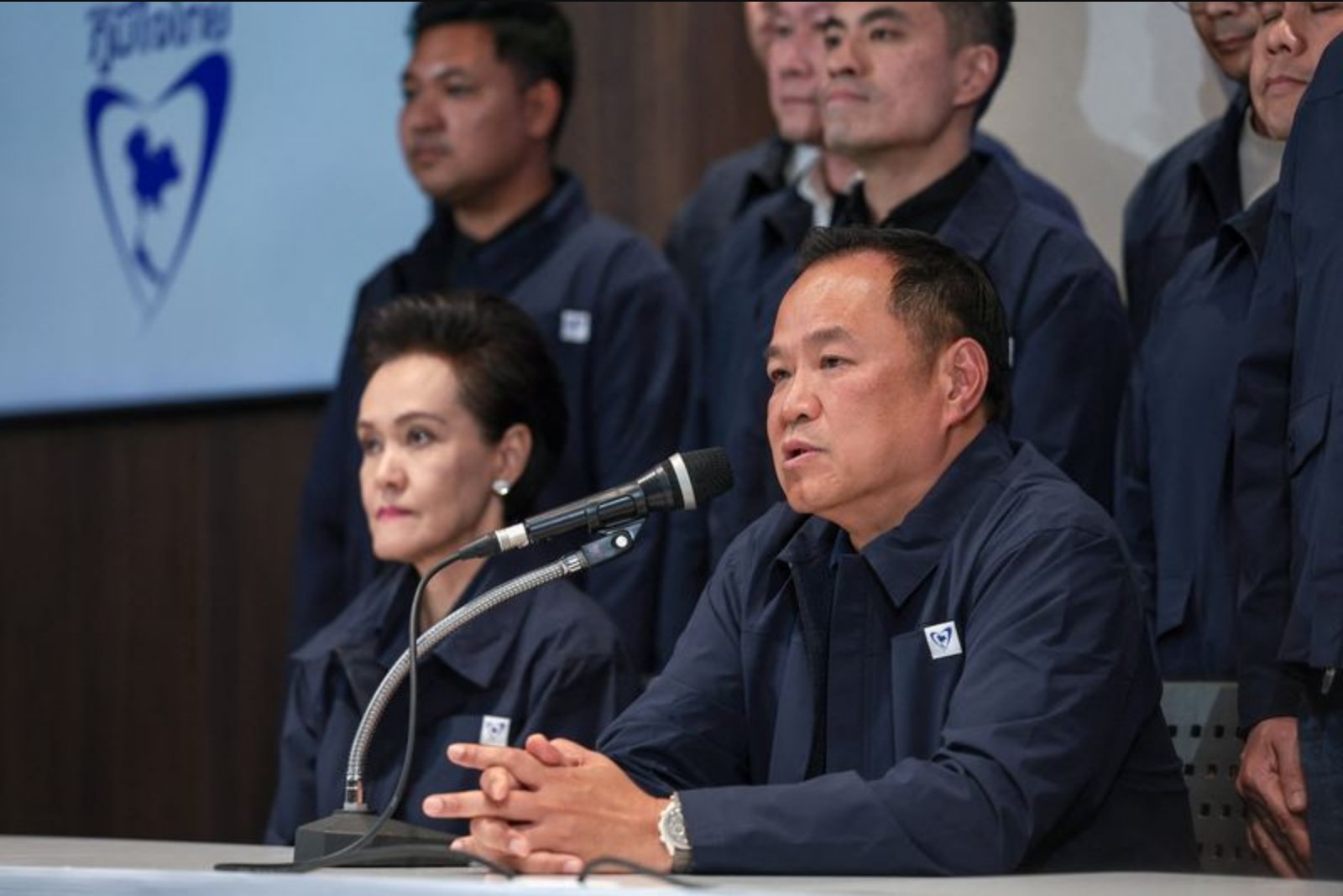
Thailand entered a period of political realignment after the Bhumjaithai Party, under Prime Minister Anutin Charnvirakul, posted a far stronger showing than many had expected in the general election held on Sunday. With 94% of ballots tallied, Bhumjaithai had secured 192 of the 500 parliamentary seats, putting it well ahead of competitors and positioning it to lead negotiations to form a governing coalition in the coming days.
Based on election commission data calculations, the People’s Party was trailing on 117 seats, while the Pheu Thai Party held 74. A group of smaller parties collectively won 117 seats. Observers cautioned that the final distribution of party list seats could shift because Thailand’s proportional electoral system can alter late tallies.
Bhumjaithai received 30.2% of the vote, according to the counted ballots. Analysts have attributed the party’s gains to a consolidation of conservative support amid a surge in nationalist sentiment, and to the party taking a number of constituencies that were previously held by Pheu Thai, the party associated with the Shinawatra family.
When questioned about forming a coalition and the composition of a future cabinet, Anutin said he would await clarification of the final numbers and indicated that each party would need to carry out internal discussions on next steps. He had earlier suggested that, if re-elected, the incumbent ministers responsible for finance, foreign affairs and commerce would remain in place in any new cabinet.
Anutin called the December election after serving less than 100 days in office and has sought to harness a wave of nationalism stemming from Thailand’s three-week conflict with Cambodia. He characterized the election outcome as "a victory for all Thais".
The left-leaning People’s Party has already announced it will not participate in a coalition led by Anutin. Its leader, Natthaphong Rueangpanyawut, said late on Sunday that the party would not pursue the formation of a rival governing alliance.
In a separate but concurrent ballot, voters backed a proposal to replace the constitution that was enacted after the 2014 military coup. Nearly two-thirds of voters supported initiating a constitutional replacement. Implementing a new charter is expected to be a multi-year undertaking; the process will require at least two more referendums to approve the drafting steps and the final text, and is anticipated to take at least two years to complete.
Key points
- Bhumjaithai won 192 of 500 parliamentary seats with 30.2% of the votes counted, placing it well ahead of rivals - Potentially affected sectors: financial markets and investor sentiment that respond to political stability.
- Coalition talks are expected to begin in the coming days, but final party list seat allocations may change under the proportional electoral system - Potentially affected sectors: trade and public policy-dependent industries awaiting policy direction.
- Voters supported replacing the post-2014 constitution, but the drafting and approval process will require at least two more referendums and likely two years to implement - Potentially affected sectors: regulatory and legal frameworks influencing long-term investment decisions.
Risks and uncertainties
- Coalition formation remains uncertain - the article notes coalition talks are expected but provides no timeline or certainty on partners, leaving policy continuity and cabinet composition unresolved. This uncertainty may affect market confidence and sectors sensitive to government policy.
- Final seat totals can change - under Thailand’s proportional electoral system the party list allocation could shift the parliamentary balance, introducing further unpredictability for governance and legislative agendas.
- Constitutional replacement is a multi-step process - although voters supported replacing the charter, the article states that at least two more referendums are required and implementation is expected to take two years, creating an extended period of constitutional uncertainty.
As Bhumjaithai prepares to open talks with potential partners, the immediate political picture centers on numerical verification and internal party deliberations. The electoral outcome and the parallel vote on constitutional change set the stage for an extended period in which final governmental arrangements and the shape of a future charter will be determined.